


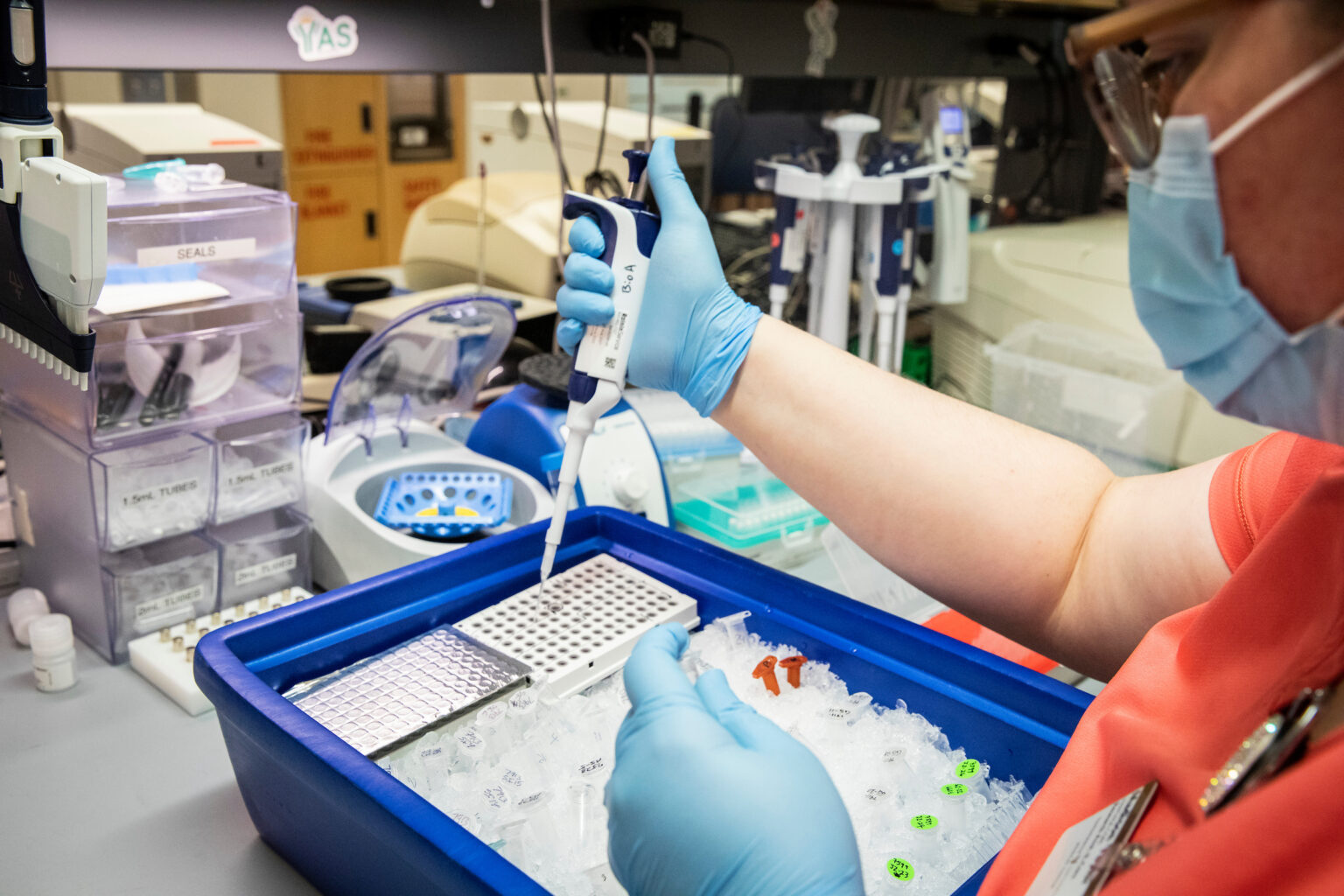
 Work at the BioVU VANTAGE facility (photo by Susan Urmy)

Vanderbilt Health and the University of Alabama at Birmingham are launching a new regional effort to make genomic medicine more accessible to clinicians and patients across the Southeast.
The project, called the Southeast Genomic Medicine Service, or SE-GEMS, is funded by a multiyear $7.87 million award from the National Human Genome Research Institute. It will create a genomic eConsult service that allows clinicians to ask practical questions about genetic testing, test interpretation and next steps in care.

Genomic testing is becoming part of routine medicine, but many clinicians still do not have easy access to genetics experts. That gap is especially important in community and rural settings, where patients may face long waits or need to travel far for specialty care.
“Genomic medicine is moving quickly, but access to genetics expertise has not kept pace,” said Rizwan Hamid, MD, PhD, the Dorothy Overall Wells Professor of Pediatrics and Director of the Division of Medical Genetics and Genomic Medicine at Vanderbilt Health. “SE-GEMS is designed to give clinicians timely, practical guidance so more patients can benefit from genomic advances without unnecessary delays.”
Through SE-GEMS, clinicians will be able to submit questions through a structured intake system. A team of genetics and pharmacogenomics experts will review the request and return a concise consult note with recommendations, including whether testing is appropriate, which test to consider, how to interpret results, and when a genetics referral is needed.
The project brings together Vanderbilt Health’s experience with genomic eConsults and UAB’s expertise in implementation science, pharmacogenomics and population health. The service will initially focus on general genetics, pharmacogenomics, prenatal genetics and cancer genetics questions.
“Many patients who could benefit from genomic medicine never make it to a genetics clinic,” said Nita Limdi, PharmD, PhD, Professor of Neurology at UAB. “This project is about meeting clinicians where they are and helping them make informed decisions for their patients.”
The Vanderbilt Health and UAB teams will also study how the service affects access to care, clinician confidence, testing decisions, referral patterns and patient outcomes. The goal is to build a model that can support genomic medicine across the Southeast and eventually in other regions.