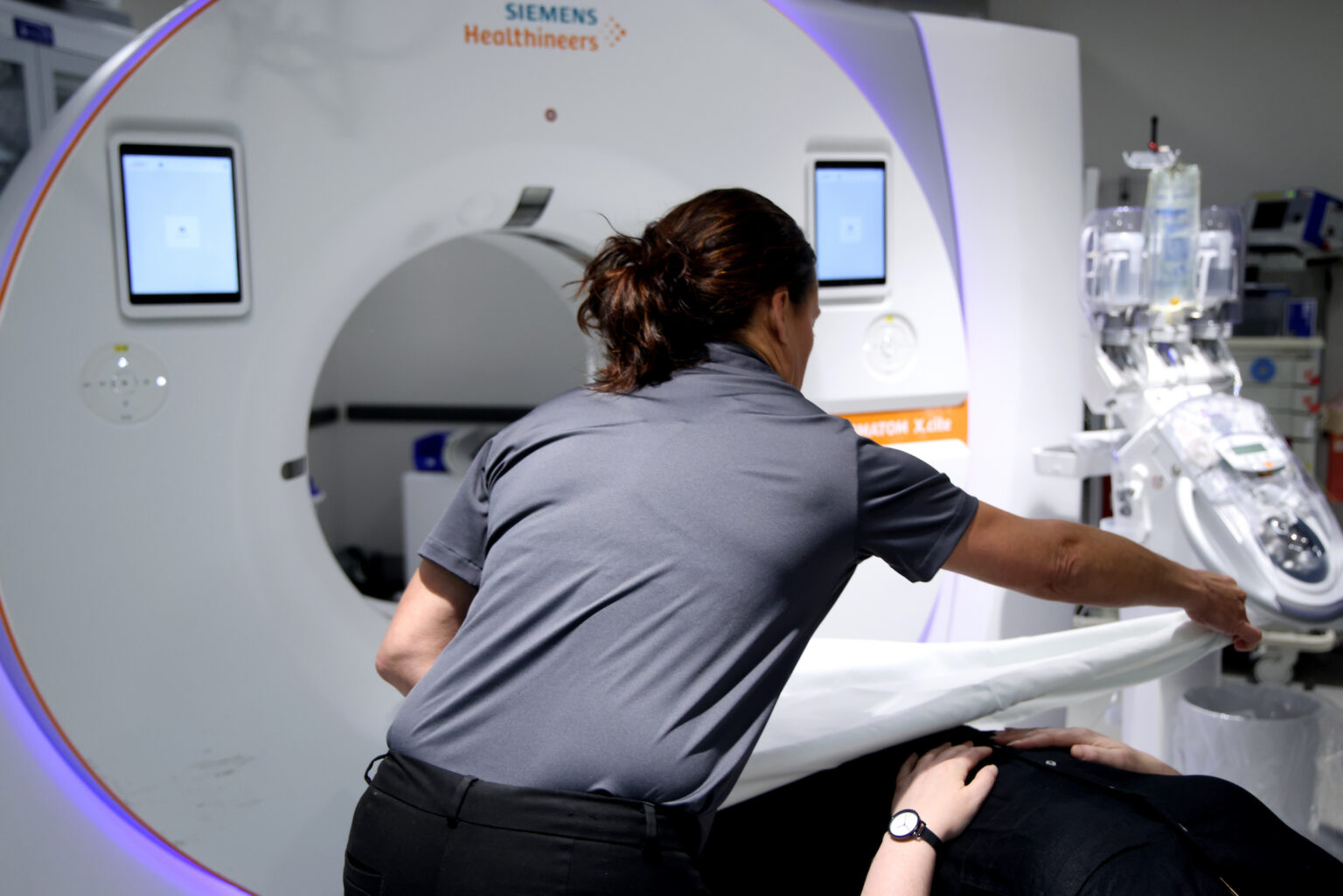
 Mary Thompson, RT(R), Imaging Services Director at Vanderbilt Tullahoma-Harton Hospital, prepares someone for a CT scan. The hospital received its new CT scanner in February 2026. (photo by Donn Jones)
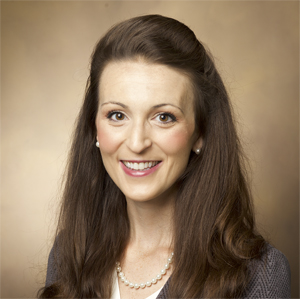
Eric Wallace, MD, Vice Chair of Community Radiology in the Department of Radiology and Radiological Sciences, leads a growing team of physicians who are dedicated to interpreting the scans that originate at Vanderbilt Bedford Hospital (VBCH), Vanderbilt Tullahoma-Harton Hospital, and Vanderbilt Wilson County Hospital. Demand for imaging is booming around Vanderbilt Health’s network and VBCH just started offering weekend ours to accommodate patients’ lives.
Next month in Community Impact, we will talk to the Director of Community Breast Imaging about why local screening options increase the possibility of catching things sooner.
Q: How did the Community Radiology section come together?
A: When Vanderbilt Health bought the first three hospitals — Tullahoma-Harton, Wilson and Bedford — from a radiology perspective, they were funneling all those studies through the Main Campus radiology department. They quickly realized that A) those radiologists are busy, and B) they’re serving a patient population that’s sometimes a little different from someone going to a big tertiary medical center in downtown Nashville. So the idea was to start the regional, or community, section.
As of today, we have eight going on nine full-time radiologists, and we’ll probably grow to about 10 by the end of this calendar year. That growth has allowed us to provide focused, subspecialty-level care to the Regional Hospitals. Now we have a dedicated core of people who read for those hospitals on a daily basis. On top of that, we also have three fellowship-trained mammographers providing breast imaging services to the three of the regional Hospitals, which I’m really proud of.
Q: When you’re getting imaging, you’re usually not having the best day. What do you want the communities around the hospitals to know about the radiology services they’re getting?
A: I want them to know that we’re providing efficient, high-level quality care — we’re not just trying to get through studies as fast as possible. That’s one thing that drew me to this job. In radiology, there’s kind of a private-practice mindset and an academic mindset, and I really enjoy the academic mindset. Even though we’re at the regional sites, we all still hold professorships at the Main Campus — assistant professors, associate professors or professors. Patients are getting that academic-minded level of medicine at the regional sites.
I’m proud that the community radiologists as a whole read over 108,000 studies last fiscal year! We’ve been handling that volume while staying true to our academic mission.
Q: Help quantify that — how do I explain 108,000 studies to a non-radiologist?
A: It’s hard to compare because there’s such a wide range. Some studies take minutes to read; some can take half an hour, depending on complexity. A PET CT with multiple comparisons or a complex cancer follow-up MRI could take 30 minutes. An X-ray of a knee — someone came in and twisted it checking the mail — is a few minutes.
Q: You mentioned that the types of cases coming into Regional Hospitals may be different from what comes to Main Campus. Talk a little more about that.
A: When you’re in rural Tennessee or a small town, the clinicians there may have clinical questions and practice methods that are different from Main Campus. For instance, I read for Tullahoma-Harton, which has two general surgeons. At the Main Campus in Nashville, I can’t even put into words how many surgeons there are. It’s a different mindset — small town versus big city.
Q: Is there anything else we didn’t touch on that I wouldn’t have known to ask?
A: Our ultimate goal is to provide the same level of care at every Vanderbilt Health facility — whether it’s in downtown Nashville or a stand-alone urgent care somewhere in Middle Tennessee. My goal as the regional leader is to bring the expertise and cutting-edge technology of Vanderbilt Health to everywhere Vanderbilt Health serves. Whether you go to Main Campus, Tullahoma-Harton, Bedford or Wilson County, you’re going to get the same imaging protocols. We use the same types of CT scans. We’ll scan you the same way. All of our radiologists are subspecialty trained, so you’re getting the same level of care regardless of where you go.