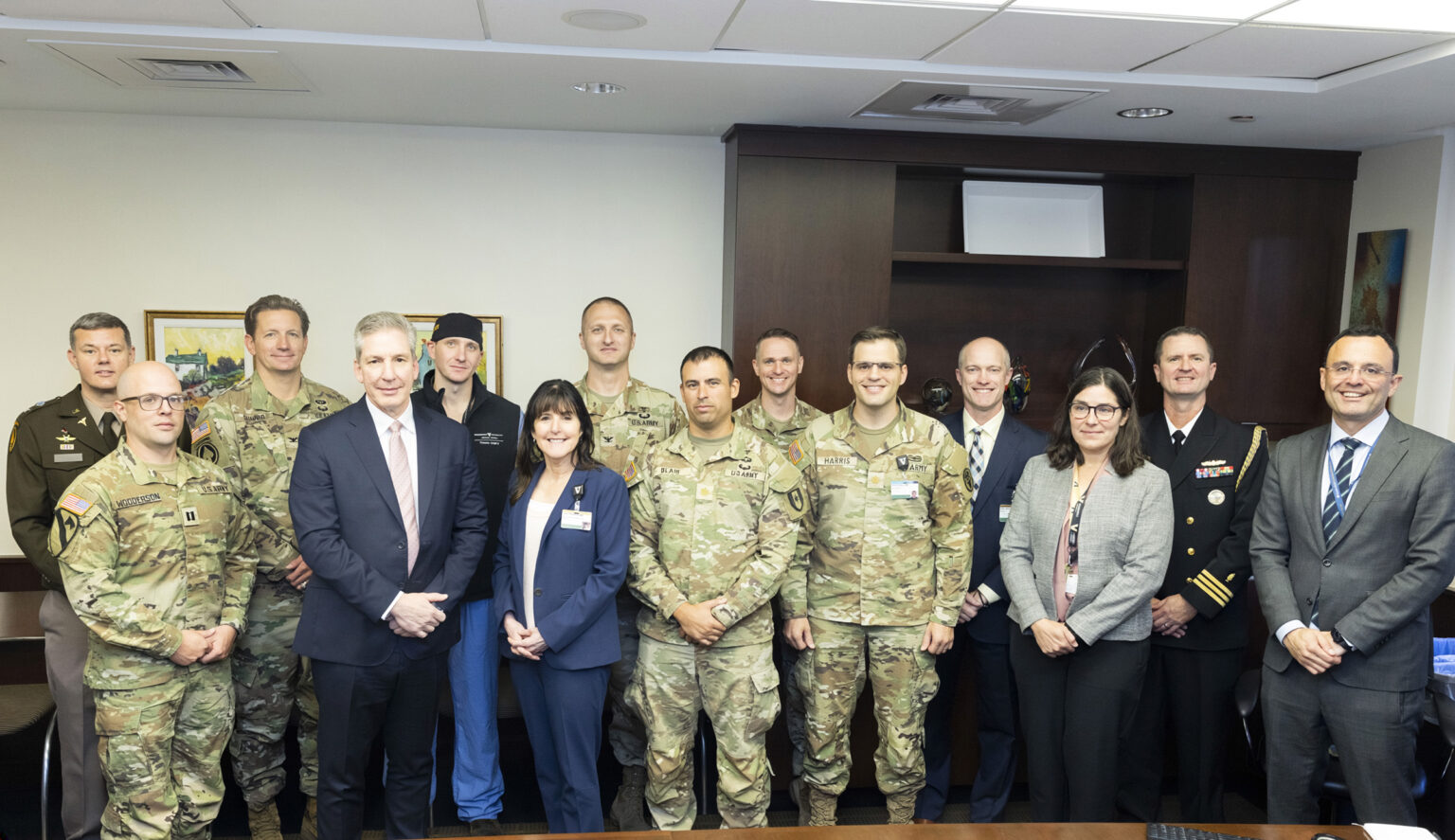
 Shown here during the visit are, front row, from left: Maj. Wesley Wooderson, BSN, RN, CCRN; Keith Bass, MBA, MPH, Assistant Secretary of Defense for Health Affairs; Jane Freedman, MD, Deputy CEO and Chief Health System Officer; Maj. Andrew Blair, DNP, CRNA; Lt. Col. Danny Harris, MD; Elisa Bickett; Alex Jahangir, MD, MMHC; back row, from left: Col. Benjamin Donham, MD, Senior Military Deputy to the Assistant Secretary of Defense for Health Affairs; Col. Daniel Stinner, MD, PhD; Maj. Jeffrey Conner, MD; Col. Jim McWherter; Sgt. 1st Class Nick Burns, CCP; Bradley Dennis, MD; and Cmdr. Dave Cavallario, Military Assistant to the Assistant Secretary of Defense for Health Affairs. (photo by Susan Urmy)

Physician leaders in Vanderbilt Health’s Military-Civilian Partnership Programs recently hosted representatives from the Department of Defense, including Keith Bass, MBA, MPH, Assistant Secretary of Defense for Health Affairs, for a discussion of the ongoing collaboration between Vanderbilt Health and its military partners.
Following a brief presentation by Jane Freedman, MD, Deputy CEO and Chief Health System Officer, and Bradley Dennis, MD, Chair of Vanderbilt Health’s Military Affairs Committee in the Division of Acute Care Surgery, the group discussed the experiences of active-duty soldiers with positions at civilian health systems and how to ensure that health systems and service branches alike benefit from training and developing those who practice medicine while in uniform.
The Military-Civilian Partnership Programs work to support the integration of military service members and civilian clinicians to care for soldiers on and off the front lines. Among the programs is the Army Military Civilian Trauma Team Training (AMCT3) program, in which Army physicians, CRNAs, RNs and paramedics are embedded at Vanderbilt Health for several years and work in a full-time staff capacity. The experience and skills they gain from working at a high acuity Level I trauma center help maintain their readiness for the Army to deploy them as needed to care for military personnel.
Dennis said the integrated relationships between civilian and military clinicians is a point of pride for all involved with the programs.
“They should be proud of the work they do because they are providing necessary skills to help us care for soldiers injured in battle,” Dennis said. “We’re meeting the mission that we’ve been asked to meet.”
“At the end of the day, the objective of our programs is to make sure that these military medical professionals are ready to be deployed to protect our country and care for our service members wherever they are needed,” said Alex Jahangir, MD, MMHC, Vice Chair of Orthopaedic Surgery and Director of the Division of Orthopaedic Trauma. “People who have trained here have deployed and saved lives overseas. It speaks volumes that Mr. Bass and his staff came here to hear directly from our program leaders.”
Col. Daniel Stinner, MD, PhD, Vice Chair of the Vanderbilt Health Military Affairs Committee and Professor of Orthopaedic Surgery, emphasized the opportunity for continued growth of the program.
“Growth stems from both the culture of Vanderbilt Health, which is conducive to cultivating compassionate clinician-soldiers, and the support of leadership, who have been committed to this program from day one,” said Stinner.