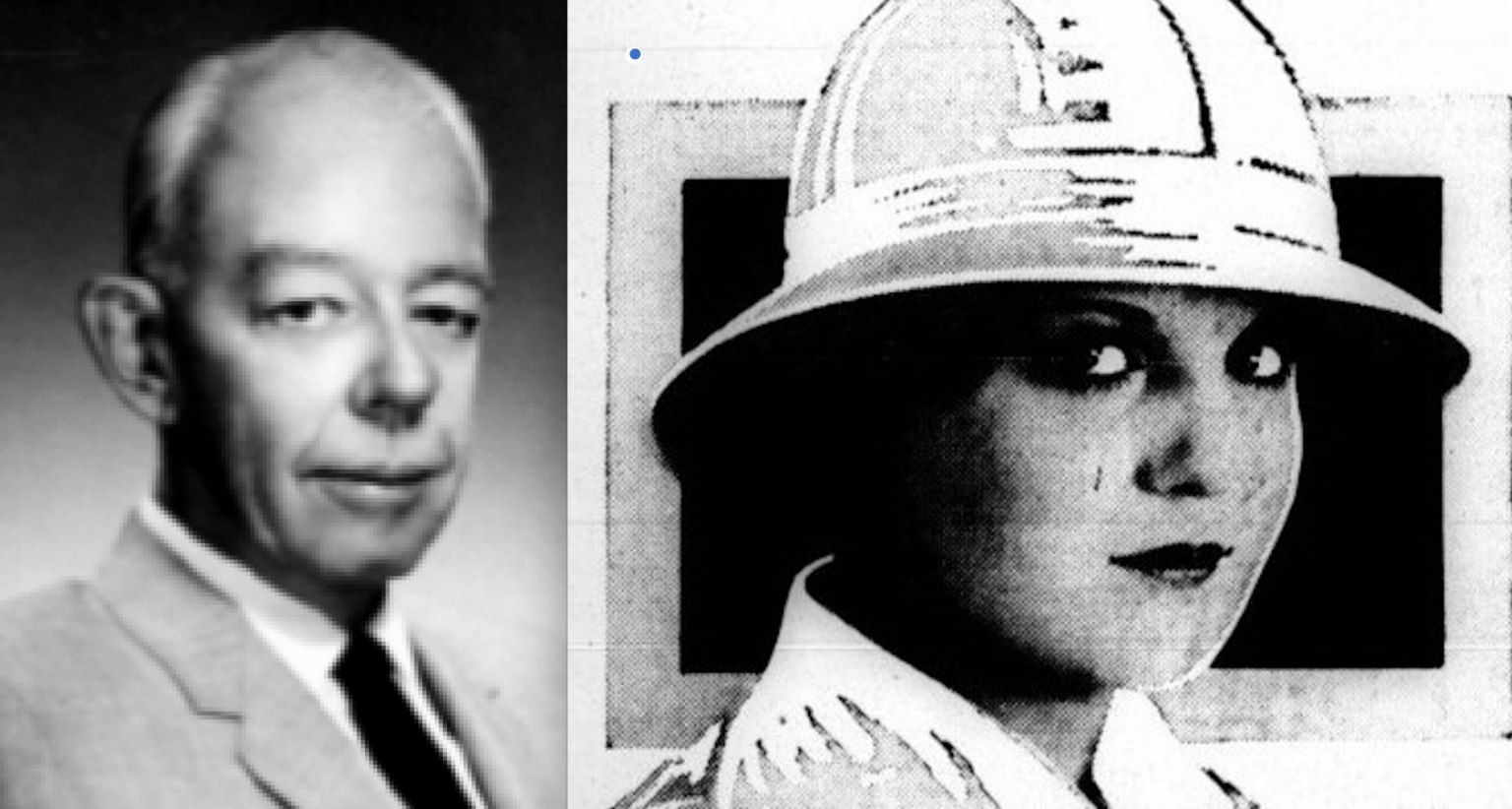
Harris D. “Pete” Riley, MD, who conducted intensive research into the time required to be clean-shaven and well-groomed. (file photo)

Harris (Pete) Riley, MD, was a graduate of Vanderbilt University School of Medicine (Class of 1948) who was Chair of Pediatrics at the University of Oklahoma Health Sciences Center for 33 years. Later in his career, he returned home to practice at Vanderbilt Health.

In the course of those years, he cared for thousands of children, and he authored journal articles on many medical topics, including Reye’s syndrome, osteomyelitis and measles.
He was a well-liked doctor by his patients and their parents, and was a popular colleague at his workplaces. Among his many honors, he was named the 1986 winner of the Vanderbilt Medical Alumni Association’s Distinguished Alumnus/Alumna Award.
But although he published journal articles on medical concerns of both children and adults, two of his publications especially stand out.
And those two publications raise some questions. Was Pete Riley serious, or was he putting everyone on? And if it was a joke, were the editors at JAMA and the Southern Medical Journal in on it?
The cost of tonsorial excellence
The first was published in JAMA in the issue of Dec. 7, 1970, and was titled, “Health Manpower: Physician Time Expended in Obtaining Haircuts.”

In this amazingly detailed report, Riley tells how over the course of a year and a half, he studied the time and cost of getting his hair cut. During the study period, he went for 24 haircuts, which took a cumulative 41 hours and 24 minutes, and cost $148.73.
He even averaged it all out: The mean haircut required one hour and 41 minutes of his time, and the mean cost was $6.13. (Since the study was published in 1970, these were late 1960s prices.)
Riley’s conclusion: There was a great need for barbers to come to doctors’ offices to reduce the valuable time doctors were spending in their pursuit of tonsorial excellence.
The dilemma of the clean-shaven
If, at this point, you’re wondering what Riley could possibly have up his sleeve for an encore, the answer came a full 19 years later in the Southern Medical Journal’s edition of July 1989, in his follow-up piece, “Health Manpower. II: Physician Time Expended in Shaving.”
For this study, Riley regarded his previous 18-month research into haircuts and apparently decided it wasn’t nearly detailed enough.

So for three years, three months and eight days, for a total of 1,133 (almost daily) shaves, Riley timed his ablations with a stopwatch. The total time spent shaving, he reported, was 435,921.8 seconds, which he translated to 7,265.36 minutes, or 121.08 hours, or 5.04 days.
The mean shave, according to Riley’s stopwatch, took 6.41 minutes.
I’ll bet you think that’s as detailed as his research went, but you’d be wrong. He breaks down results by brand of razor and day of the week.
His conclusion is not, as you might suppose, that all male physicians should grow beards. In fact, he says he doesn’t want to grow a beard and is frustrated to realize that by being clean-shaven, if his results are extrapolated over a lifetime, he will spend more than 100 cumulative days of his life shaving.
He wants to shorten the time spent shaving, he says, but offers no solutions to this dilemma.
So, we are back to the central question raised by what are unquestionably two of the strangest studies ever produced by a Vanderbilt researcher. Was Riley amused by the continuing focus on stretching the productivity of physicians, and decided to have some fun with the idea? When he submitted his idiosyncratic studies to medical journals, were they published with a straight face, or with a knowing wink from the editors?
Riley can’t tell us, alas. He died in 2010 at the age of 85, leaving behind a lifetime of care for children, a solid body of published medical research, great contributions to academic medicine in both Oklahoma and Tennessee, and … a lingering mystery about what that haircut and shaving stuff was all about.
(Thanks to James Thweatt and Chris Ryland of the History of Medicine Collections for research)
(all images iStock)