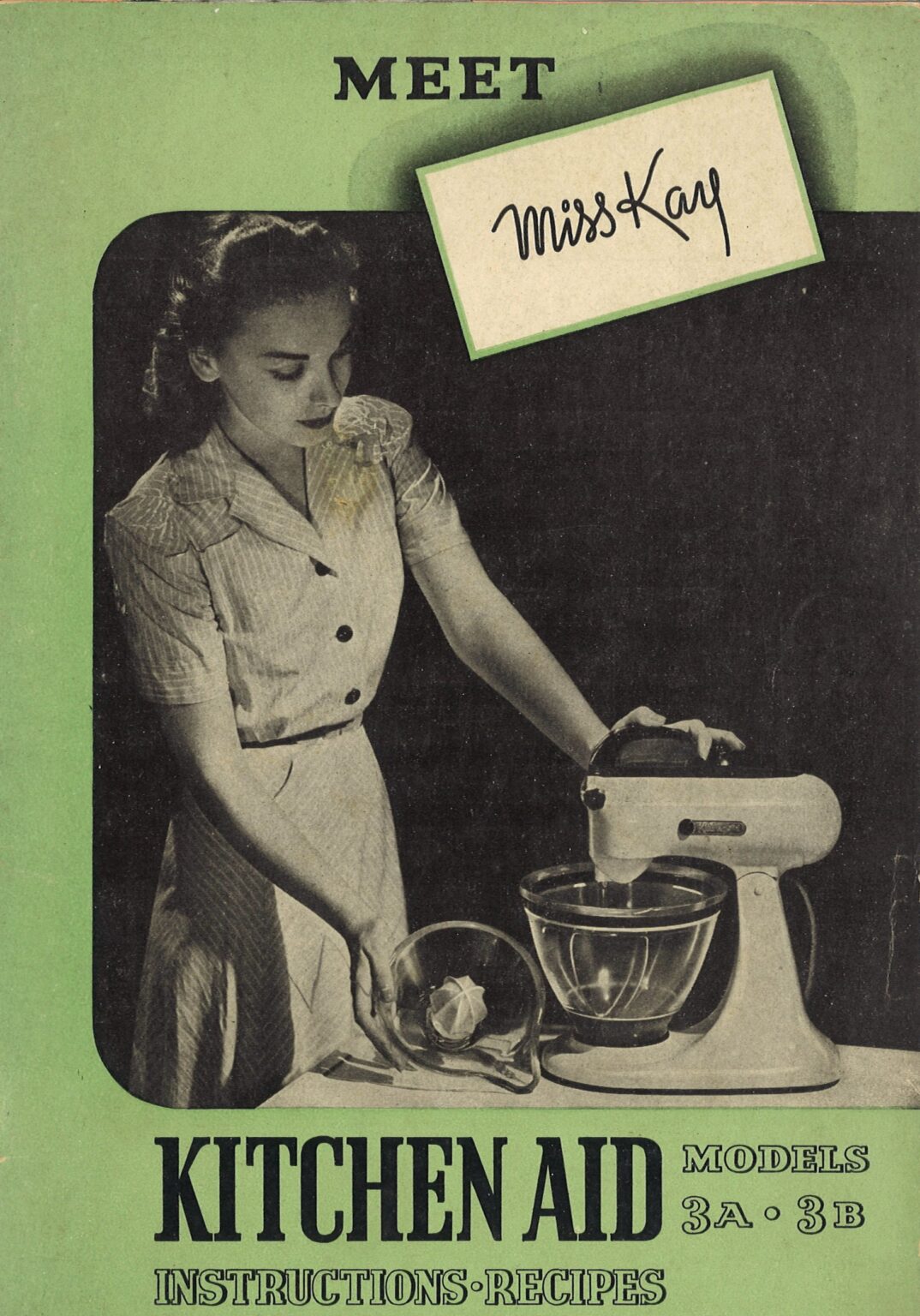
Click through the slide show to see some examples of cookbooks from the collection.
E. Neige Todhunter, PhD, had already had a full career before she arrived at Vanderbilt University in 1967. She was born on a dairy farm near Christchurch, New Zealand, in 1901. After earning bachelor’s and master’s degrees, she moved to the United States as a young woman, seeking more opportunity to grow in her profession of nutrition science.
She earned a doctorate from Columbia University in New York in 1933 and in 1941 became Dean of Home Economics at the University of Alabama, where she remained until her retirement in 1966.
Except “retirement” doesn’t at all fit with what happened next.
She was given the opportunity to come to Vanderbilt as a Visiting Professor of Biochemistry (Nutrition), so she moved to Nashville and continued her academic career for an additional two decades.
“Cookbooks are part of medicine — your health depends on what you eat. Food is so basic that that cookbooks reflect everything that is happening in the world.”
During her time “visiting” Vanderbilt, Todhunter taught and mentored students, contributed to the professional literature and continued a longtime interest — the collection and study of cookbooks. She once said she didn’t particularly enjoy cooking, but she loved reading cookbooks.
Todhunter donated her collection of more than 1,000 cookbooks to Vanderbilt in 1986, and since that time hundreds more volumes have been added to the Todhunter Cookbook Collection and the History of Nutrition Collection, of which it is a part. The collection is housed in the Annette and Irwin Eskind Family Biomedical Library and Learning Center.
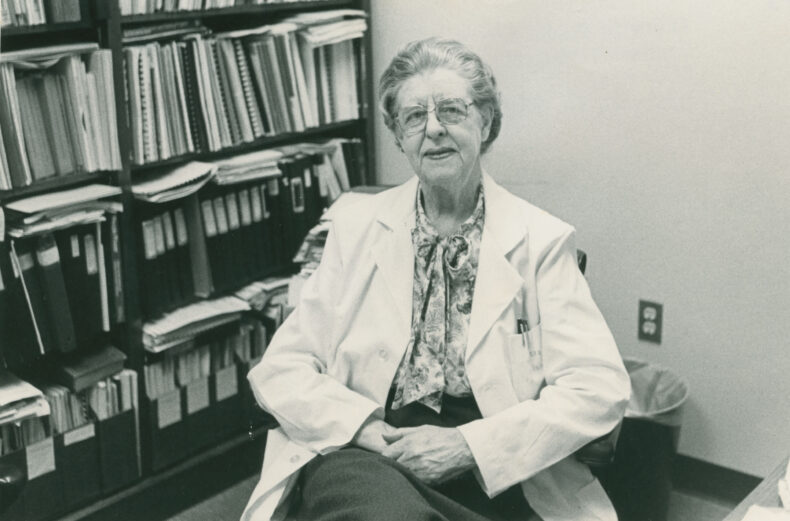
Todhunter was a soft-spoken woman who never completely lost her New Zealand accent, even after her decades in Alabama and Tennessee, but she was emphatic in putting forward her belief that the study of both medicine and history would be immeasurably enriched by more understanding of nutrition and cooking.
“Cookbooks are part of medicine — your health depends on what you eat,” she said in a 1987 interview, adding: “Food is so basic that that cookbooks reflect everything that is happening in the world.
“If you want to know how the English people managed during World War I, you check the cookbooks that were published in that time,” she said. One example: Since no finely ground flour was available, recipes called for more coarsely ground meal. Cookbooks contain the everyday story of people in a difficult time figuring out how to make do with what they had.
The art and experience of cookery
When you got Todhunter talking about cookbooks, there was no telling what you were going to learn. Also from the 1987 interview:
- The first cookbook written and published in the United States appeared in 1796 and bore the cumbersome but comprehensive title “American Cookery, or the Art of Dressing Viands, Fish, Poultry and Vegetables and the Best Mode of Making Pastes, Puffs, Pies, Tarts, Puddings, Custards and Preserves and all Kinds of Cakes, from the Imperial Plumb to Plain Cake Adapted to This Country and all Grades of Life” by Amelia Simmons, An American Orphan. Not much is known about this “American Orphan,” but she did adapt two words from the Dutch: “koekje” became the English “cookie,” and “sla” was transformed into the English “slaw.”
- The modern volume system of measurements, such as cups and teaspoons and tablespoons, did not exist in older cookbooks, so instructions were more indefinite. “They’d say, ‘A handful of this or that,’” she said.
- Step-by-step instructions were often nonexistent. Todhunter cited the example of an 1857 cookbook’s recipe for “snow cake,” which read in its entirety: “One pound of flour, one of crushed sugar, half a pound of rich cream, the whites of sixteen eggs, beaten two hours.”
- Cook stoves, typically cast iron and fueled by a wood fire, had no temperature settings, so baking instructions were similarly vague. Todhunter noted that common instructions were “bake brisk,” “a slow oven,” “a slack oven” or “a light oven.”
“Cookery was still an art, and experience was necessary,” she said.
Bean queens, shoats’ heads, “persons without brains,” and beyond: bite-sized samples from the collection
The Todhunter Collection contains some things you would expect: bestsellers of their time such as “Better Homes and Gardens New Cook Book,” “Craig Claiborne’s Favorites,” and “The James Beard Cookbook.”
There are also foreign cookbooks such as “Middle Eastern Cooking,” “Classic Cooking from India,” “A West African Cook Book,” and the predictable European entries.
Cookbooks based around certain foods are another well-represented category in the collection. These seem largely to be the efforts of societies or groups set up to encourage consumption of a certain food.
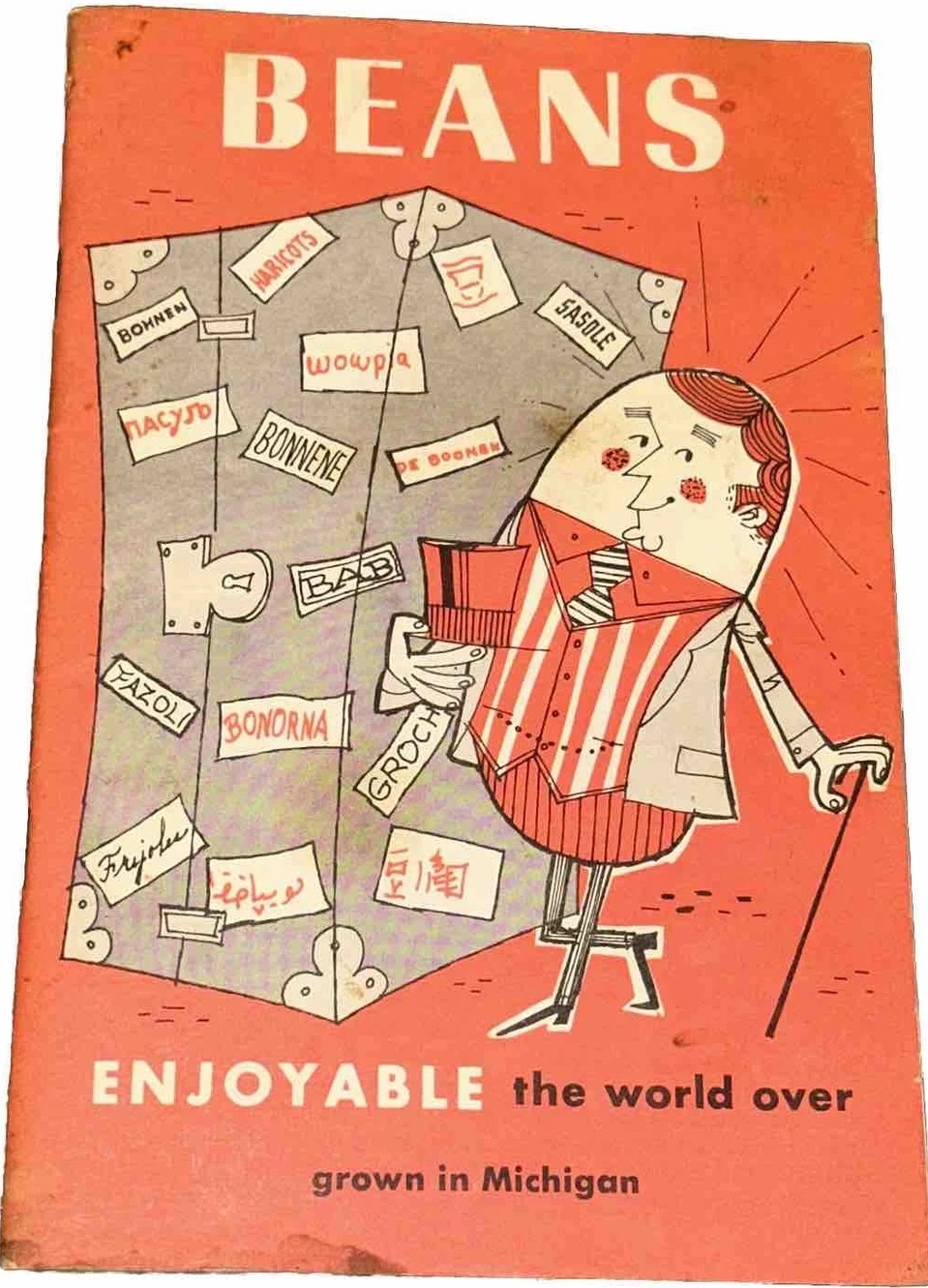
For example there is the book with the punctuation-free title “Beans Enjoyable the World Over Grown in Michigan,” produced by, not surprisingly, the Michigan Bean Shippers’ Association. Its featured recipes include Candied Beans with Nuts and Apples, Ranch Beans for the Gang, and Beans and Round Dogs. It also has a section on “The Beautiful Bean Queens,” which explains the rules for participation in the annual Bean Queen pageant: “Each pretty girl must be the daughter of a farmer who grows beans. She must herself be well-informed on the subject and its importance in the economy.”
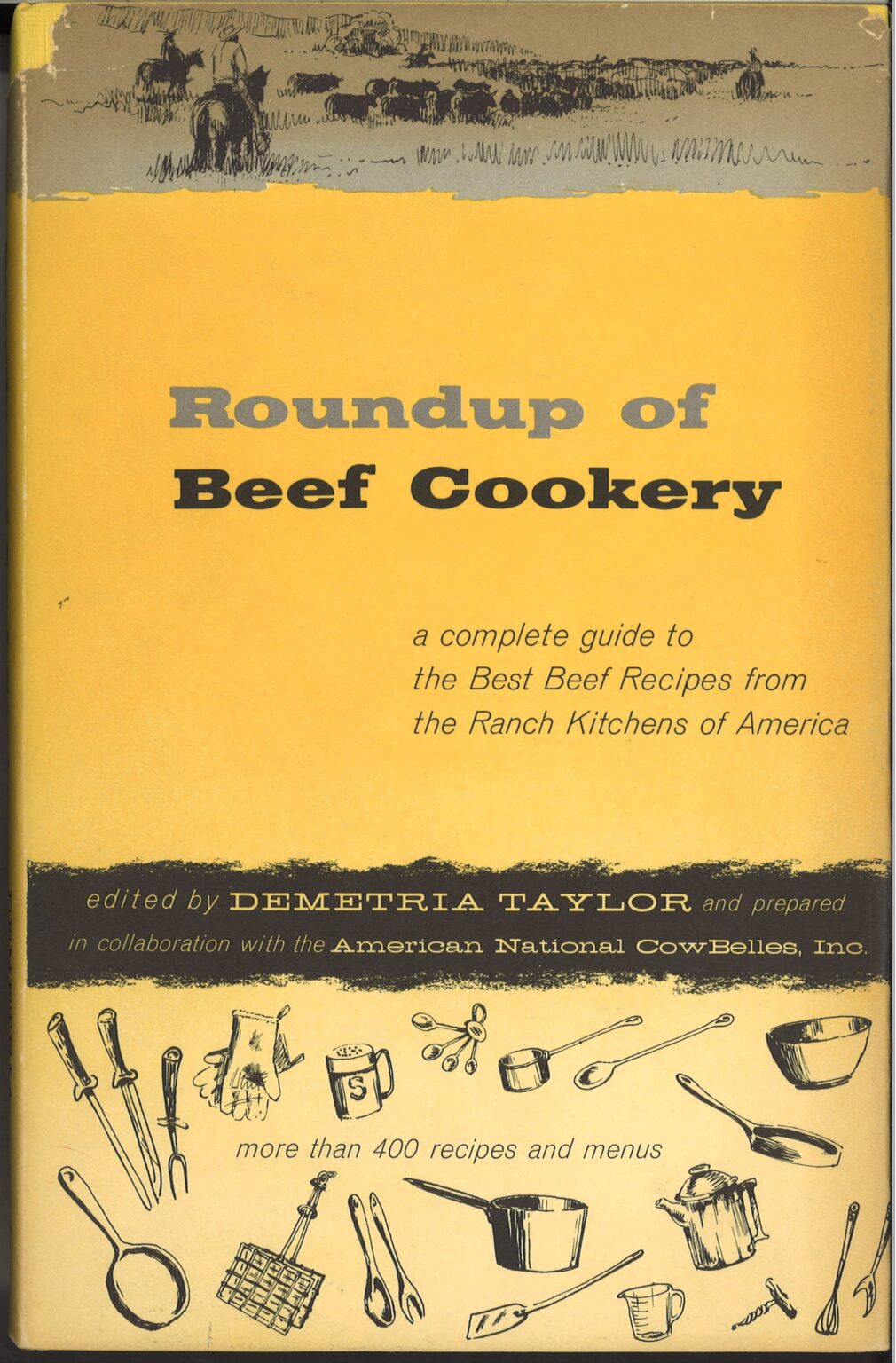
For those who prefer their protein on the hoof, there is the “Roundup of Beef Cookery,” produced in collaboration with the American National CowBelles Inc., described as an association of the wives of cattlemen. This hefty volume contains 400 beef recipes, and asserts dubiously that, “You can, if you wish, serve beef every day of the year without fear of menu monotony.”
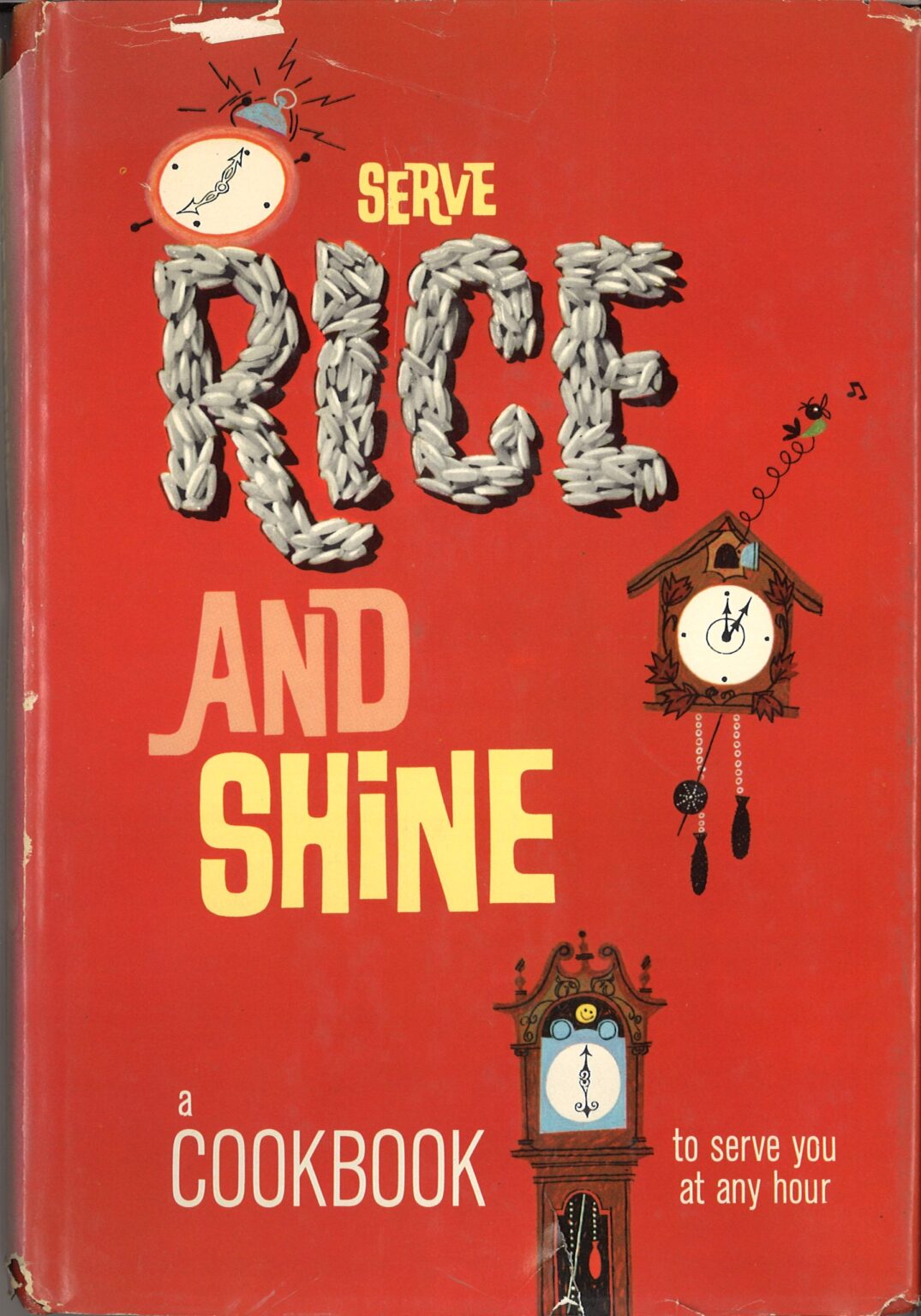
The Test Kitchens of the Rice Council for Market Development weigh in with “Serve Rice and Shine,” which asserts, “No matter what the hour — it’s RICE TIME!” Left unsaid is exactly what hour of the day or night would be appropriate to chow down on the likes of Rice Pancakes, Ham with Peanut-Rice Stuffing, or a Rice-Pizza Burger.
“I would say to housewives, be not daunted by one failure nor by twenty. Resolve that you will have good bread and never cease striving after this result till you have effected it. If persons without brains can accomplish this, why cannot you?”
Words of encouragement from cookbook author Marion Cabell Tyree, 1879
An 1879 cookbook, “Housekeeping in Old Virginia,” provides a master class in using the whole animal, with recipes for Pigeon Pie, Calf’s Head Pudding and Shoat’s Head Stew. But even beyond those temptations, the book is notable for its words or encouragement from its author, Marion Cabell Tyree: “I would say to housewives, be not daunted by one failure nor by twenty. Resolve that you will have good bread and never cease striving after this result till you have effected it. If persons without brains can accomplish this, why cannot you?”
After a remarkable life as one of the leading teachers and researchers on nutrition of her era, Todhunter died Dec. 7, 1991, in Nashville.
The link to the Elizabeth Neige Todhunter papers at Vanderbilt is here.
To read more about her life, her Wikipedia entry is here.
Special thanks to James Thweatt, Archivist of the History of Medicine Collections. Cookbook covers are from the History of Medicine Collections.