


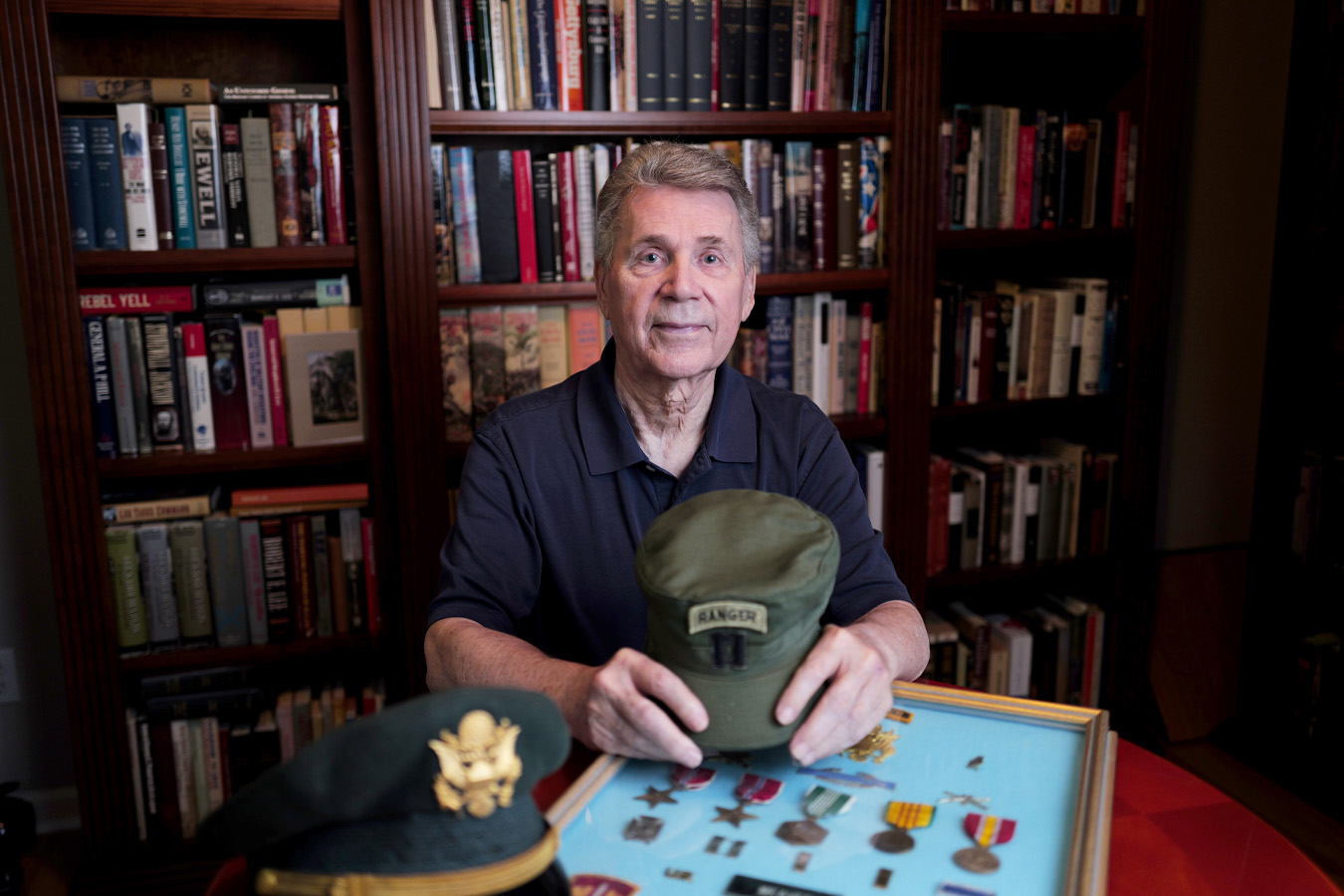
 Johnnie Lee Weaver (photo by Donn Jones)

In 2016, Johnnie Lee Weaver visited his general practitioner in Paducah, Kentucky, seeking relief for a sore shoulder. When his X-rays came back, he was referred to an oncologist. “That’s when the red flags went up,” he said.
After additional testing, Weaver was diagnosed with multiple myeloma, a blood cancer in which plasma cells in the bone marrow become cancer cells. He was sent to Vanderbilt University Medical Center to determine the type and returned later for a stem cell transplant. Over the past nine years, he has undergone three changes in regimens. When the last one stopped working, Weaver, now 79, was evaluated for and met the criteria to receive chimeric antigen receptor T (CAR-T) cell therapy at VA Tennessee Valley Healthcare System’s Nashville VA Medical Center — Veterans Affairs’ only certified CAR-T center.
A wound you can’t see
When he was 21 years old, Weaver enlisted in the United States Army after completing the ROTC program at Murray State University. After completing basic training, he spent two years in Germany and was subsequently deployed to Southeast Asia when the Vietnam War began. He served in various roles, including rifle company commander, division operations officer, and adviser, after his division returned to the United States and he stayed in Vietnam.
“I didn’t realize it at the time, but that’s where I was exposed to Agent Orange,” he said of the chemical herbicide used to clear vegetation that has been linked to many health conditions. “It shows up several years later and is what caused me to have multiple myeloma.”
Weaver counts fatigue and exhaustion as the most debilitating symptoms of his disease, plus the symptoms he carries over from his original stem cell transplant, including chemotherapy-induced neuropathy and pain that “permeates” his body.
“My situation is the same as someone who was wounded and 100% disabled in Vietnam,” said Weaver, who retired as a captain. “This is a wound you can’t see, but it’s a wound that inalterably changes my life.”
The VUMC-Nashville VA connection
Because VUMC is in the Nashville VA’s backyard, and the organizations share medical personnel, there has always been a natural collaboration between the two.
The first stem cell transplant at the Nashville VA was performed in 1995. Over the past 30 years, veterans have received either autologous (using the patient’s stem cells) or allogeneic (using donor stem cells) transplants to treat lymphomas, myelomas and leukemias.
In 2016, when Weaver was diagnosed with multiple myeloma, Vanderbilt-Ingram Cancer Center became the first cancer center in Tennessee to provide CAR-T cell therapy as part of a clinical trial, and, a year later, became one of a few cancer centers in the United States authorized to deliver the new immunotherapy.
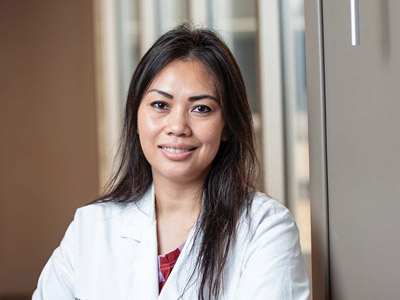
“CAR-T cell therapy uses a patient’s own T cells. T cells are immune cells which are then reengineered to learn how to treat the underlying disease. Currently, we use CAR-T to treat some lymphomas, leukemias and multiple myeloma that have not responded to other treatments,” said Salyka Sengsayadeth, MD, medical director of the Stem Cell Transplant and Cellular Therapy program at the Nashville VA Medical Center. “We collect their T cells, and they’re sent to a manufacturer that reengineers the cells to attack the lymphoma, myeloma or leukemia cells. Then we infuse those reengineered CAR-T cells back into the patient to treat their disease. This is the cutting edge of medicine treatment, and where we think the future of cancer treatment is headed.”
In late 2019, VA Tennessee Valley Healthcare System performed its first CAR-T infusion at its Nashville VA Medical Center — the first CAR-T treatment to take place at a VA hospital.
Covering the cost of CAR-T
CAR-T treatment involves an integrated multidisciplinary team and advanced laboratory software. A 2018 donation from The Journey Home Project — a foundation created by the late country music legend Charlie Daniels and music industry executive David Corlew that helps veterans transition from service to civilian life — funded software, monitoring and other administrative costs associated with CAR-T treatment.
“I have a tremendous amount of respect for what Vanderbilt does, both personally and professionally through The Journey Home Project,” Corlew said. “We were happy to help make this treatment possible for veterans and look forward to continuing to support this fundamental cause.”
Support comes in many forms: Every veteran who meets the criteria for CAR-T treatment receives it at no cost at the Nashville VA. Their travel and lodging for multiple visits are fully covered as well, which is vital because veterans come to Nashville from all over the country for this treatment. And the referral process and time to treatment are often much quicker for veterans than civilians.
“Patients have to be referred by their local oncologist or hematologist. Thanks to telemedicine, of which the VA was a pioneer, we can evaluate patients quickly,” Sengsayadeth said. “If we get a referral for a patient from Texas and see they need CAR-T cell therapy, we usually evaluate them within the first week, sometimes within days, because everything is integrated within the VA. This speeds everything along, including the time to collect T cells and the time to treatment, which is critical for patients where time is of the essence. We work hard to get patients here as quickly as possible, especially since we’re the only VA in the country that performs this treatment.”
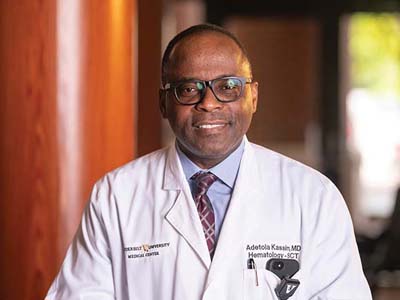
Another factor in the speed with which veterans get their CAR-T cell therapy is due to the lack of a financial clearance process. Adetola Kassim, MBBS, MS, director of the Vanderbilt-Ingram Cancer Center Stem Cell Transplant and Cellular Therapy Program, sees it firsthand every day.
“I work on both sides of the aisle. On the commercial side, these are expensive therapies and a lot of hoops to jump through based on various insurance plans,” Kassim said. “But at VA, once it’s approved, almost every veteran who needs it can get it. It’s impressive. I’ve seen situations on the commercial side where some insurance companies put you through the wringer before approving you. But at VA, once the transplant group agrees the veteran can benefit, it’s smooth sailing after that.”
The value of hope
Without having to worry about mounting costs, insurance issues and managing travel for himself and his wife, Weaver can focus on the matter at hand, which is dealing with the effects of treatment and testing and staying alive as long as possible.
Because each person and blood cancer is different, there’s no framework for how long CAR-T therapy extends life, only that it buys more time.
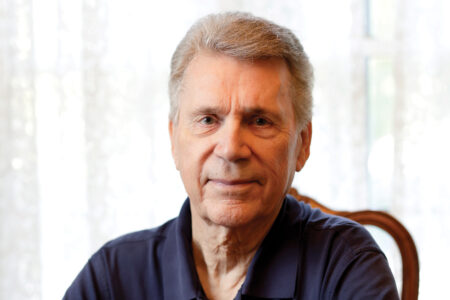
“When you’re told that you have cancer, and it’s an incurable but manageable cancer, you’re trying to figure out, what does all that mean? I’m still working on that,” Weaver said. “But one of the things it does when you get started with the treatments, and a lot of times the treatments are very unpleasant, is that they give a person hope — and that’s one of the things we don’t recognize or talk about enough.
“The medical staff at VA and Vanderbilt are really fantastic. They’ve been so good to me, kind, thoughtful and reassuring. Whether it’s the doctors or any of the other nurses, they’ve all been so kind and generous with their time and seem to sincerely care about what’s going on.”
During the infusion and treatment phase, Weaver spent several days in the hospital for observation and returned almost daily for blood tests (anywhere from four to 34 vials), results and injections to boost his white or red blood cell count. If his numbers indicate progress, he’ll undergo a bone marrow biopsy, which involves injecting a syringe through his pelvis and into the bone to sample the bone marrow. When he’s not needed at the hospital, he rests.
“When I have a good day, I try to do as much as I can,” he said. “When I’m not having a good day, I try to rest up and recoup as well as I can to have another good day. I’m always moving back and forth between good days and bad days.”
Since 2019, Nashville VA has performed almost 100 CAR-T cell therapies on veterans — and Weaver is grateful to be one of them.
“I’ve been exposed, let’s say to the possibility of death quite a few times, and it’s something I think, I hope, that I’ve reconciled with,” Weaver said, reflecting on his time in Vietnam and his current battle. “I see myself as a spiritual being in this body; I understand there’s a beginning and end for this body; and I try to do the next best thing while I’m in it and live with that. Mortality doesn’t frighten me — at least it hasn’t to this point. I have a wife, four children and 10 grandchildren, and want to try to be with them as much as I can — and be with them so that they remember me in a very positive way, despite being ill.”


