


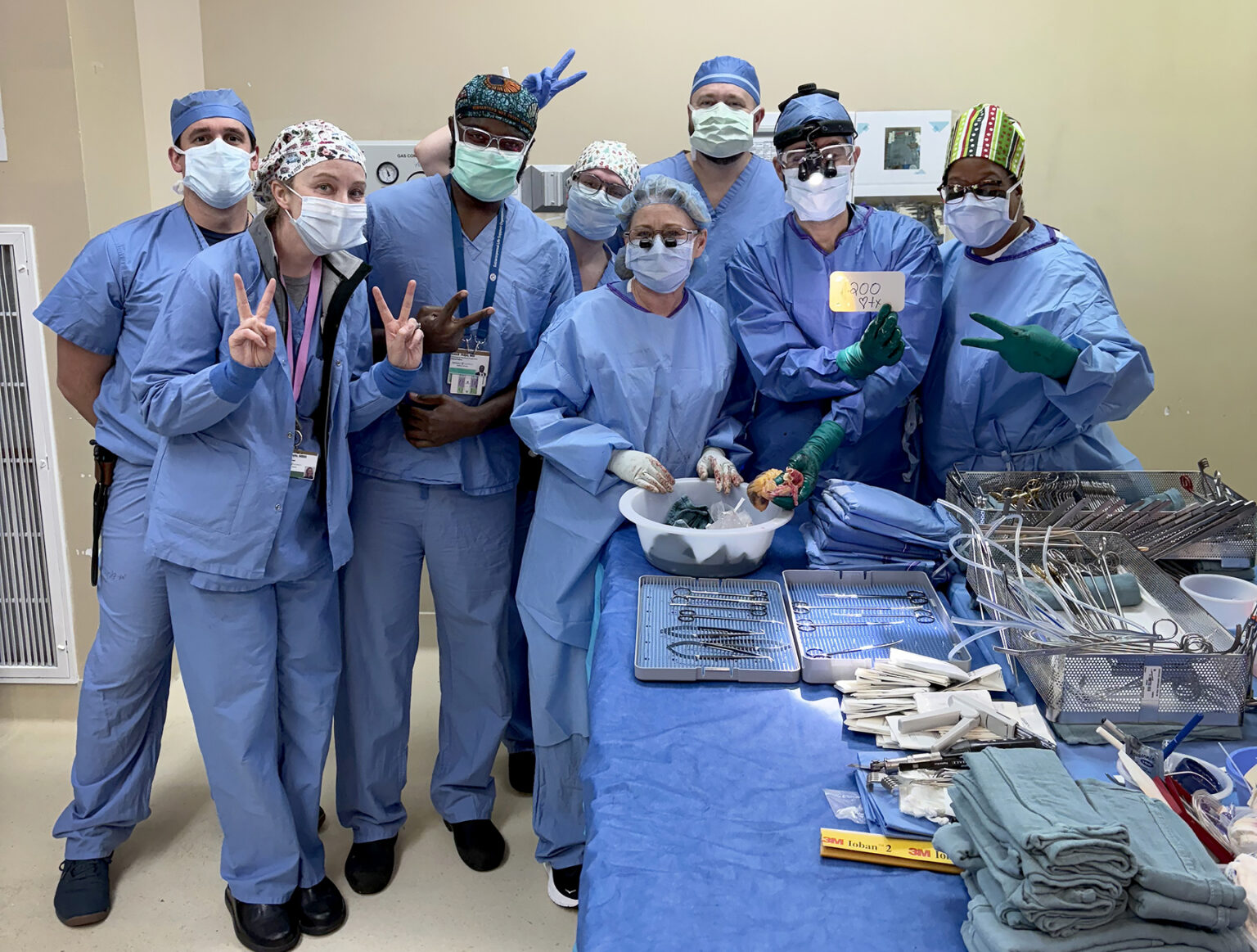
 Members of the transplant team pose for a photo after surpassing 200 adult and pediatric heart transplants. (photo courtesy of Ashish Shah)

In a city known for making records, Vanderbilt Health’s Heart Transplant Program will break its own world record this year, performing more than 200 adult and pediatric heart transplants during 2025. In 2024, Vanderbilt Health performed 174 heart transplants.
“We’re tremendously proud to surpass 200,” said Kelly Schlendorf, MD, medical director of the adult transplant program and section chief of Heart Failure and Transplantation. “While this number may sound small, it’s unheard of for a single center until now. More important than the number, however, is what it represents — innovation, courage, incredibly hard work and, most importantly, the patients behind the number and the trust they put in Vanderbilt to care for them.”
Among the patients transplanted this year were 16 children and more than 185 adults, 29 U.S. veterans, and 20 patients who received multiorgan transplants including 16 heart-kidney transplants, two heart-liver transplants and two heart-lung transplants.
As in prior years, the success of Vanderbilt Health’s transplant program is a testament to the greatness of individuals and innovations alike and to the tremendous power of teamwork. Compassionate nurses, selfless organ recovery teams, and intensivists who work around the clock are just some of the many dozens of people at Vanderbilt Health that make these transplants happen.
They often use technologies pioneered by Vanderbilt Health that expand the donor pool and improve transplant outcomes, not just for patients at the Vanderbilt Transplant Center but those around the globe.
“Consider that the 200th was from a donor whose heart was thought unusable by local teams,” said Ashish Shah, MD, professor and chair of Cardiac Surgery. “That the 200th was for an immunologically complex recipient. That the 200th pushed our high performing team to make it happen in short order. To me, it sounds about right. What may seem like chaos to others is business as usual for the best heart transplant team in the world.”
Both Shah, who holds the Alfred Blalock Directorship in Cardiac Surgery, and Schlendorf express immense gratitude to their colleagues and to the institutional leadership and support that has allowed the heart transplant program to continue to thrive.


