



Building on previous joint research at Vanderbilt Health and Vanderbilt University, investigators from both institutions will continue studying the validity of near-infrared autofluorescence to improve detection of parathyroid glands during endocrine neck surgery, now looking into its application for pediatric patients.
The researchers have received a high-priority, short-term project award from the National Institutes of Health to support their study.
While endocrine neck surgery is generally safe with a low rate of complications, inadvertent removal and damage to parathyroid glands can cause hypoparathyroidism, a condition that can lead to low levels of calcium and elevated levels of phosphorus in the blood. Long-term hypoparathyroidism complications include impaired kidney function, cardiac arrhythmias and increased risk of death.
In pursuit of technologies to help accurately identify these glands during surgery, a device known as PTeye, developed at Vanderbilt and authorized for use by the Food and Drug Administration in 2018, will undergo further experimentation to validate its ability to improve surgical outcomes in pediatric patients. PTeye was shown to improve intraoperative identification of parathyroid glands in adult patients through a clinical trial whose results were published last year in JAMA Surgery.
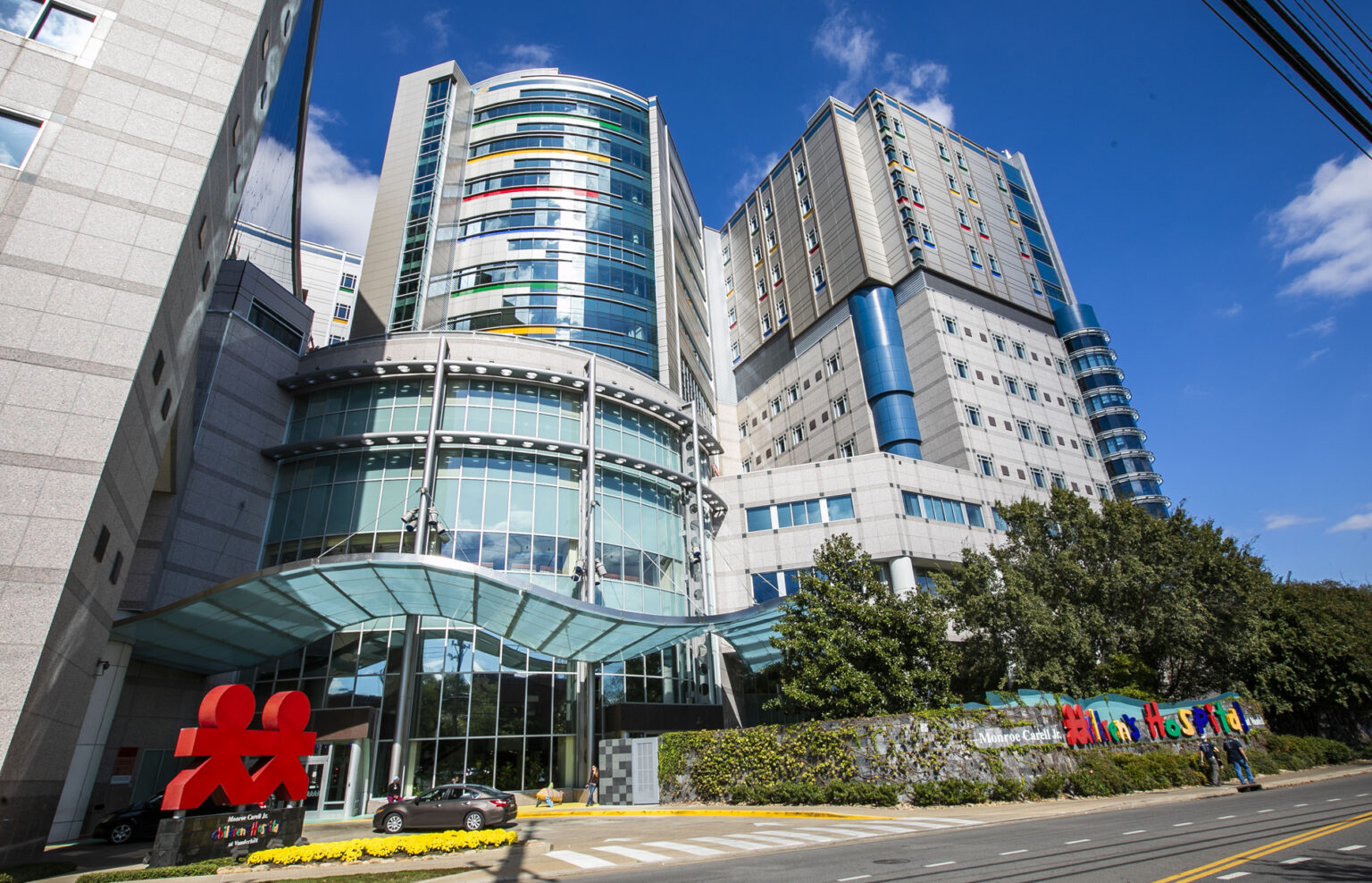
Anita Mahadevan-Jansen, PhD, the Orrin H. Ingram Professor of Biomedical Engineering, led the development of PTeye and will now serve as this study’s principal investigator, teaming up with physician-scientists at Monroe Carell Jr. Children’s Hospital at Vanderbilt. Mahadevan-Jansen has long been at the forefront of biomedical image and signal processing and holds a Vanderbilt Health appointment through the Vanderbilt University Institute of Imaging Science.
“I’m excited to continue translating our research and achievements with PTeye to pediatric patients,” said Mahadevan-Jansen. “This grant will help us secure the future of pediatric endocrine neck surgery and increase the rate of positive surgical outcomes for this population of younger patients.”
The co-principal investigators are Ryan Belcher, MD, MPH, associate professor of Otolaryngology-Head and Neck Surgery, and Monica Lopez, MD, MS, professor of Pediatric Surgery and vice chair for Quality and Evidence-based Programs. Belcher and Lopez are also surgical co-directors of the Monroe Carell Pediatric Thyroid Nodule and Cancer Program.
“The improvement of surgical outcomes for our pediatric population is the reason we do what we do, and adapting PTeye use to optimize outcomes for pediatric patients is a remarkable example of the power of translational research,” said Lopez. “Doing so by leveraging a Vanderbilt-developed technology in PTeye is a testament to the impact of collaboration between the Vanderbilt University School of Engineering and Vanderbilt Health.”
Belcher said that the forthcoming multisite trial, which will include other sites such as Texas Children’s Hospital, Children’s Healthcare of Atlanta, Johns Hopkins Children’s Center and Children’s Hospital of Philadelphia, will emphasize collecting a large sample size of data.
“Thyroid surgery for benign and malignant disease is rare enough in children that collecting data across multiple sites is crucial,” said Belcher. “We aim to collect that data through examination during endocrine neck surgery to conclude whether near-infrared autofluorescence of parathyroid glands is age-dependent, and if so, to understand how patients at different points in their development respond to the use of technology such as PTeye.”
The investigators further credited Carmen Solórzano, MD, the John L. Sawyers Professor of Surgical Sciences and chair of the Department of Surgery, for her work pioneering PTeye. Solórzano was the senior author of the JAMA Surgery paper that validated the use of PTeye in adult patients, which the investigators said laid the foundation for their work with pediatric patients. They further thanked Parker Willmon, a PhD student in Vanderbilt University’s Department of Biomedical Engineering, for his work moving the research forward.
The grant, officially titled “Translating near infrared autofluorescence for guiding pediatric endocrine neck surgeries,” is NIH grant number R56HD119923.