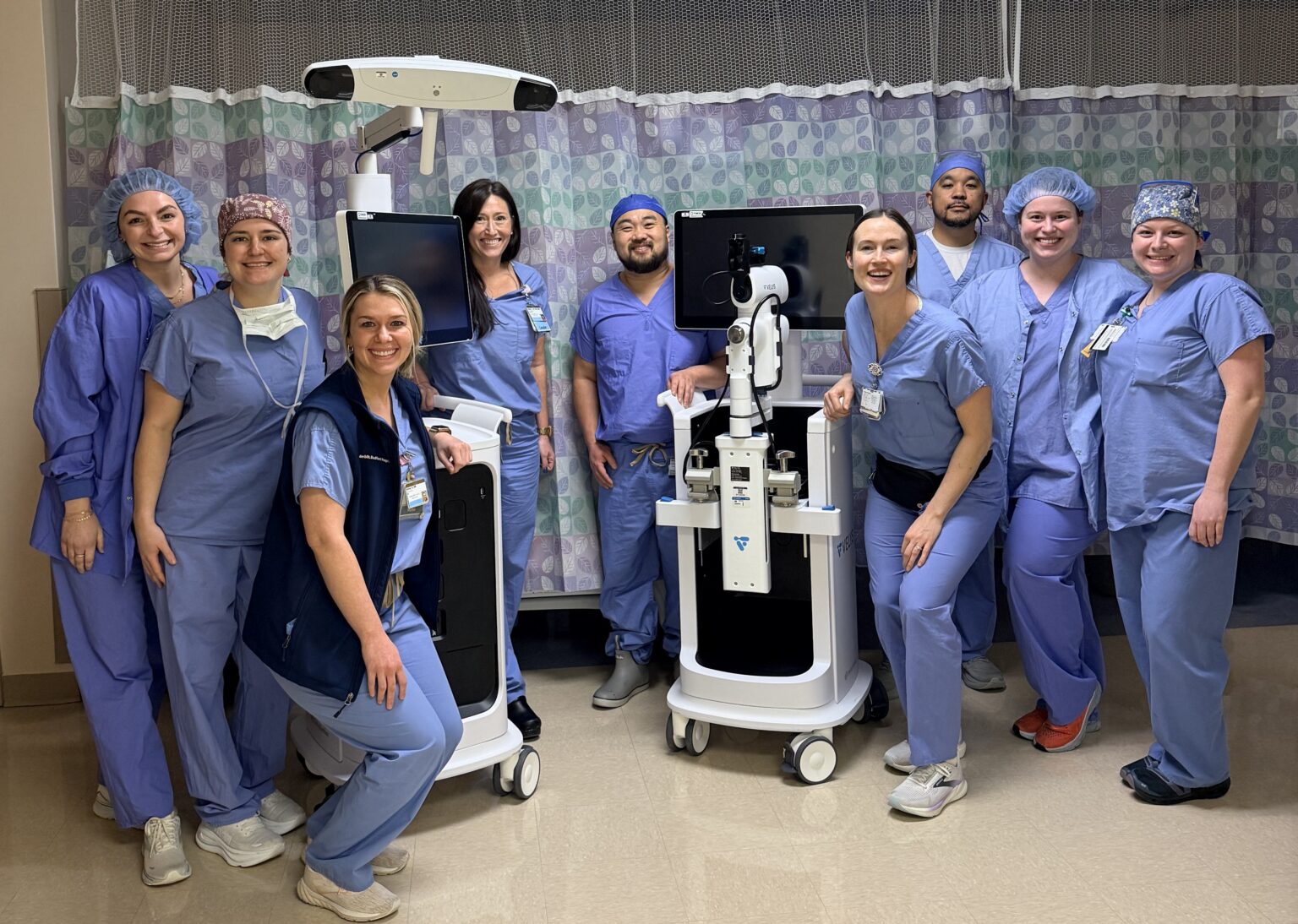
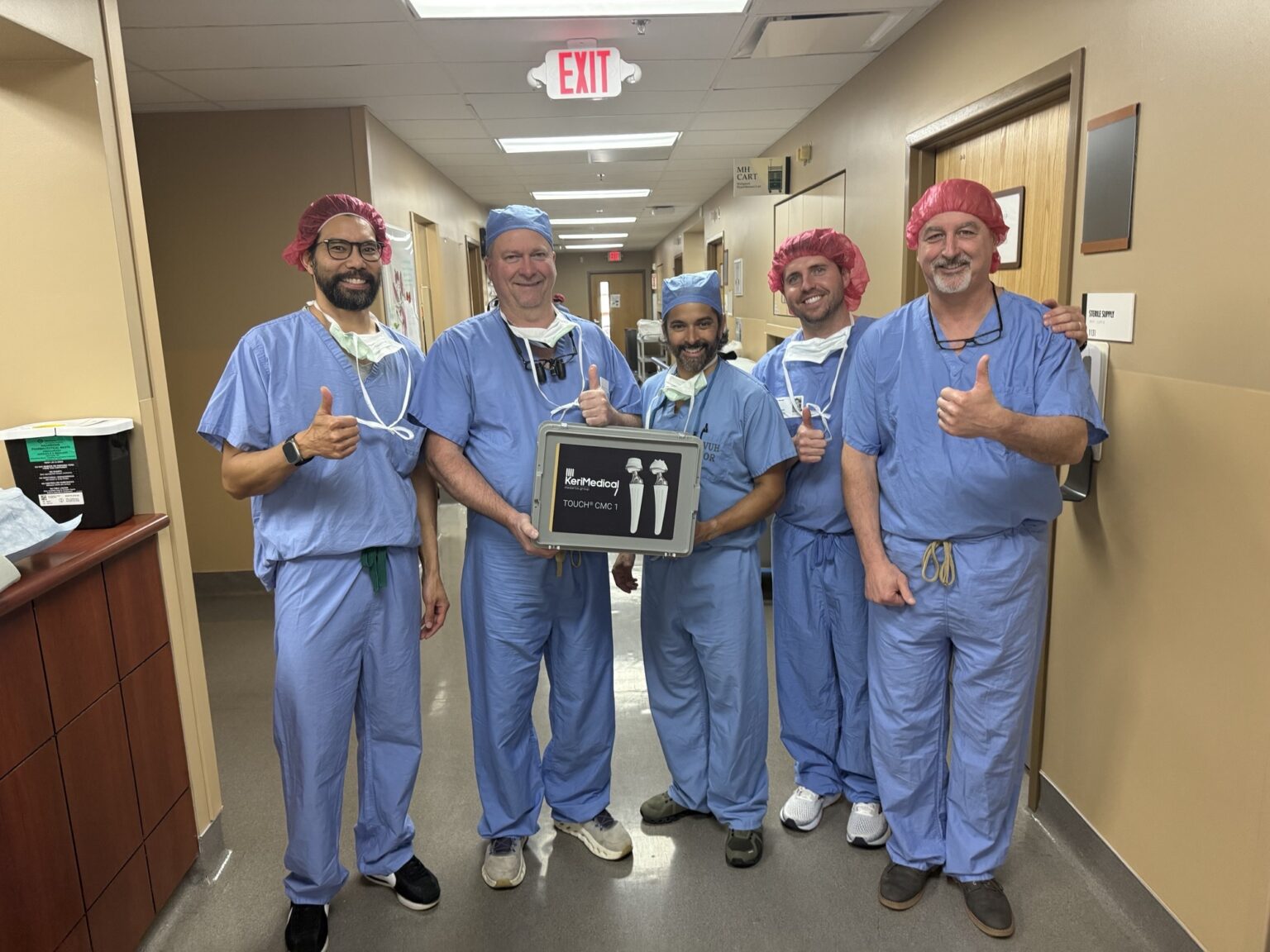
 Douglas Weikert, MD, left, and Mihir Desai, MD, right, both in blue surgical caps, performed the first thumb carpometacarpal implant arthroplasty with Touch prosthesis surgery in Tennessee at Vanderbilt Surgery Center in Franklin. (submitted photo)

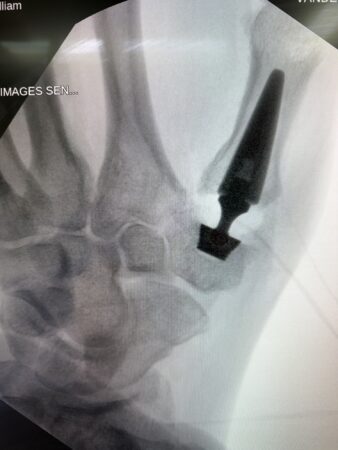
Two Vanderbilt Health orthopaedic surgeons, Mihir Desai, MD, and Douglas Weikert, MD, recently performed the first thumb carpometacarpal (CMC) implant arthroplasty with Touch prosthesis surgery in Tennessee at Vanderbilt Surgery Center in Franklin. The implant acts as a joint replacement for the CMC joint at the base of the thumb.
“Thumb CMC arthritis is one of the most common conditions we see in the clinic,” said Desai, Associate Professor of Orthopaedic Surgery and Medical Director of Vanderbilt Orthopaedics Franklin. “It is osteoarthritis of the carpometacarpal joint at the base of the thumb, where the cartilage wears down and the bones begin to rub, causing pain and loss of function.
“It is very common with aging, especially in people over 40, and occurs more often in women than men. Typical symptoms include pain with pinching or gripping, swelling, stiffness, weakness, and sometimes a bony prominence at the base of the thumb.”
Prevalence increases with age: Studies show that up to 25% of men and 49% of women over 75 have thumb CMC arthritis. Treatment options range from splinting, nonsteroidal anti-inflammatory drugs and activity modification to steroid injections. For more advanced disease, surgical procedures are recommended. Historically, the most common surgery involved removing one of the bones within the hand.
“The Touch prosthesis is a major step forward in the treatment of thumb carpometacarpal joint arthritis,” said Weikert, Associate Professor of Orthopaedic Surgery, Chief of the Division of Hand and Upper Extremity Surgery, and Medical Director of Vanderbilt Health Belle Meade. “It provides anatomic balance resulting in better stability and a quicker return of motion, pinch and grip strength. Returning to normal activities takes a fraction of the time compared to conventional methods, and pain management has been exceptional. We are excited to bring this technology to Vanderbilt Health.”
Made by KeriMedical and distributed by Medartis, the technology is on limited release in the United States. According to Desai, he and Weikert were the first two surgeons in the state to be trained on this procedure and implant the device.
“The implant is like a small total hip replacement within the thumb joint. It’s different than the conventional treatments because we do not have to remove a bone from the hand. We do not alter the patient’s anatomy or change their mechanics,” Desai said.
The replacement removes the arthritis and allows for pain-free mobility. The biggest improvement compared to conventional treatments is the speed of recovery. With conventional surgical treatments, patients would often take three to six months for a full recovery. The thumb CMC implant arthroplasty with Touch prosthesis often takes half of that time for recovery.
The outpatient surgery takes about an hour, using regional anesthetic and sedation for most patients and is performed at Vanderbilt Surgery Center in Franklin and at Vanderbilt Health Belle Meade.
“We are fortunate to have an exciting new treatment to offer to patients for what is a very common, but debilitating disease,” said Rick Wright, MD, MMHC, the Dan Spengler, MD Professor of Orthopaedics and Chair of the Department of Orthopaedic Surgery.