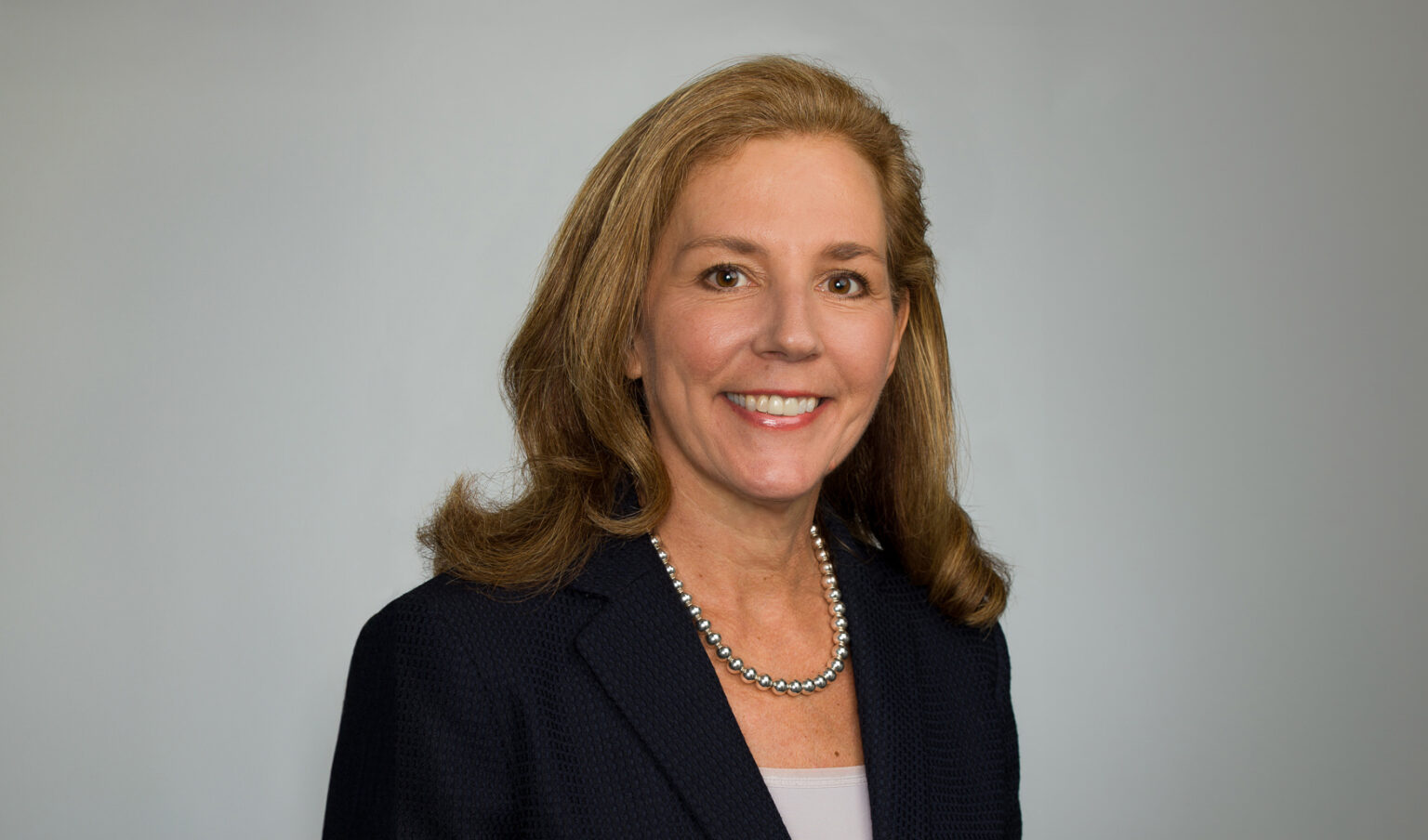
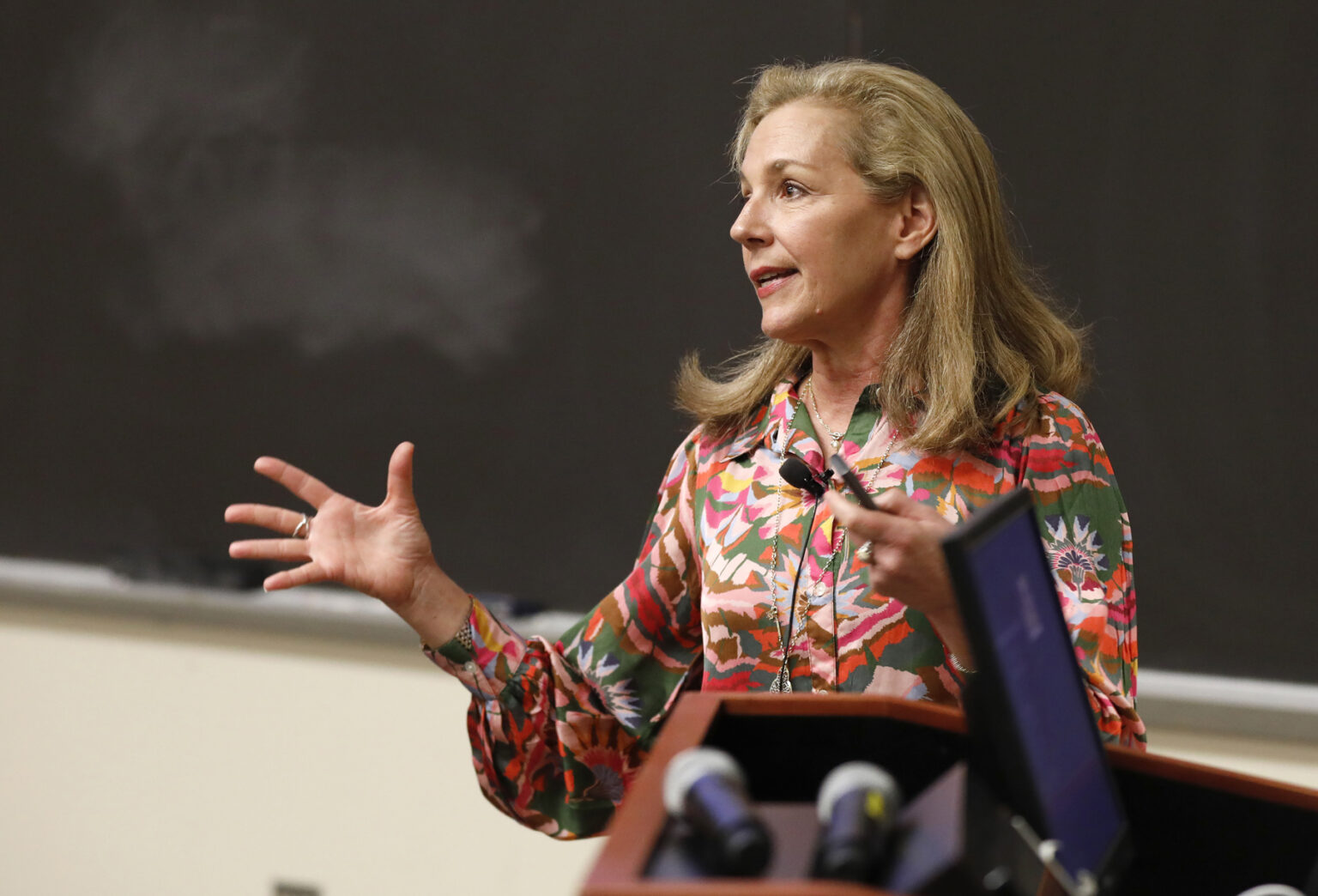
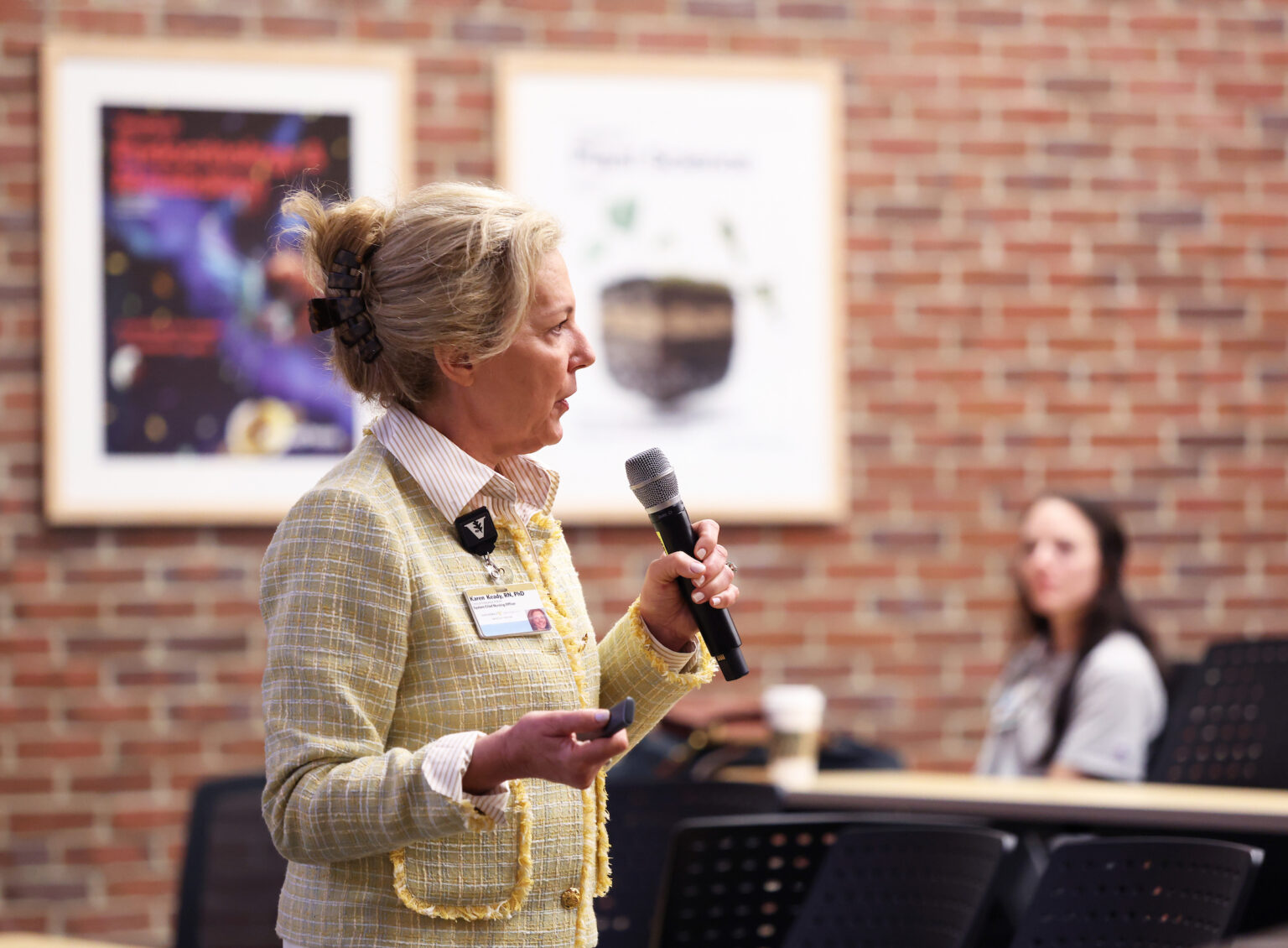
 Chief Nursing Officer Karen Keady, PhD, RN, NEA-BC, gives her State of Nursing Address on May 26, 2026. (photo by Donn Jones)

Karen Keady, PhD, RN, NEA-BC, presented her first State of Nursing address, Strong by Design, on May 26. She discussed the challenges facing the nursing workforce today and highlighted new systems and standards to advance professional excellence and personal health through emerging technology integration, employee-centered systems, strategic career development opportunities and systemwide operational alignment.
Many nursing practice models currently in place have become outdated as new technology and professional priorities reshape the modern nursing landscape.
“We have to make care safe and efficient while keeping workloads manageable and we’re using technology to help us do it,” Keady said.
She detailed recent technology initiatives in nursing, including the growth of the virtual nursing program that now cares for 796 beds in Vanderbilt Health’s hospital system; patient pump integration which directly inputs bedside patient data into electronic health records for precise, real-time monitoring and treatment; and DAX copilot with ambient listening, enabling nurses to more efficiently complete patient documentation.
Keady also discussed that, while the number of individuals pursuing nursing education is increasing, national feedback shows that only 47% of nurses are satisfied in their roles and 45% of bedside nurses are considering leaving the profession in the next three years.
“We looked at the major trends shaping the nursing workforce and asked, ‘How can we create an environment that not only addresses their concerns but bolsters their career fulfillment?’” said Keady.
She highlighted several systemic and financial programs designed to improve departmental collaboration between frontline staff and operational teams, and better support workforce well-being and professional growth.
Among those is the internally developed WellNurse dashboard, with which nursing data is compiled reflecting individual and unit health. The tool helps identify and address potential workplace burnout and system inefficiencies for leaders while providing guided, actionable steps to improve workplace wellness and support.
Addressing career fulfillment and innovation in practice, Keady reviewed the success of The Staffing Collaborative, a program launched in response to national and internal findings that indicate greater schedule flexibility and opportunities to explore different specialties is crucial to nursing retention. The program also addressed specific short-term staffing needs throughout the health system.
Beyond these programs, dedicated workforce development and retention includes the Vanderbilt nurse residency program, the Vanderbilt Professional Advancement and Recognition of Excellence program, tuition assistance for advanced degrees and community engagement focused on developing a nursing pipeline.
Future priorities to further advance the excellence and impact of the more than 10,000 nurses working at Vanderbilt Health include expanding tuition assistance for doctoral degrees and reenvisioning professional governance to safeguard nurses’ decision rights over their practice while sustaining strong professional advocacy, and shared ownership.
“Nurses own so many of the responsibilities that define consistent operational excellence, and we continue driving that excellence through intentional technological support, thoughtful purpose-driven work, and professional advancement opportunities,” Keady said.