


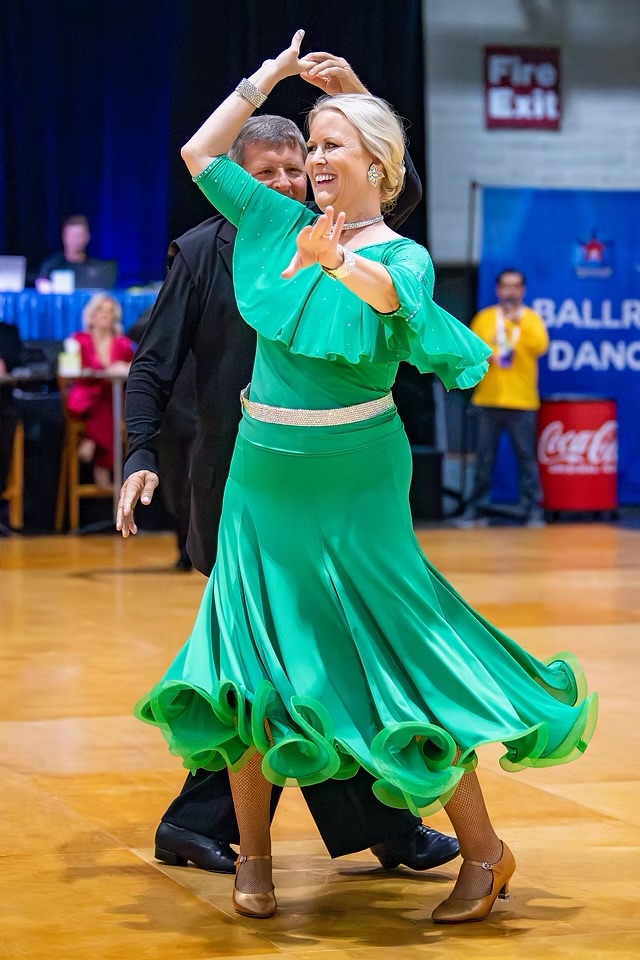
 Angela Culp and her friend Dan Butler, who is her dance partner at The Transplant Games of America 2024 in Birmingham, Alabama. The duo won a Gold medal in the event of ballroom dancing in her skill level and age division. Culp will be a contestant at the 2026 games in Denver in June. (submitted photo)

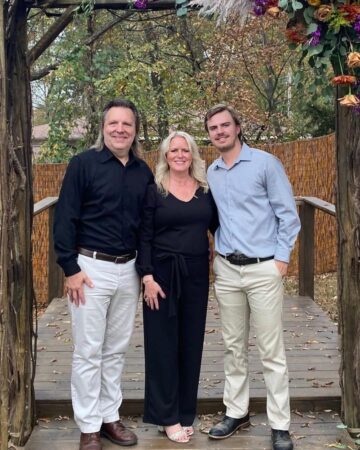
Angela Culp, RN, wears many hats: She is a mother, competitive dance champion, kidney transplant recipient and Vanderbilt Health nurse.
Culp has worked at the Vanderbilt Heart and Vascular Institute for more than 21 years, caring for patients with heart, liver and kidney failure who are undergoing cardiac testing as part of an evaluation to be listed for organ transplant. In her role, she supports complex transplant evaluations, guiding patients through testing, educating them on expectations, and serving as a constant clinical presence.
Her personal experience as both provider and patient gives her a unique understanding of the impact nurses can make in a patient’s life — bridging her clinical expertise with lived understanding of illness, uncertainty and hope.
Fourth generation with the disease, the first to survive
At age 30, she was diagnosed with autosomal dominant polycystic kidney disease (ADPKD), a genetically inherited condition. She is the fourth generation in her family to face it, but with the support and medical care at Vanderbilt Health, she is the first to survive it.
“Until I went through this journey myself, I never fully understood what our patients go through, and now it gives me an entirely different perspective in caring for them,” Culp said.
She was committed to her health and managing her diagnosis, but at 43, about 11 years into her nursing career at Vanderbilt Health, Culp faced end-stage renal failure and needed a kidney transplant. She was placed on the transplant list, eventually relying on dialysis treatment five nights a week, eight to 10 hours each time. After four years of waiting, she received her transplant at Vanderbilt Health.
Being part of a transplant evaluation, this time as a patient, Culp experienced firsthand the clinical expertise and encouragement of the colleagues she worked alongside.
After beginning dialysis, Culp wasn’t sure if she would be able to continue her nursing career. She credits her nursing unit and leadership team for being a core support in enabling her to continue working part time while prioritizing her health and family.
“My unit feels like family, we’ve worked together for so long, watched each other’s families grow up, and shared so many life experiences. They rallied behind me every step,” Culp said.
Honoring the gift
After her transplant and recovery, she returned to her role and team ready to celebrate her return.
“Having the flexibility to focus on my health, with the security that I would be welcomed back made such an impact while navigating recovery,”
Today, Culp tries to make the most of her transplant.
“Donors are heroes. You feel what a gift you’ve been given, and I aim to live every day honoring that gift.”
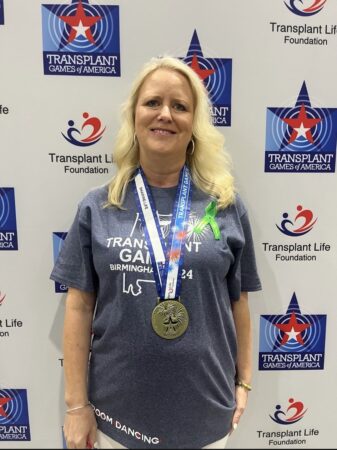
To stay healthy after transplant, she joined a dance class and discovered a new joy and expression in it. Dancing led her to enter competitive ballroom competitions through the Transplant Games of America. The games raise awareness for and celebrate the organ donation community.
“I compete for the memory of family I’ve lost to ADPKD, my donor and my entire support system,” said Culp.
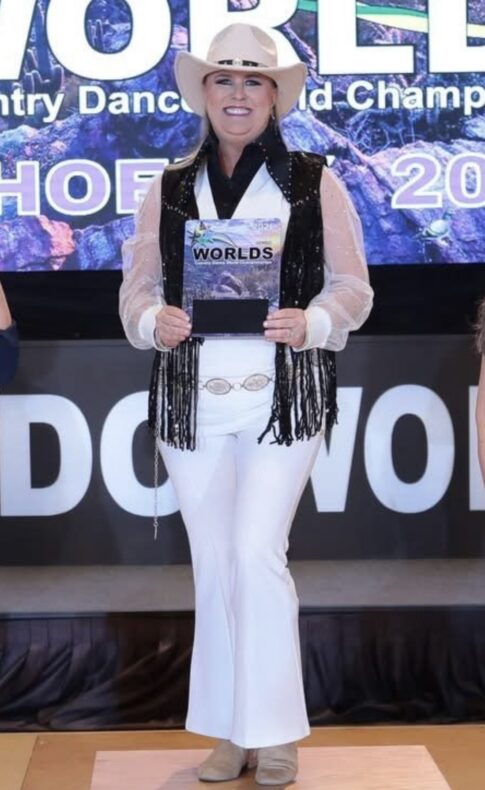
In January this year, she competed and won a world championship in country western line dancing in her division.
She’s returned multiple times to the recovery unit she stayed in after receiving her transplant, to translate complex experiences into reassurance, insight and practical guidance only someone with clinical and lived experience can provide.
Eight years after receiving her donated kidney, Culp continues working and encouraging patients as a nurse at the Vanderbilt Heart and Vascular Institute. She’s become an ambassador for Donate Life Tennessee and plans to keep dancing in celebration of her donor and other organ donors at the upcoming 2026 Transplant Games.