 (Adobe Stock)

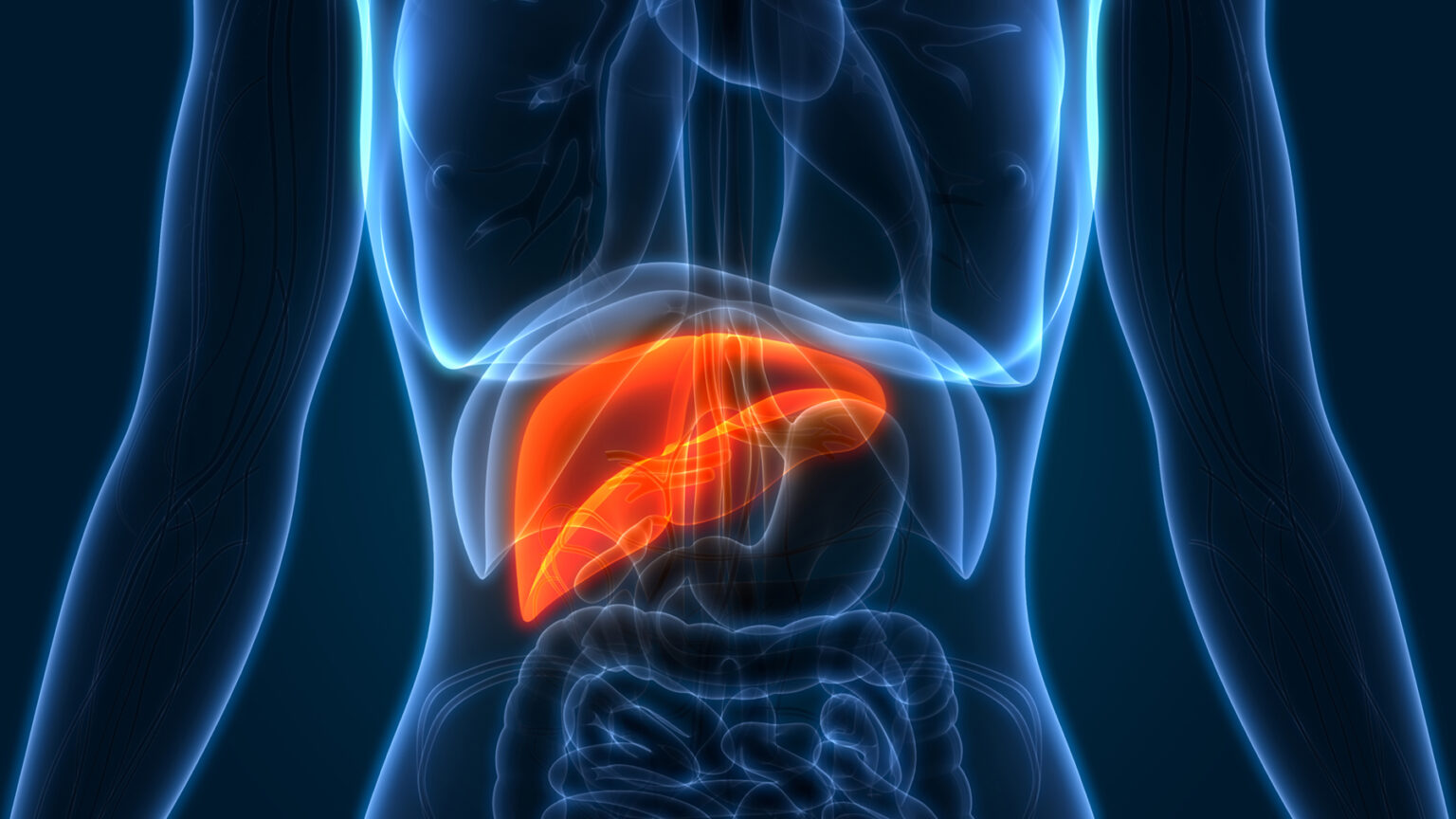
About one-third of the global adult population has excess fat buildup in the liver linked to metabolic factors like obesity and type 2 diabetes. Metabolic dysfunction-associated steatotic liver disease (MASLD), formerly known as nonalcoholic fatty liver disease, can progress to inflammation, cell damage and fibrosis (scarring).
Noninvasive imaging tests can be used to assess liver stiffness without the need for an invasive liver biopsy. These tests — shear wave elastography (SWE) and magnetic resonance elastography (MRE) — provide quantitative measures of liver stiffness that are used to indicate or exclude liver fibrosis. But the liver stiffness measurements are typically stored as free text within radiology reports in the electronic health record (EHR) and are not readily available for systematic identification of patients.

Ashley Spann, MD, MSACI, Assistant Professor of Medicine in the Division of Gastroenterology, Hepatology and Nutrition, and Vanderbilt Health colleagues have developed and validated a natural language processing (NLP) pipeline to extract fibrosis values from SWE and MRE reports, as well as steatosis values (proton density fat fraction) from MRE reports, in real time.
The researchers assessed the performance of the NLP pipeline by comparing extracted liver stiffness and steatosis data to manual reviews of the original SWE/MRE reports.
Of 415 liver elastography studies (186 MRE and 229 SWE) conducted at Vanderbilt Health for the study period (Feb. 11-April 11, 2025), the NLP pipeline had 100% sensitivity for extracting stiffness values and 98% sensitivity for steatosis values.
The findings, reported in the journal Hepatology Communications, show that real-time NLP can be incorporated into EHR to efficiently identify MASLD patients and streamline assessment for treatments such as resmetirom and GLP-1 receptor agonists.
The NLP pipeline can be used “to trigger EHR-embedded clinical decision support systems to prevent gaps in care and improve guideline adherence to new treatment options,” the authors noted.
Spann, the corresponding author, was joined on the study by Lale Ertuglu, MD, Christina Grimes, Dameia Brewster, MS, Cathy Jenkins, MS, Qingxia Chen, PhD, and Dario Giuse, PhD, MS. The research was supported in part by an American Association for the Study of Liver Diseases-Harold Amos Medical Faculty Development Program Hepatology Award and by the National Institutes of Health (award UL1TR002243).