



Vanderbilt Health leaders André L. Churchwell, MD, Professor of Medicine in the Division of Cardiovascular Medicine, and Reed A. Omary, MD, MS, Professor of Radiology and Biomedical Engineering, are helping advance a national effort to move care upstream: from treating disease after it emerges to preventing, interrupting and ultimately eliminating targeted diseases.
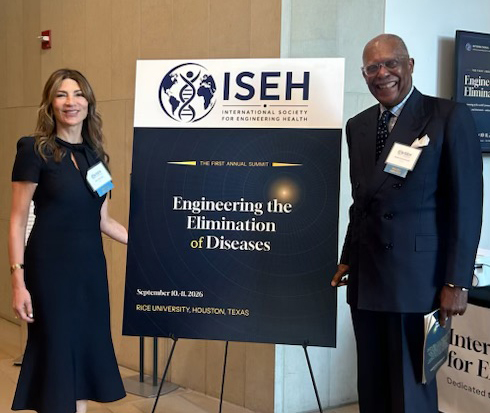
At the inaugural International Society for Engineering Health (ISEH) Summit on Engineering the Elimination of Diseases, Churchwell and Omary brought Vanderbilt’s distinctive clinical, academic, and health-system perspective to a central question: How can promising technologies be translated into better outcomes for patients and communities?
Churchwell, holder of the Levi Watkins Jr., MD, Chair, serves on the ISEH Board. Omary serves as Vice President of ISEH.
ISEH integrates engineering and medicine to preserve health and eliminate diseases. The Society brings together scientists, clinicians, engineers, patients, industry, government, philanthropy and advocates to pursue high-impact disease elimination through sustained, coordinated innovation. Its defining aim is a moonshot for human health: not merely incremental treatments, but strategies designed to eliminate targeted diseases.
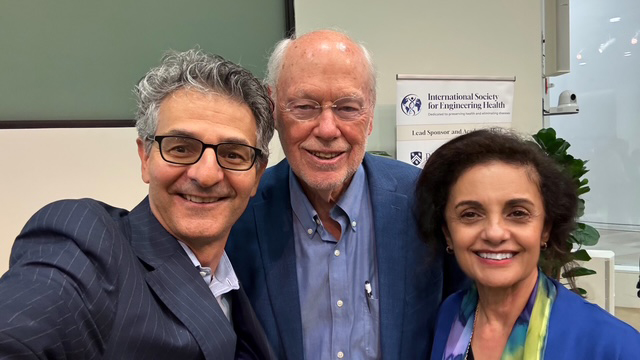
Participants representing five continents joined Nobel laureate Phillip A. Sharp, PhD, and former NIH Director Francis S. Collins, MD, PhD for the welcome and opening remarks. Collins joined virtually for the Summit’s opening session and was the keynote for the Monogenic Disease session.
Linking Innovation to Patient Care
Omary moderated the Summit’s opening panel, “Stakeholder Perspectives — The Ecosystem of Change” that underscored a core health-system imperative: Technology creates value only when it is developed with the clinical workflows, care teams and patient experience required to make a measurable difference. That practical orientation is central to Vanderbilt Health’s contribution to the work ahead.
Advancing Technologies with Clinical Purpose
Churchwell co-moderated the “Emerging Disruptive Technologies” session with Harvey Borovetz, PhD, Distinguished Professor of Bioengineering at the University of Pittsburgh; five global leaders examined platforms with the potential to change how diseases are detected, understood and treated.
The Summit identified six initial disease targets for sustained action:
- stroke
- pancreatic cancer
- schizophrenia
- monogenic diseases
- Alzheimer’s disease
- sepsis.
ISEH will convene a working group for each target, bringing engineers and clinicians together with researchers, early-career scholars, industry, government and funding representatives and patient advocates.
From Summit Dialogue to Coordinated Action
Each group will develop an elimination roadmap identifying scientific and technology gaps, milestones, funding strategies, clinical validation needs, and barriers to health-system adoption. The model connects research ambition with the systems required to deliver progress at scale.
The Work Ahead
In the months ahead, ISEH will convene the working groups and engage partners across research, translation, regulation, reimbursement and global access. Churchwell and Omary’s leadership positions at Vanderbilt Health to contribute clinical insight, cross-disciplinary collaboration and a practical understanding of how innovations reach patients.


