 Clark Akers competes in the men's golf final for the Southern Conference in April 2026, in West Columbia, South Carolina, where Furman University placed second. (submitted photo)

You wouldn’t know that Nashvillian Clark Akers, 24, had major brain surgery by looking at him. His hair has grown back over most of the scar on the back of his head, and, unless he wears a ballcap for too long, he doesn’t think about the spot that can sometimes feel numb.
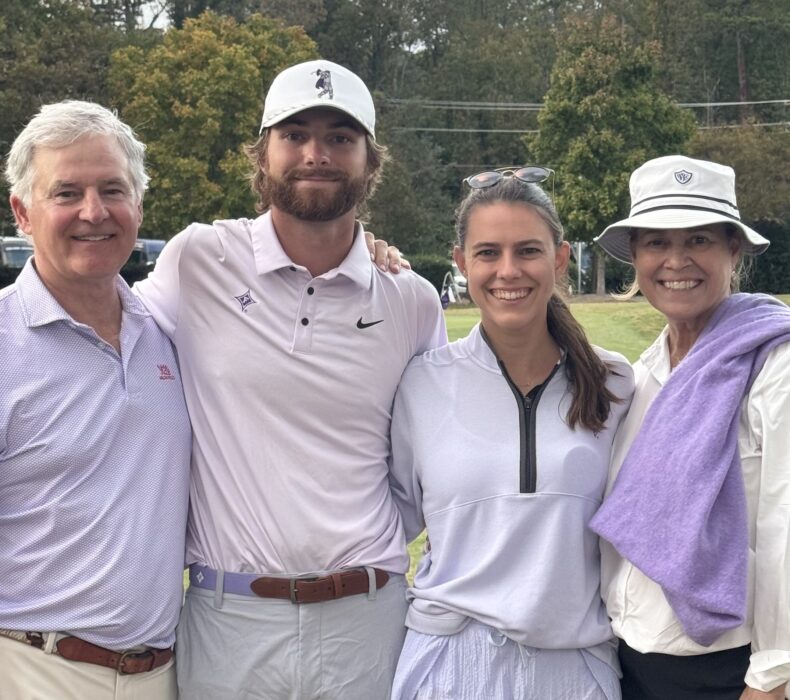
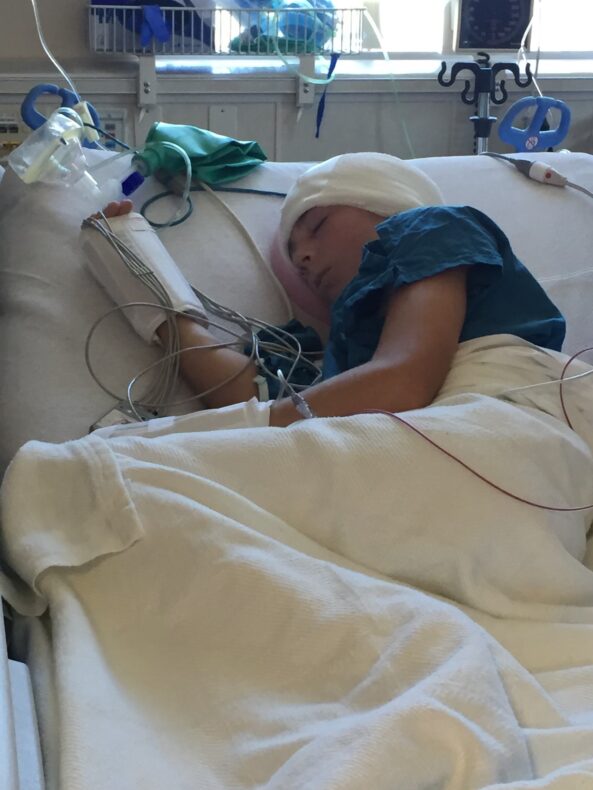
As a golfer, Akers wears a hat most every day, so sometimes he is reminded of the Chiari decompression surgery he underwent at age 12 at Monroe Carell Jr. Children’s Hospital at Vanderbilt. A recent graduate of Furman University, where he played on the men’s golf team, Akers accomplished what every pediatric neurosurgeon hopes for their patients: He returned to doing the things he loves after treatment.
As a middle schooler, Akers presented with Chiari I malformation and a syrinx (a fluid-filled cavity) in his upper cervical spine. Chiari I malformation is diagnosed when imaging shows that the lowest part of the cerebellum crowds down into the spinal canal, blocking a patient’s normal pathways for cerebrospinal fluid (CSF) flow.
“Spinal fluid flow is in the measurement of millimeters and milliliters,” said John (Jay) Wellons, MD, MSPH, Professor and Chief of the Division of Pediatric Neurological Surgery. “CSF is produced inside the ventricles of the brain, flows down through very tiny channels, makes its way outside the brain, down around the spinal cord and then comes back up and gets absorbed. It’s always being produced and it’s always being absorbed.”
Wellons, the Cal Turner Professor of Pediatric Neurosurgery, said that blockages such as a Chiari I malformation can cause the fluid to divert, partially, into the middle of the spinal cord, causing symptoms ranging from pain and numbness to difficulties with motor function to scoliosis.
Although little seemed wrong, Akers needed a straightforward operation from a surgeon he could trust
Akers was getting unrelated MRIs done on his pituitary gland for an endocrinologist, who spotted something amiss in the imaging and directed him to get checked out by a neurosurgeon before continuing treatment.
“I was very lucky to get the surgery in the first place,” Akers said. “If I hadn’t been already getting an MRI for my pituitary gland, the symptoms I was having, including headaches and occasional vomiting, wouldn’t have been far enough out of the ordinary for my parents to research it in a timely manner.”
Upon learning he needed surgery, it was clear to Akers that a doctor close to home — and, importantly, one who connected with him — would be the best choice.
“Clark was a terrific patient from the outset,” Wellons said, stressing that communicating with the patient, no matter their age, is crucial. “They’re the ones with the symptoms and the issues. They want to be part of the conversation.”
Wellons’ communication style had the desired effect.
“Dr. Wellons did the best job helping me understand it as a 12-year-old,” Akers said. “He wasn’t really talking to my parents; he was talking to me. That helped me decide on him as my surgeon.”
Successful surgery changes patients’ lives
The purpose of Chiari decompression surgery is to create space where not enough space exists. As Wellons said, it often comes down to a matter of millimeters, but that tiny amount of space can make all the difference for a patient’s health and quality of life.
“Looking back on it, fortunately it was a pretty easy experience for me,” Akers said. After plenty of sleep and a brief hospital stay, he went home with his family. Things started getting better right away.
Brain fog cleared up, and school became easier after surgery, and his physical limitations didn’t last long in the grand scheme of things. At the time, he competed in diving as well as golf, and while the nature of the sport — which involves compressing the top of the head to hit the water — initially gave Wellons pause, he determined Akers had gotten enough relief from his decompression surgery to resume diving.
Wellons emphasized that getting treatment for Chiari does not preclude a patient from getting back to the activity of their choice, no matter how athletically intense it may be.
“I want kids to go back to whatever sports they want to do,” Wellons said. “I’ve operated on softball pitchers for symptomatic Chiari who would get headaches when they’d bear down to pitch … then months later I’d get a newspaper clipping of them pitching in the state championship and winning most valuable player. That is a wonderful feeling.”
Along with getting back to diving and finding his athletic passion for golf, Akers majored in psychology while attending Furman. Perhaps he would’ve found his way to studying the brain without a Chiari diagnosis, but with the cards he was dealt, Akers made the most of having a reason to understand the brain.
“Hearing Dr. Wellons explain the surgery to me in such detail was actually the source of my fascination with how the brain works,” Akers said. “From then on, I was pretty focused on my love of neuroscience.”
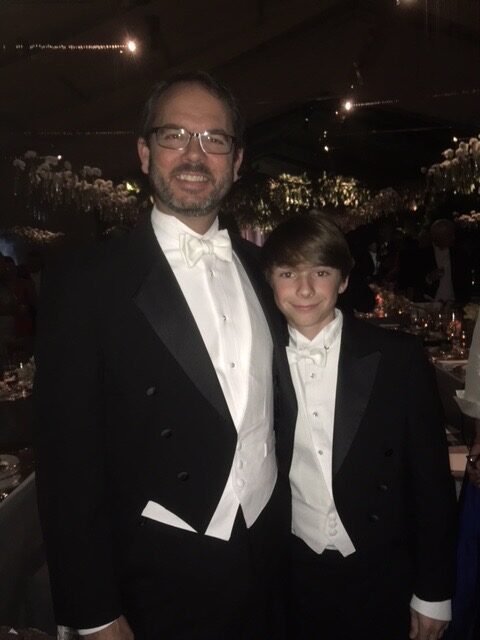
The two families have also become close. Akers recalled trips taken together, sharing the experience of Boy Scouts with Wellons’ son, Jack, and the overall experience of a doctor-patient relationship blossoming into a larger family friendship.
“Monroe Carell did an unbelievable job with me,” Akers said. “Just seeing the care they take of their patients, and the job Dr. Wellons does to make the patient comfortable — I want to do anything I can to give back to them and tell my story.”