Elizabeth B. Lamb Center for Pediatric Research Archive — Page 1 of 1

Computer-generated molecular rendering of a spherical viral particle, with purple and green surface components surrounding yellow and red internal structures.
September 22, 2015

Keep your coat on, virus!

A compound acting on serotonin receptors delays a critical step during reovirus cell entry, reducing viral infectivity.

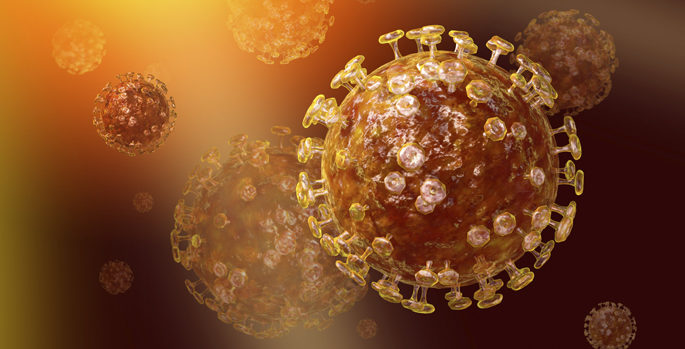
Illustration of several spherical virus particles with brown textured surfaces and numerous translucent yellow spike-like projections, shown against a dark reddish-brown background.
February 24, 2015

Contributors to coronavirus ‘fitness’

Understanding the role that host membrane modification plays in coronavirus replication is essential for developing novel approaches to block the viruses that cause SARS and MERS.

Fluorescence microscopy image showing a network of neurons with branching red and green processes against a black background.
July 18, 2014

Neural receptor for reovirus

A newly identified receptor allows mammalian reovirus to infect neurons, shedding light on factors important for viral encephalitis.

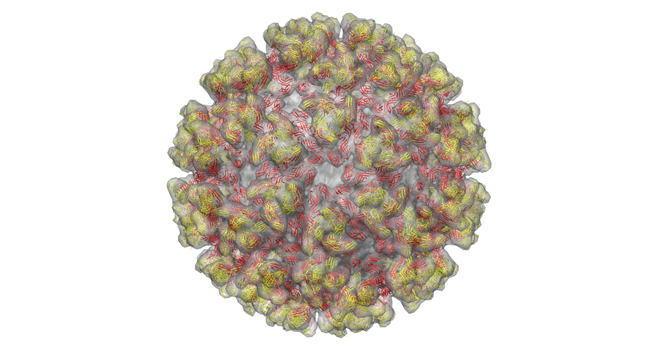
Atomic model of a chikungunya virus particle, shown as a spherical molecular surface with densely packed red, yellow, and gray structures.
April 28, 2014

Target cell entry to halt Chikungunya virus

Understanding how chikungunya virus binds to and enters cells offers a new target for antiviral medications.

September 12, 2013

‘Proofreader’ key to coronavirus growth

A coronavirus protein is required for replication of the viral genome and may be a good treatment target for SARS and other diseases caused by coronaviruses.

Baby bottle filled with milk lying beside a colorful pacifier on a white background.
December 7, 2012

Breast milk blocks virus binding

Components of human breast milk help ward off viral infection, a new study shows.