


Department of Pediatrics Archive — Page 54 of 57




-
July 25, 2013
Event to highlight breast-feeding’s benefits
Adjoa Taylor is no stranger to breast-feeding. The mother of five is well versed in the advantages of nursing for her children. But what she discovered were the benefits for herself. -
July 11, 2013
Training program meets ‘critical need’ for earlier autism identification
A three-year study that evaluated the effectiveness of a training program designed to enhance autism spectrum disorder identification and assessment within community pediatric settings was released this week in the journal Autism. -
July 1, 2013
Monroe Carell Jr. Children’s Hospital at Vanderbilt offers tips on tick and mosquito bite prevention
Monroe Carell Jr. Children's Hospital at Vanderbilt pediatricians want children and parents to be aware of the dangers of tick-borne illnesses and other insect-related infections. -
June 13, 2013
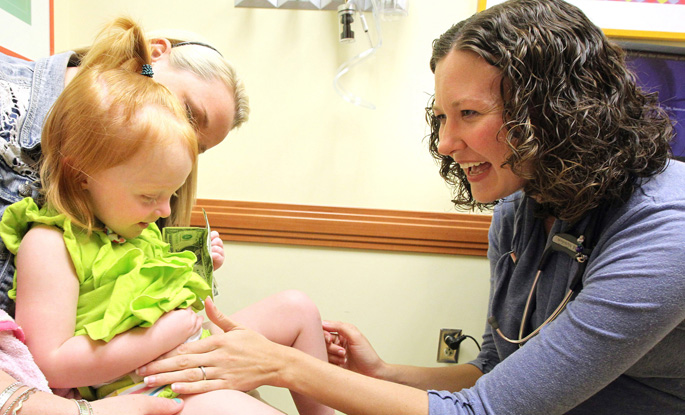
New protocol takes the sting out of Children’s Hospital outpatient procedures
A patient comfort protocol is rendering minor procedures less painful and upsetting for younger outpatients of the Monroe Carell Jr. Children’s Hospital at Vanderbilt. -
June 12, 2013
Antacids: risky for premature babies
Antacids that block a certain enzyme pose a risk for a common cardiac problem in premature infants. -
May 30, 2013
Patel lands health care informatics award
Neal Patel, M.D., MPH, professor of Clinical Pediatrics and chief medical information officer for inpatient services at Vanderbilt University Medical Center, is the first-place recipient of the 2013 Healthcare Informatics/AMDIS IT Innovation Advocate Award, recognizing leaders who have helped move the health care industry forward through their innovations. -
May 23, 2013
Blood test for autism could speed diagnosis
Vanderbilt University is part of a multi-site autism clinical study designed to evaluate the effectiveness of a blood test that aims to screen children for referral for autism spectrum disorder evaluation (ASD) earlier and more accurately.