


U.S. military Archive — Page 1 of 3

-
November 8, 2024
VUMC plays active role in training today’s military medical personnel
Vanderbilt University Medical Center is extensively involved in partnerships with the military that both assist individuals as they transition out of service to be civilian veterans and help active-duty military medical personnel maintain their critical skills needed during deployment. -
November 5, 2024
VUMC has long record of supporting military on Veterans Day — and every day
“Vanderbilt is an extremely welcoming environment for military personnel, and you see that all over campus.” -
May 8, 2024
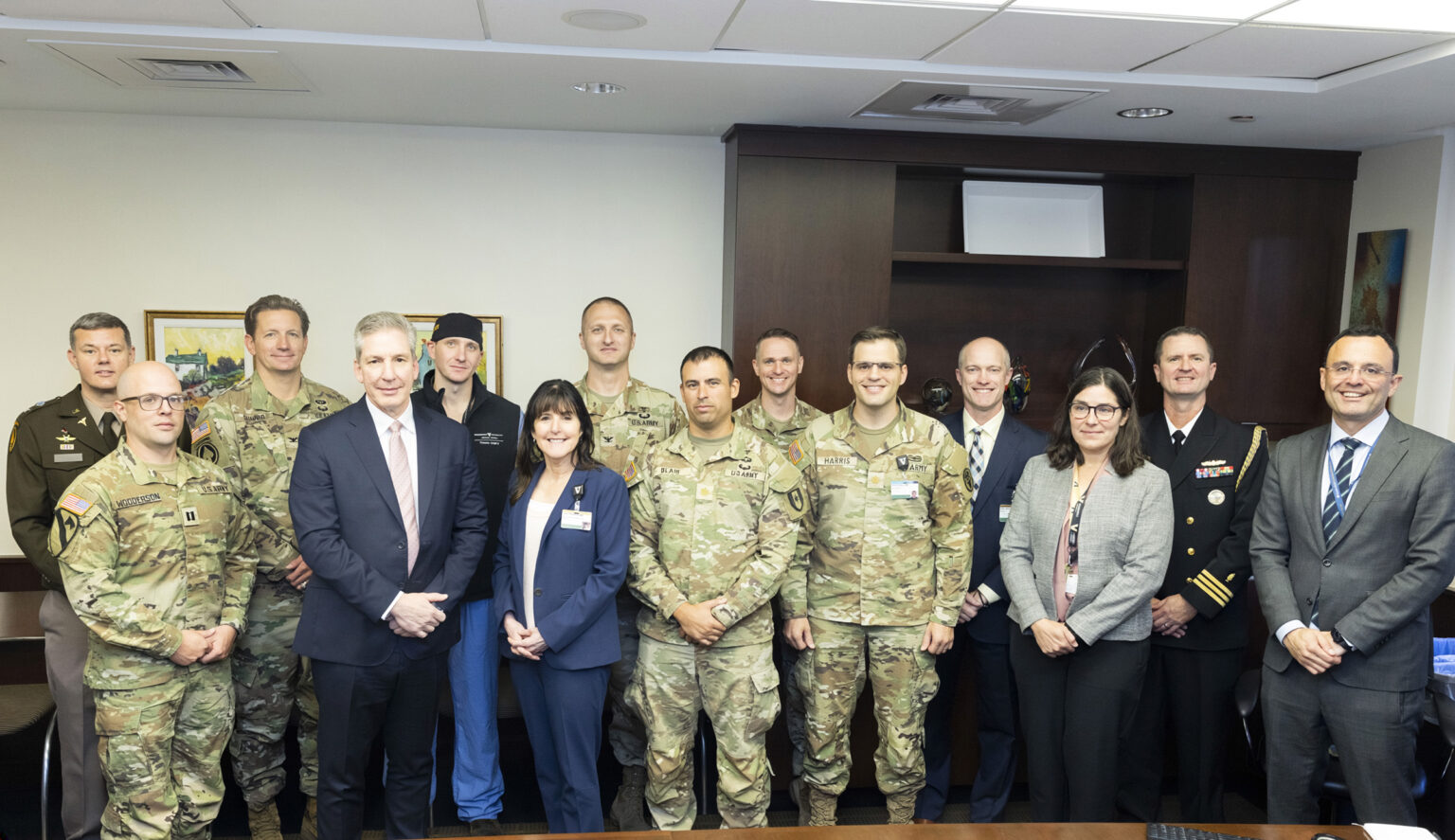
Top military medical leader supports additional expansion of partnerships with Medical Center
VUMC is an official site of programs that deliver medical training opportunities to military medical personnel serving on Army Trauma Teams and that bring combat medics, licensed practical nurses and operating room technologists to VUMC for rotations to complete much of their annual medical skills competency requirements. -
May 7, 2024
Study seeks to evaluate military exposures on veterans’ lung cancer risk
A prospective cohort of veterans including those with military toxic exposures, such as burn pits, will be screened annually with low-dose chest CT to detect lung cancer and other disease early. -
April 3, 2024
Latest SMART rotation of military personnel taking place
The latest Strategic Medical Asset Readiness Training (SMART) rotation began early this week for 11 members of the United States military, where they will work in clinical areas of the adult hospital. -
January 25, 2024
New SMART rotation of military personnel begins in February
The next Strategic Medical Asset Readiness Training (SMART) rotation of members ofthe United States military, is coming to Vanderbilt University Medical Center to work in clinical areas of the adult hospital Feb. 6-20. -
November 17, 2023
Study validates use of VUMC suicide risk model in Navy primary care
A Vanderbilt study found that automated suicide risk prediction models operating on electronic health records could help clinical teams efficiently identify patients for face-to-face suicide risk screening and prevention.