


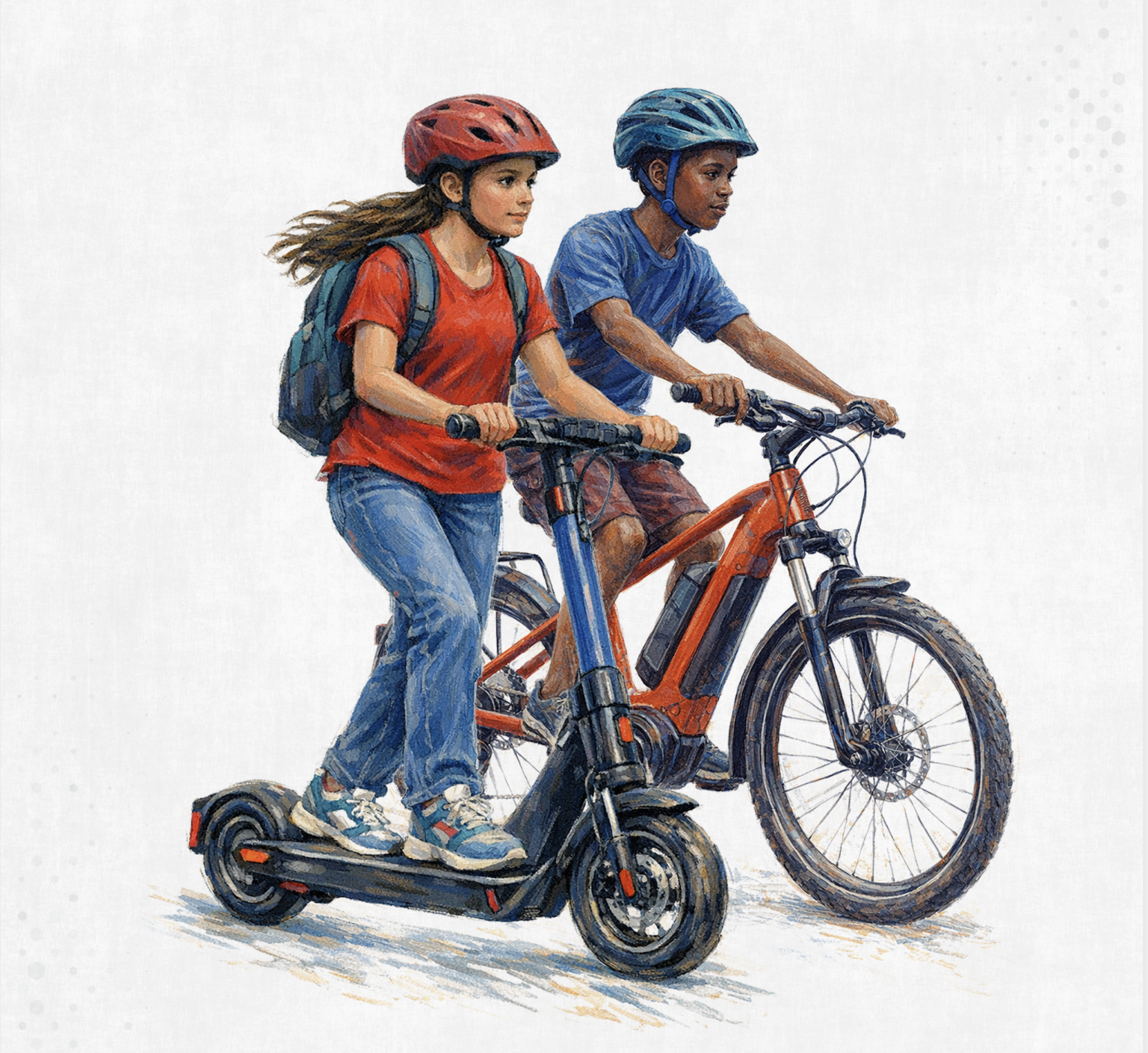
 Screenshot of the E-Ride Ready Safety Guide. Download a copy below.

Nearly every three days, a child is treated at Monroe Carell Jr. Children’s Hospital at Vanderbilt for injuries related to an e-bike.
It’s a number that physicians fear will continue to rise.
“These are not minor scrapes,” said Jeffrey Upperman, MD, Surgeon-in-Chief at Monroe Carell. “These are fractures, concussions, head injuries, deep lacerations and, in some cases, serious internal organ damage.
“In the last 90 days, we have seen nearly 30 children who were injured by e-bikes,” said Upperman, Professor and Chair of the Department of Pediatric Surgery at Monroe Carell. “The average age has been 12 years old. Quite frankly it’s upsetting because these are preventable injuries.”
Upperman and colleagues are hoping that a new campaign launched today at the hospital in conjunction with AAA-The Auto Club Group and Bike Walk Franklin will help keep more children safe.
Called E-Ride Ready, the campaign was introduced after nationwide concern began to grow about injuries among young riders. A U.S. Consumer Product Safety Commission review found micromobility-related injuries (harm incidents associated with lightweight, low-speed, personal transport devices) rose an average of 23% from 2017 to 2022.
As the popularity of micromobility devices surges, E-Ride Ready aims to help parents better understand the risks associated with e-bikes and e-scooters.
“Electric bikes and scooters are becoming more common in neighborhoods across Tennessee,” said Megan Cooper, public affairs and government relations consultant for AAA. “And unfortunately, they’re also showing up more often in crash reports.
“E-bikes are not toys. They move fast. They carry real risk. One bad decision can change a child’s life in seconds,” stressed Cooper. “These devices can accelerate quickly and travel faster than traditional bikes, which means that the crashes that we see can be more severe. These injuries happen when speed outpaces skill.”
The E-Ride Ready campaign includes a free guide that highlights:
- An overview of e-bike and e-scooter types and performance differences
- Helmet guidance and safety checklists
- Tips for riding around traffic and pedestrians
- Safety conversation starters for parents and young riders
- Safety tips for drivers and e-riders
“Our trauma registry shows that only 58% of children that were involved in e-bike accidents were wearing helmets,” said Meredith Montgomery, MD, a clinical fellow in Pediatric Emergency Medicine at Monroe Carell. “That number is far too low. A properly fitted helmet can significantly decrease the risk of serious brain injury and can save a life.
“We recommend that every child wear a helmet every time, no matter how short the trip.”
Ned Dannenberg, Committee President, Bike Walk Franklin, said the volume of injuries has been a concern statewide.
His organization has heard from a variety of groups about the increasing number of young e-bike and e-scooter riders, as well as the high speeds and unsafe riding practices onlookers have observed.
“This campaign definitely addresses the added dangers of these devices,” said Dannenberg. “We encourage parents to have a conversation with their children. Riders need to be aware that they are a vehicle on the road. They need to pay attention to the lights. They need to yield to other vehicles when coming to an intersection.”
Download the AAA-E-Ride Safety Guide to learn more about matching the right device with a child/teen, safety features, selecting the best helmet and gear, as well as understanding the laws regarding micromobility devices and where they can be ridden.


