


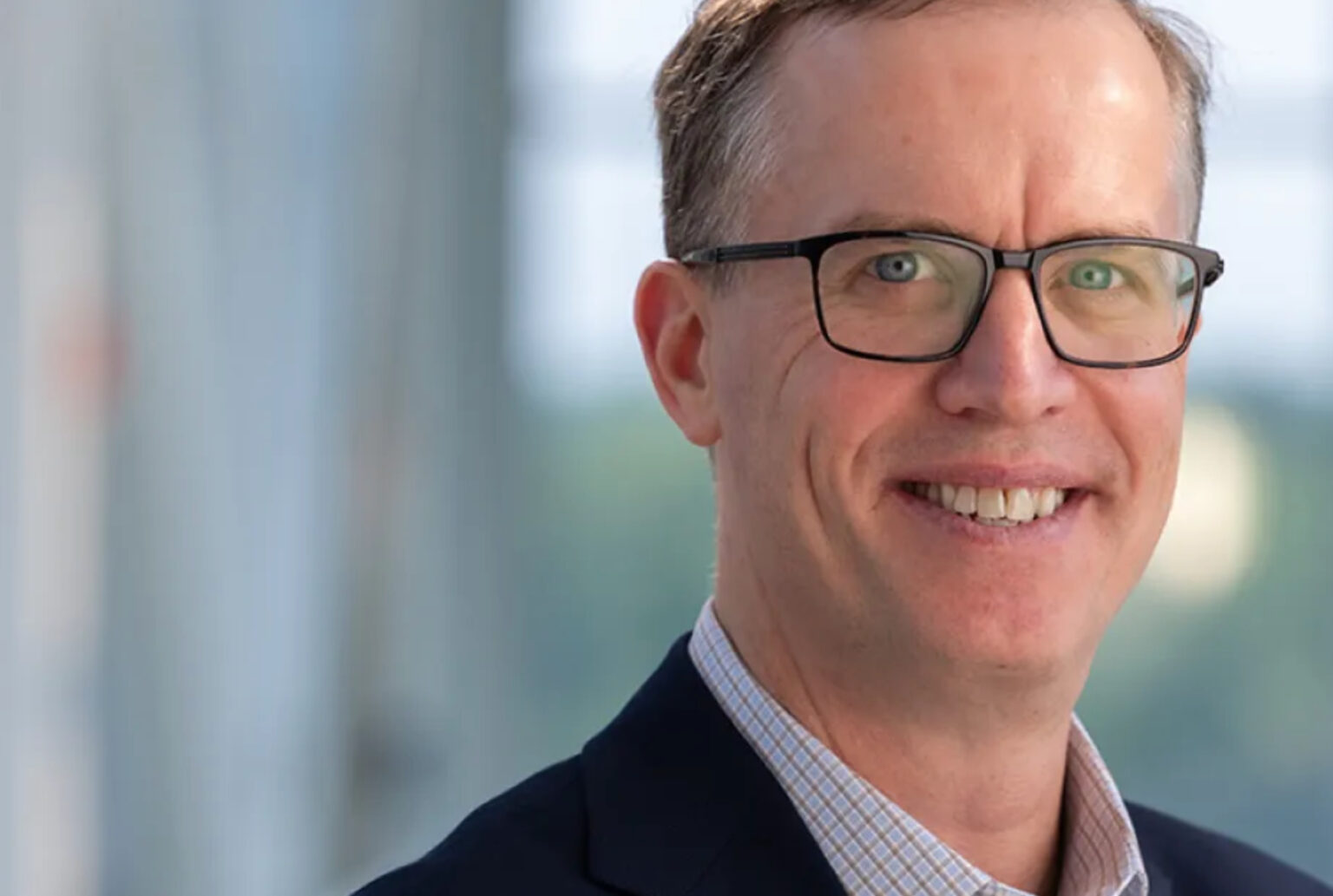
 David C. Miller, MD, MPH

David C. Miller, MD, MPH, Chief Executive Officer of Michigan Medicine and Executive Vice President for Medical Affairs for the University of Michigan, has been chosen to succeed Jeff Balser, MD, PhD, as the next President and CEO of Vanderbilt Health and Dean of Vanderbilt University School of Medicine. Miller will assume the role at Vanderbilt on Jan. 1, 2027.
Earlier this year, Balser announced plans to retire on Dec. 31, after serving Vanderbilt in both leadership roles for nearly two decades.
Miller’s selection as the new senior leader for Vanderbilt Health (VH) and Vanderbilt University School of Medicine (VUSM) finalizes an extensive national search by the VH Board of Directors to identify Balser’s successor.
“From an incredibly strong field of applicants, Dr. Miller’s personal warmth, prior leadership experiences, and commitment to organizational culture stood out. David has presented an exciting vision for advancing the Medical Center’s missions and is the ideal candidate to succeed Dr. Balser. We look forward to welcoming David, his wife, Inge, and family to the Nashville community,” said Edie Carell Johnson, JD, Chair of the VH Board of Directors.
“On behalf of the board, I want to again express my deep appreciation to Dr. Balser for his many years of dedication to the Medical Center’s growth and success. Jeff will be remembered for his commitment to excellence and as a leader whose contributions will continue to impact generations of patients and families now and into the future.”
Miller has spent the bulk of his career with the University of Michigan and Michigan Medicine where he has held a variety of administrative and academic roles and has been instrumental in enhancing quality, safety and patient experience and expanding access to health care services across Michigan through operational growth and strategic partnerships.
Similar in size and scale to Vanderbilt Health, Michigan Medicine is a statewide academic health system with 12 hospitals, 5,800 clinicians, 2,500 physicians-in-training, 97,000 annual discharges, 4.7 million outpatient visits and $820 million in annual research awards.
As the new leader of VH and VUSM, Miller will be responsible for shaping the institution’s core missions of advancing health care delivery, scientific discovery, health care training and education, and community engagement while championing a culture of collaboration, service and clinical excellence amid a period of rapid growth.
“Serving as CEO and Dean has been tremendously rewarding, and I’m forever grateful for everyone’s support. I want to congratulate Dr. Miller and welcome him into the Vanderbilt family,” said Balser. “David is a seasoned leader with deep, career-long experience in our core missions of health care, research and teaching. He joins us at an exciting and transformative moment in history. I am confident he will sustain our positive momentum while nurturing the distinctive and caring culture we all treasure.”
Miller will be responsible for the development, implementation and fulfillment of strategies spanning VH and VUSM and will be central to maintaining the scholarly activities shared by the Medical Center and University.
“Vanderbilt University and Vanderbilt Health together form one of the largest and most eminent research enterprises in American higher education — one that turns discovery into better treatments and educates the next generation of physicians and scientists,” said Daniel Diermeier, PhD, Chancellor, Vanderbilt University. “Our School of Medicine sits at the heart of that work, which is why this appointment matters well beyond our campus. I am delighted to welcome Dr. Miller as its Dean and a partner in this transformative work, and I look forward to what we will accomplish together.”
Prior to his service as the CEO of Michigan Medicine, Miller served as Executive Vice Dean for Clinical Affairs for the University of Michigan Medical School and President of U-M Health, a clinical enterprise with approximately 20,000 employees caring for more than 1.3 million patients, where he oversaw all aspects of strategic, operational, clinical, cultural and financial performance. During his tenure at Michigan Medicine, Miller also led the clinical, business and cultural integration of the statewide academic health system.
Before serving as U-M Health’s President, Miller served as Chief Clinical Officer for Michigan Medicine’s University Hospital and the Frankel Cardiovascular Center. As a professor in the Department of Urology, he also maintained a clinical practice focused on the diagnosis and management of patients with prostate cancer.
Miller has been awarded research funding for urologic cancer by the National Institutes of Health, the Agency for Healthcare Research and Quality, and the American Cancer Society. A frequently invited speaker on urologic cancer, Miller is the author or co-author of more than 300 peer-reviewed articles, editorials and abstracts. In addition to his clinical practice, Miller served as Director of the Michigan Urological Surgery Improvement Collaborative (MUSIC) from 2011 through 2020, a coalition of more than 40 urology practices improving urological care in Michigan.
“I am honored to be named the leader of one of the most highly regarded academic health care organizations in the country,” Miller said. “Vanderbilt is synonymous with exemplary patient care and world-leading innovation and medical education; I am humbled to be following in Dr. Balser’s footsteps. I am eager to begin meeting faculty, staff and students to learn what makes Vanderbilt such an exceptional organization with an unparalleled culture. My wife, Inge, and I are also excited about getting to know Nashville and the entire state.”
Miller earned a Bachelor of Science from the University of Michigan, Doctor of Medicine from Washington University School of Medicine, and a Master of Public Health with emphasis in epidemiology from the University of Michigan School of Public Health. His residency training in urology was at the University of Michigan, followed by a health services research and clinical fellowship in urologic oncology at the University of California, Los Angeles.