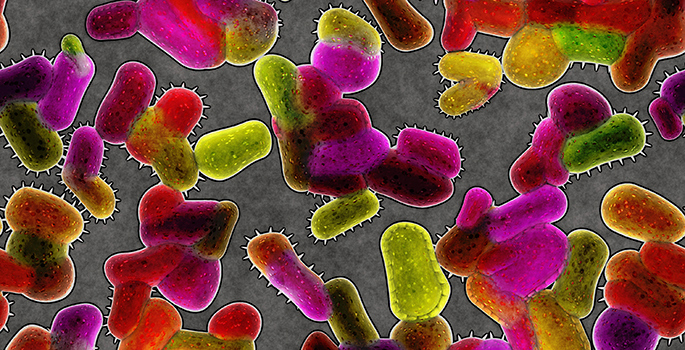
The trillions of microorganisms that live in and on our bodies — bacteria, viruses, fungi — collectively known as the microbiome — are of increasing interest to biomedicine. To characterize microbiome specimens from a group of people, these days instead of getting out a microscope, researchers run molecular assays of DNA, RNA and proteins, collecting gene- and protein-level signatures of these tiny organisms.
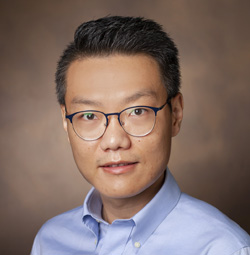
The rapid expansion of human microbiome data, reflecting the broader growth of molecular data in epidemiology, calls for new tools and careful handling to yield understanding and reproducible research results. This represents opportunity for a young statistician like Siyuan Ma, PhD, Assistant Professor of Biostatistics. Earlier this year, Ma received a Maximizing Investigators’ Research Award tailored by the National Institutes of Health for early-stage investigators. The award carries, in Ma’s case, a flexible five-year, $2.2 million research grant to advance statistical methods for next-generation microbiome data analytics.
Opportunities to advance methodology in this field are set out in Ma’s application for the NIH award.
• Analyses of large human microbiome databases are too often subject to unmeasured confounding that can lead to false findings, especially from unmeasured host factors such as medication exposures. Ma will develop ways to estimate and adjust for these hidden confounders in large microbiome studies.
• With the microbiome varying significantly from one individual and one group to the next, annotations needed to draw meaning from these often sparse data are lacking. Ma will enlist artificial intelligence in the form of genomic large language models to aggregate and analyze microbial “dark matter” genes (those that are rare and poorly annotated but may still affect health).
• New methods are needed to contend with the noise inherent in metatranscriptomics, the comprehensive study of RNA molecules (the transcriptome) expressed by a microbial community. Much noise is thought to stem from error in the measured abundance of underlying genes, and Ma will work on methods to account for this error.
Ma received a BA in statistics from Peking University and a PhD in statistics from the Harvard T.H. Chan School of Public Health at Harvard University. He joined the Vanderbilt University faculty in 2022.
The project will produce public databases and software to aid study of the human microbiome. This work is supported by NIH grant R35GM162668.