The American Heart Association (AHA) has awarded more than $500,000 in highly competitive research funding to the Pediatric Heart Institute at Monroe Carell Jr. Children’s Hospital at Vanderbilt, recognizing research to advance care for children with heart disease.
The three doctors receiving awards are: Kelsey Brown, MD, Sudeep D. Sunthankar, MD, MSCI, and Andrew Well, MD, MPH, MSHCT. Each received a prestigious AHA grant supporting innovative research spanning global early detection of rheumatic heart disease, genetic predictors of outcomes in congenital heart disease and patient-centered decision-making.
“These awards highlight the strength and innovation of our pediatric heart research programs,” said Carlos Mery, MD, MPH, Chief of the Division of Pediatric Cardiology and Co-Director of Pediatric Cardiac Surgery. “Drs. Brown, Sunthankar and Well are leading efforts that will impact how we care for children across the life spectrum at Monroe Carell and Vanderbilt Health. Their work underscores our commitment to delivering compassionate, evidence-based care and improving outcomes for children with heart disease worldwide.”
Monroe Carell is home to one of the original congenital heart disease and pediatric heart transplant programs in the country. Through research and innovation, the Pediatric Heart Institute at Monroe Carell has been pioneering innovative heart procedures and technology for decades.
“What is especially exciting about these projects is how they span the full spectrum of pediatric heart care — from understanding disease at the genetic level to improving real-time clinical decision-making and advancing prevention strategies internationally,” said Larry Markham, MD, Director of the Division of Pediatric Cardiology and Co-Director of the Pediatric Heart Institute. “Fewer programs are engaged in impactful research. Together, these efforts represent our mission to lead in discovery and patient-centered care as one of the nation’s premier institutes.”
Here’s a look at each of the award projects:
Advancing global detection of rheumatic heart disease
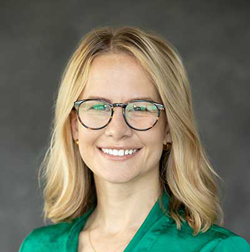
Brown, Assistant Professor of Pediatrics, is part of the AHA Strategically Focused Research Network known as SHIELD (Strategic Hub for Interventions to Promote Early Detection and Lifelong Protection from Advanced Rheumatic Heart Disease). The SHIELD team, which includes multiple sites and three projects, was awarded over $1.7 million over four years. Brown’s portion of the award for the Pediatric Heart Institute is $114,000.
The award supports a multi-institutional effort to improve early detection and slow progression of rheumatic heart disease (RHD) through three coordinated research projects.
Brown serves as a co-investigator and will transition to principal investigator for Project 1. Her work focuses on deploying an artificial intelligence tool that analyzes echocardiogram images to detect early valvular changes associated with RHD.
The technology will be implemented in Brazil, Timor-Leste and Uganda as part of a global collaboration aimed at demonstrating that early detection and prevention can significantly reduce the burden of RHD.
Investigating genetic drivers of single ventricle outcomes
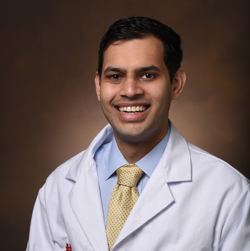
Sunthankar, Assistant Professor of Pediatrics, received a three-year, $231,000 AHA Career Development Award for his project, “Genetic Predictors of Heart Failure in Single Ventricle Congenital Heart Disease.”
Single ventricle heart disease is one of the most severe forms of congenital heart disease. Without surgical intervention, it is universally fatal in the first year of life, and even with advances in care, more than 25% of patients die or require heart transplantation during infancy.
Sunthankar’s research aims to understand why outcomes vary so significantly among patients by examining the role of genetic variation. His project seeks to improve survival and long-term outcomes for one of the most complex pediatric patient populations.
His study seeks to enroll more than 550 individuals with single ventricle heart disease. The research will explore how identifying genetic markers associated with higher risk could enable identification of vulnerable patients; lead to more personalized monitoring and medical management; and improve timing of surgical interventions.
Supporting shared decision-making in rare coronary anomalies

Well, Research Assistant Professor of Cardiac Surgery, Director of Patient-Centered Outcomes in Pediatric Cardiac Surgery and Co-Director of the PHI Outcomes Center, received an AHA Career Development Award totaling more than $230,000 over three years.
His research focuses on patients with anomalous aortic origin of the right coronary artery (R-AAOCA), a rare condition affecting approximately 0.3% of the population. While the condition carries an increased relative risk of sudden cardiac arrest, the absolute risk remains extremely low, creating uncertainty for patients, families and clinicians when deciding on treatment options.
His project will develop and test a patient- and family-centered decision aid tool designed to support shared decision-making. The goal is to improve how families navigate complex medical decisions when no single optimal treatment strategy exists for with R-AAOCA.
The project will identify key factors influencing treatment decisions among patients, caregivers and clinicians; develop a decision aid using user-centered design and iterative feedback; and evaluate the tool’s impact on communication, decisional conflict, regret and quality of life.