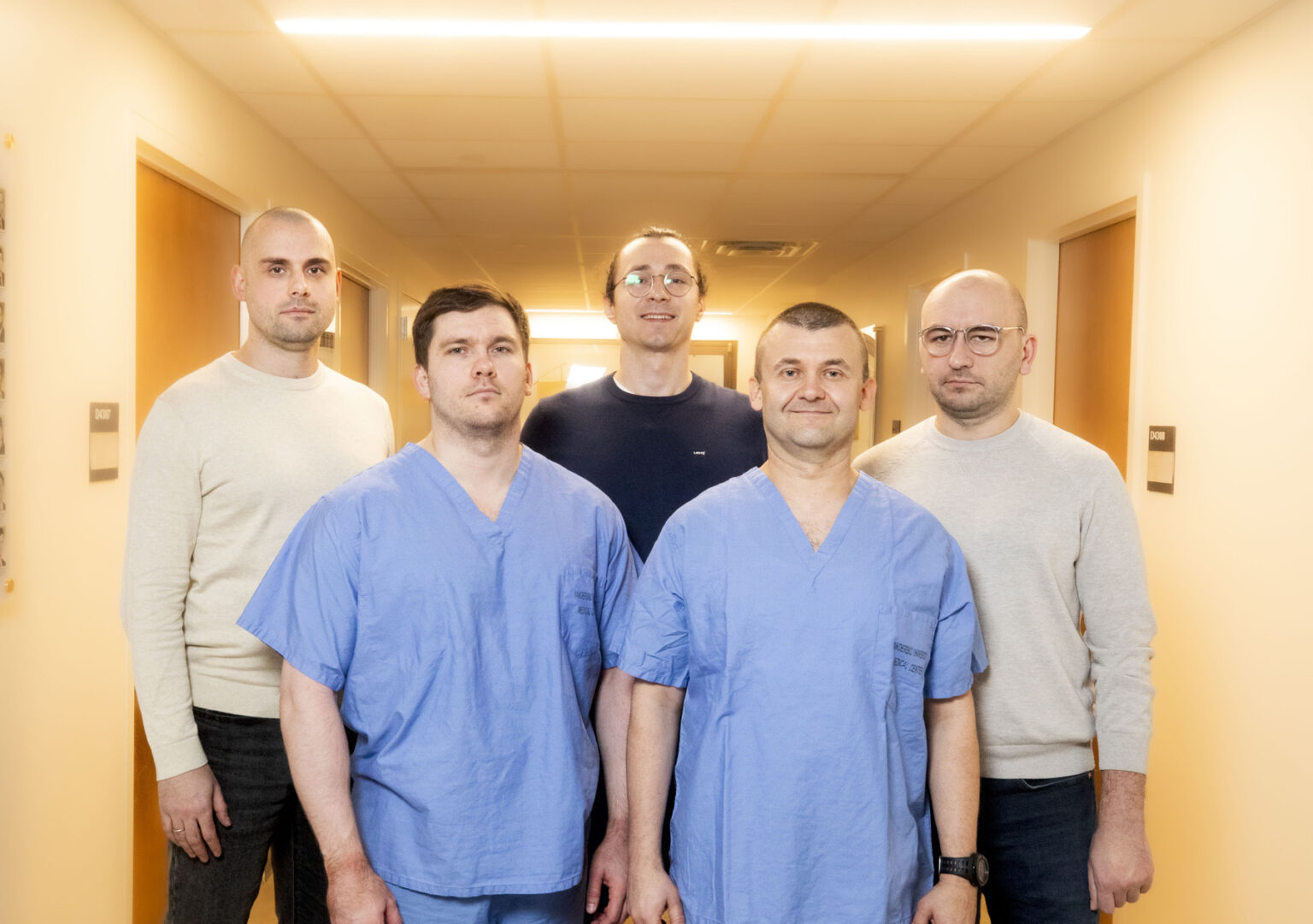
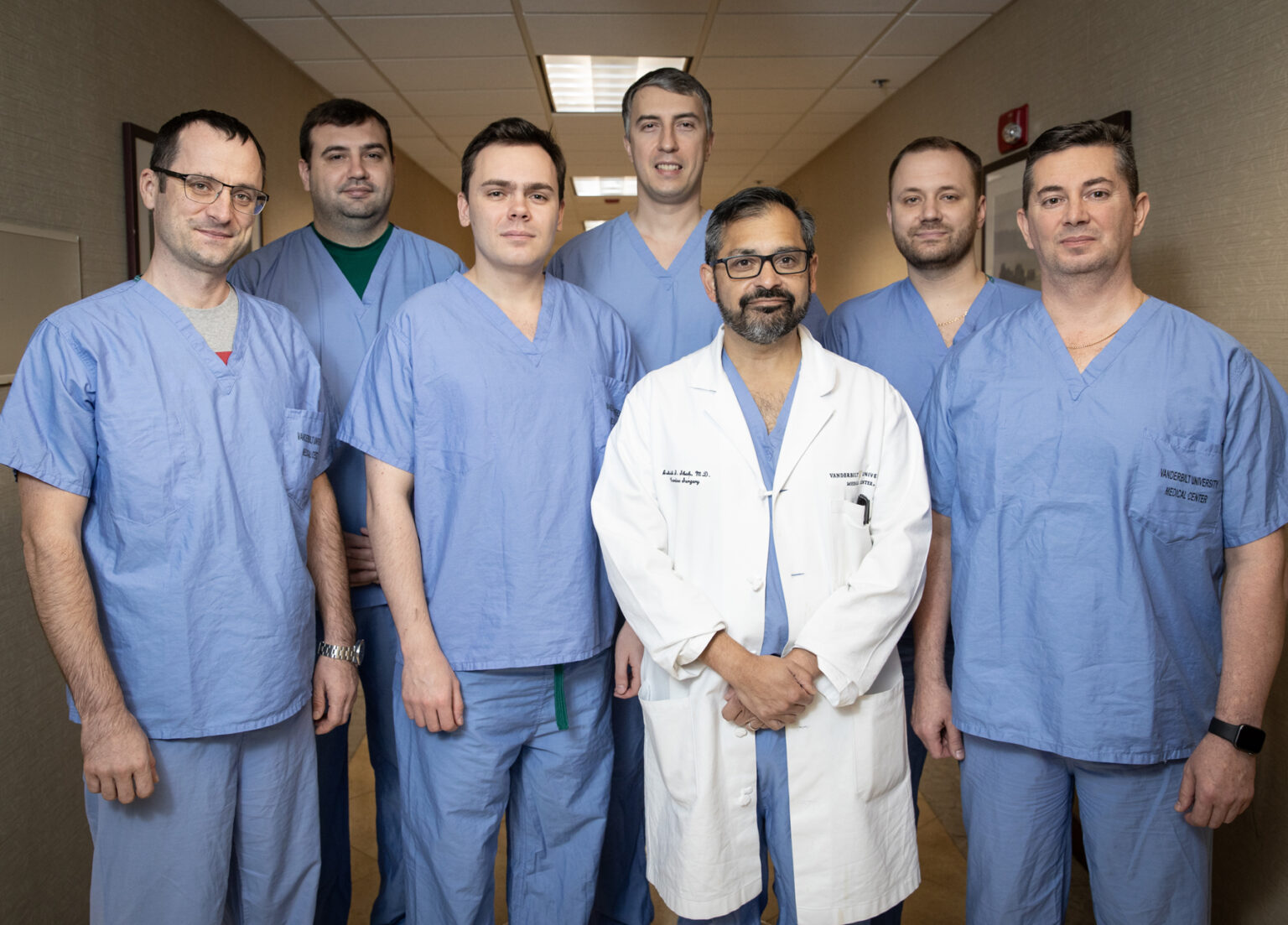
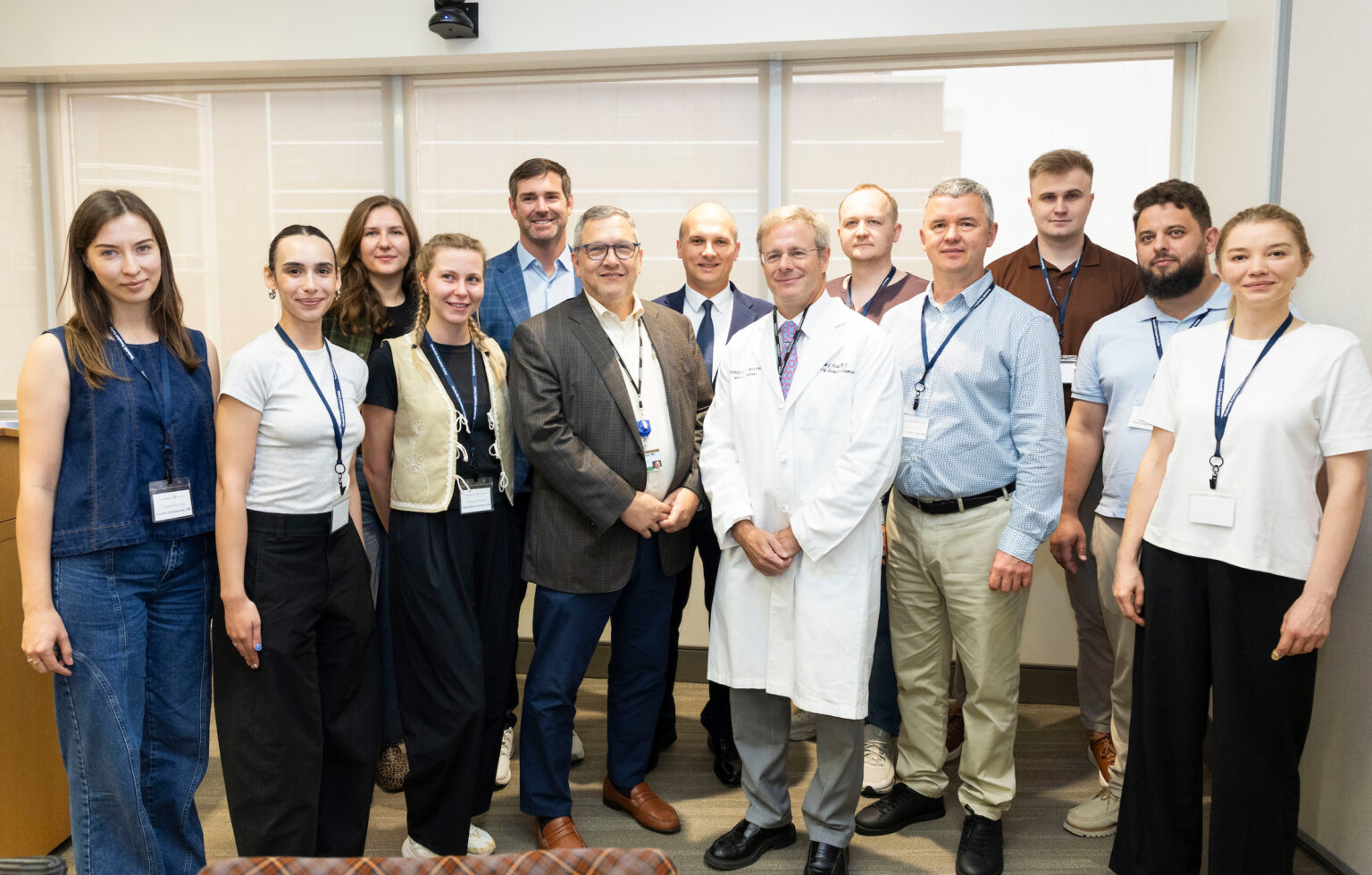
 A delegation of physicians from Ukraine with Joseph Magliocca, MD, and Seth Karp, MD, (wearing a white coat) at the Vanderbilt Transplant Center. (Photo by Susan Urmy)

A delegation of 10 health care professionals from Ukraine visited the Vanderbilt Transplant Center, the Vanderbilt-Ingram Cancer Center and the Department of Biomedical Informatics (DBMI) for two weeks to observe procedures, meet with top physicians, and bring back scientific knowledge to the war-torn country. This is the fifth year a Ukrainian delegation has visited Vanderbilt Health since Russia invaded Ukraine in 2022.
With the help of the Vanderbilt Transplant Center and other centers, Ukraine has developed a growing transplant program in the country during the 2020s. Historically, Ukraine’s transplant programs have been underdeveloped, as citizens needing transplants would typically leave the country for places such as India. But having a program in-country has become critical since travel became difficult after the war began.
From Sept. 21 to Oct. 2, the team of 10 physicians, surgeons and a digital health consultant from the Shalimov National Scientific Center of Surgery and Transplantation in Kyiv, Ukraine, observed all aspects of transplant, from procuring donor organs to observing the transplants themselves. They visited with Vanderbilt-Ingram surgeons performing a range of procedures, also learning about oncological therapeutic best practices, pharmacy approaches and bioinformatics. And they met with DBMI faculty, including Josh Peterson, MD, MPH, Professor of Biomedical Informatics and Medicine and Chair of DBMI.
“We came here because we admire the best practices,” said Pavlo Yakovlev, MD, DSc, head of Kidney Transplantation at Shalimov. “We are honored and privileged to be here and to learn from the expertise of physicians who are working here and build on the field of transplantation and medical care.”
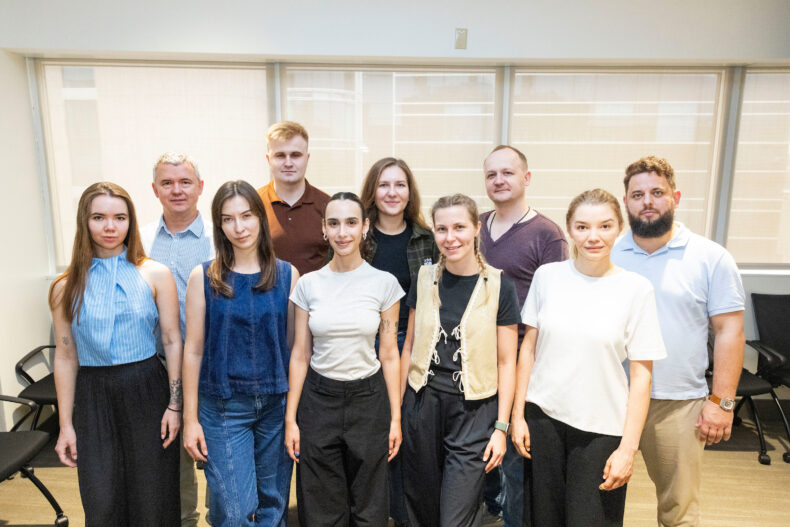
The Ukrainian transplant team was headed by Yakovlev. Other members were Oleksii Voroniak, MD; Dmytro Kostiuk, MD; Oksana Maryshchak, MD; and Tetiana Koval, MD.
The Ukrainian Oncology and Precision Medicine Team was headed by Oleksii Zubkov, MD, head of the Oncology Division and Head of Biobank at Shalimov. Other members were Nataliia Slobodianiuk, MD; Nataliia Savchenko, MD; Oleksandra Ladyzhets, MD; and Vladyslav Karaiev, MSc.
“The resilience and commitment demonstrated by our Ukrainian colleagues are truly inspiring,” said Ben Ho Park, MD, PhD, the Benjamin F. Byrd Jr. Professor of Oncology, professor of Medicine, and Director of Vanderbilt-Ingram. “Their dedication to serving patients under extraordinary circumstances is a powerful reminder of why this collaboration matters.”
The Ukrainian Oncology and Precision Medicine Team said they have integrated genomic sequencing and molecular testing into clinical practice following previous visits to Vanderbilt Health. During this year’s exchange, Park and colleagues shared expertise in cellular therapies, advanced surgical techniques, tumor board models, genetic testing implementation and clinic operations. These insights can help the Ukrainian team further strengthen and expand cancer care programs when they return home.
Seth Karp, MD, the H. William Scott Jr. Professor and Chair of the Section of Surgical Sciences, greeted the team.
“I want to stress that this is as useful for us as it is for you in this exchange, and we learn so much from you and your groups every time,” Karp said. “We thank you for coming here.”
Transplant surgeons in Ukraine are working under extraordinary conditions, performing surgeries in dark hospitals as power grids have been shattered by war. They have treated thousands of wounded soldiers and civilians and slept for months in bomb shelters with their children and families and pets, determined to stay in their country and continue to save lives.
The health professionals came from the Ukrainian capital, Kyiv, where Yakovlev said it is not uncommon to see gas stations on fire during a commute to work due to missile attacks. Missiles have been fired at homes and even at a children’s hospital. Unlike hospitals in the United States, Yakovlev’s hospital cannot send helicopters or planes to fetch donor organs because they might be shot out of the sky. All organs must travel by ground, which significantly constrains the reach of the transplant program.
But medical professionals are undeterred, and they performed 428 organ transplants from 2021 to 2025, Yakovlev said.
Joseph Magliocca, MD, Director of the Vanderbilt Transplant Center, said he never ceases to be amazed by the work the Ukrainian team does. “The conditions that you work under are unimaginable to us,” said Magliocca, Professor of Surgery and holder of the Cindy and Dave Baier Directorship. “I want to extend our welcome to you and to note that the exchange of knowledge is bi-directional. Our teams also have much to learn from our Ukrainian colleagues.”
Observing large transplant centers such as the Vanderbilt Transplant Center is vital for the Ukrainian doctors, because such procedures require a large, multidisciplinary team using complex techniques, from obtaining donor organs to completing transplants. It is important for the team to not only witness the transplant surgeries themselves but understand the protocols that surround them. That includes how to determine who is a good candidate for a transplant and how to manage patients after the transplant with frequent laboratory tests and a balance of multiple medications.
This exchange program between Vanderbilt Health and Ukraine was launched in 2022 by former U.S. Sen. Bill Frist, MD, founding director of the Vanderbilt Transplant Center; leadership of the Vanderbilt Transplant Center; Vasyl Strilka, MD, from the Ministry of Health of Ukraine; and Rostyslav Semikov, MD, founder of the Peace and Development Foundation and Audubon Bioscience.
The exchange program has grown beyond Vanderbilt Health, including 250 visits to 30 top institutions and 130 Ukrainian physicians, Semikov said.
“This is a great, deep appreciation to you and thank you from our team,” Semikov said.