Vanderbilt Health is launching a new clinical trial funded by the National Institutes of Health to improve the diagnosis of individuals with alpha-gal syndrome and to explore the underlying causes of allergic reactions to better treat and protect patients.
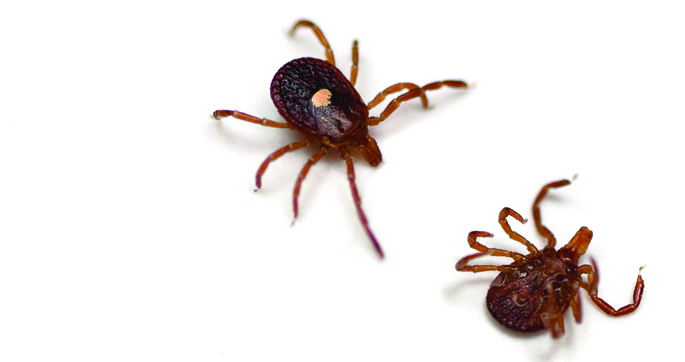
Alpha-gal syndrome (AGS) is an allergic condition associated with tick bites that can trigger severe reactions to a sugar molecule called galactose-alpha-1,3-galactose, or alpha-gal, found in red meat and other products that come from mammals. Symptoms range from hives to digestive issues and impaired breathing. Although food challenges and blood tests are currently used to diagnose AGS, distinguishing between true allergy, sensitization without symptoms, and symptoms caused by other triggers remains a challenge.
“Establishing clarity and proper diagnosis is crucial,” said Cosby Stone Jr., MD, MPH, Assistant Professor of Medicine and co-leader of the trial. “The current levels of ambiguity in our diagnosis of alpha-gal syndrome come from relying on blood tests that are overly sensitive. They are leading to misdiagnosis and patients who are implementing unnecessary lifestyle restrictions. We don’t want people to cut meat, dairy and gelatin out of their diet unless they really need to.”
The clinical trial, “Beginning to Assess an Appropriate CONtrol for Oral Food Challenges in Alpha-Gal Syndrome” (BeACON4AG), aims to address the need for diagnostic tools that can conclusively confirm whether AGS symptoms are a direct result of the meat allergy.
The two-part study is being led jointly by Stone; Leonard Bacharier, MD, the Janie Robinson and John Moore Lee Professor of Pediatrics and Section Chief Pediatric Allergy and Immunology; and Rachel Robison, MD, Associate Professor of Pediatrics in the Division of Pediatric Allergy, Immunology and Pulmonary Medicine at Vanderbilt Health. The multisite trial is enrolling AGS patients ages 12 to 50 years at Vanderbilt Health, University of Virginia, University of North Carolina and University of Arkansas. Results are expected in five to seven years.
The trial will involve a medically supervised, two-part feeding test in which participants will consume pork with alpha-gal during one visit to the center and pork that does not have alpha-gal on another visit. Neither the participant nor the clinician will know which feeding contains alpha-gal. The study team will draw blood samples from participants during each visit to look for immune factors and other molecules that are released during reactions to alpha-gal.
“This study will give us better insight into diagnosing both adult and pediatric patients experiencing possible AGS symptoms to ensure we’re diagnosing and managing them as effectively as possible,” said Robison.
About 20% of blood tests in Tennessee return positive for antibodies against alpha-gal. However, only 1 in 20 individuals with a positive blood test will experience a reaction. This is known as sensitization, when there is a positive blood test for alpha-gal, but the person does not have an allergic reaction when products with alpha-gal are consumed.
Other individuals present with AGS symptoms such as chronic hives or upset stomach that could be caused by a number of triggers other than alpha-gal.
“We’re going to try to figure more precisely what a reaction to alpha-gal is and identify what’s being released in your body during reactions,” added Stone. “This will guide us when we seek to develop more effective treatments and hopefully block allergic responses entirely.”
For many people, avoiding triggers is enough to prevent symptoms. For those who can’t avoid exposure, current Food and Drug Administration-approved treatments like omalizumab can block allergy antibodies, reducing moderate to severe allergic reactions to food.
“Research is an ongoing cycle. We strive to help patients now while continuing to use what we learn to develop better treatments for the future,” said Stone. “We always aim to accomplish more each year than the year prior.”
The BeACON4AG study is funded by the National Institute of Allergy and Infectious Diseases, part of the National Institutes of Health, through the Consortium for Food Allergy Research. It is currently enrolling participants. More information about the trial, including contacts at each study site, is available at ClinicalTrials.gov under study identifier NCT07611435.