


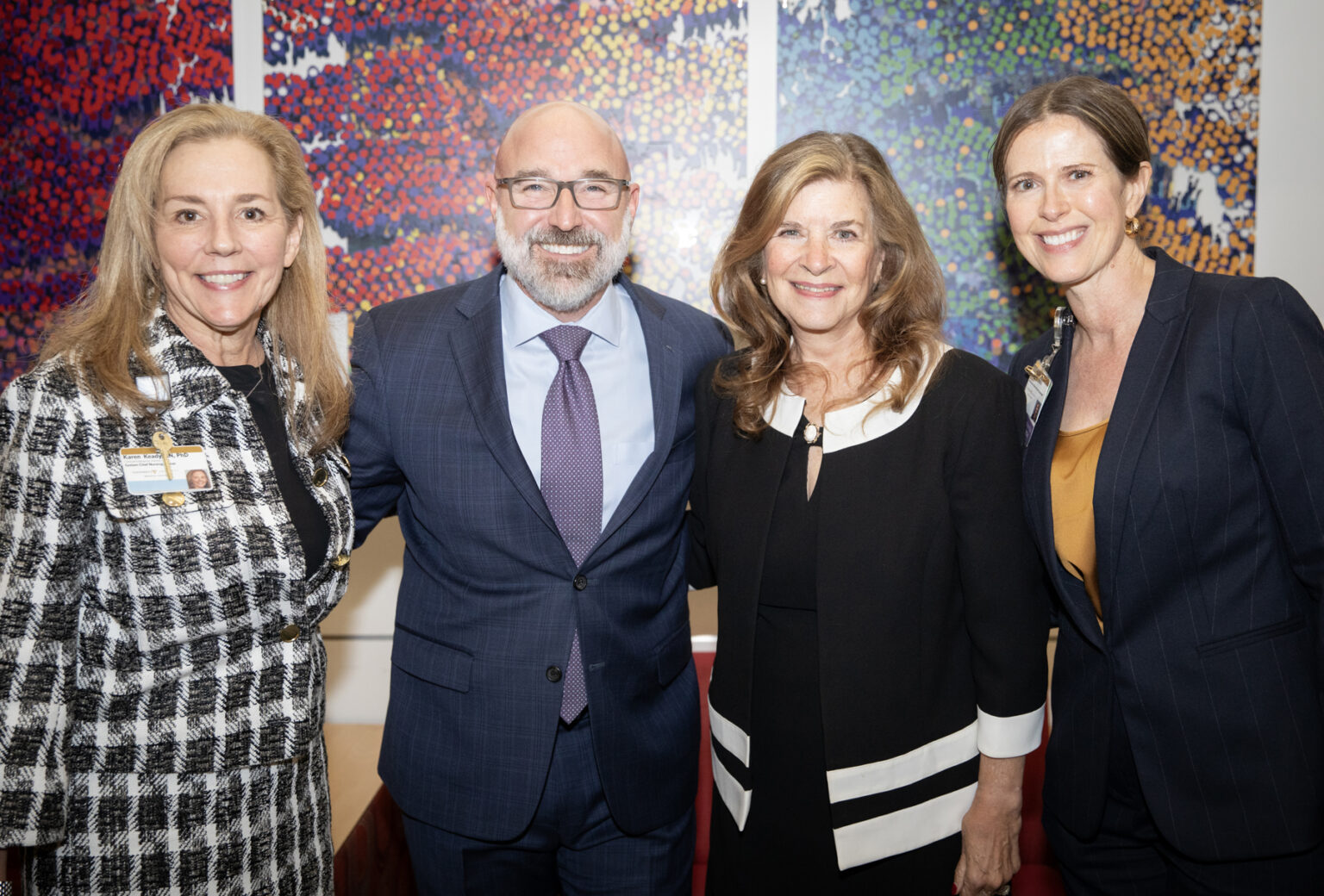
 From left are Karen Keady, PhD, RN, NEA-BC, System Chief Nursing Officer for Vanderbilt University Medical Center; Jason Wolf, PhD, CPXP, President and CEO of the Beryl Institute; Terrell Smith, MSN, RN; and Hope Collins, senior director of Patient and Family Engagement, pose for a photo following the inaugural Terrell Smith Lectureship. (photo by Erin O. Smith)

Human experience and how it shapes everyone plays a key role in impacting patients and providing care that extends far beyond physical needs. Accomplishing this abstract notion systemically was the central message of the inaugural Terrell Smith Lectureship.
Jason Wolf, PhD, CPXP, president and CEO of the Beryl Institute, kicked off the series with “Returning to the Heart of Care: Human Experience is Our True North.” Wolf is a pioneer in educating health care facilities around the world on how to improve outcomes through implementing a people-first mindset.
According to Wolf and the Beryl Institute, our experiences shape our perceptions and responses to daily interactions. Applying our personal experiences to provide care has profound influence on the overall journey of patients and their families.
Wolf emphasized that essential elements of health care go beyond checking the boxes to create environments that inform and support patients holistically.
“There is not one interaction we can take for granted,” Wolf said. “We have to continually give others freedom to behave in ways that are meaningful for the people in front of them. That plays a vital role in leading to positive outcomes and generating measurable value.”
Through illustrated examples from employees at Vanderbilt Health and other institutions, he shared practices needed to cultivate an environment driven by human-centered interactions — whether patient-facing or with visitors.
The following practices included:
- Defining what human experience means within your organization to align your teams and guide direction
- Empowering employees to exemplify leadership in their everyday practices
- Building a culture that engages and encourages intentional interactions
- Recognizing the importance of employees as drivers of quality experiences
- Engaging care partners and patients in developing solutions
- Understanding that every interaction is influential
- Prioritizing access to care
- Involving the communities you serve in growth and development opportunities
“When we get the experience right, when we have conversations that matter, we create more efficient organizations,” Wolf said.
Wolf’s final remarks reiterated the ripple effect that prioritizing the human experience in all interactions has on patients, employees, the greater community and the system itself; in turn prospering systemically and financially.
“For the inaugural lecture in Terrell’s honor, it was vital to invite a speaker who could emphasize the importance of the opportunity that everyone who walks in the door of a health care organization has to improve the human experience,” said Hope Collins, MPA, CPXP, senior director of Patient and Family Engagement.
“Jason accomplished that and so much more. One attendee wrote that his lecture ‘helped realign where our hearts should be focused in health care.’ It was an excellent reminder that personal encounters are always an opportunity to improve the human experience, whether short, lengthy, with a patient, family member, loved one or with each other,” Collins added.
The Terrell Smith Fund was established in honor of Collins’ predecessor Terrell Smith, MSN, RN, who served at VUMC for more than 40 years, engaging patients and families to improve health care through their eyes.
The fund will support a lectureship series to honor that mission and continue developing skill sets for all individuals at Vanderbilt Health to provide personalized care that meets people in the moment.