



Physician-scientists, who are dually trained in clinical medicine and scientific investigation, are uniquely qualified to identify solutions to the unmet needs of their patients. As a recent white paper put it, their research advances “the health care of tomorrow.”
Yet due to a variety of academic, financial and organizational barriers, the number of physician-scientists in the United States has declined by nearly 70% during the past 40 years.
In response, a consortium of foundations, professional societies, and leaders in physician-scientist development at academic medical centers, including Vanderbilt Health, has proposed a framework that recognizes the vital role physician-scientists play as clinically trained, full-time investigators.
Prominent among the group’s recommendations: development of new budgetary and organizational models that intentionally protect and support the physician-scientist career path. Currently, many physician-scientists are expected to self-subsidize their research through adjustments in their clinical activity.
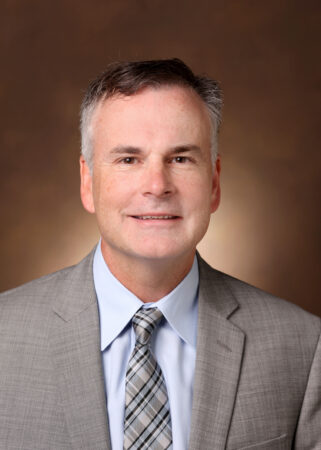
“Physician-scientists have driven many of medicine’s most important breakthroughs,” said Christopher Williams, MD, PhD, Associate Dean for Physician-Scientist Education and Training, and Director of the Medical Scientist Training Program in the Vanderbilt University School of Medicine. “Yet shrinking clinical margins and unstable research funding have made the old models untenable.”
Williams, who holds the endowed MSTP Directorship at Vanderbilt Health, is co-corresponding author with Weill Cornell Medicine’s Kyu Rhee, MD, PhD, of the consortium’s white paper, which was published April 28 in the American Society for Clinical Investigation (ASCI) journal JCI Insight.
The report resulted from a workshop convened by the ASCI, the Burroughs Wellcome Fund, the Damon Runyon Cancer Research Foundation, and experts from 18 academic medical centers. ASCI President Julie Bastarache, MD, Assistant Vice President for Clinical and Translational Scientist Development at Vanderbilt Health, is among the co-authors.
“Our programming at Vanderbilt has demonstrable success in mentoring junior faculty through career transitions,” Williams said.
The Edge for Scholars office, which Bastarache directs, is an institution-wide effort to provide support for scientific career development with a strong focus on early-career faculty. Since it was established in 2017, Edge for Scholars has helped to launch the careers of nearly 200 physician-scientists.
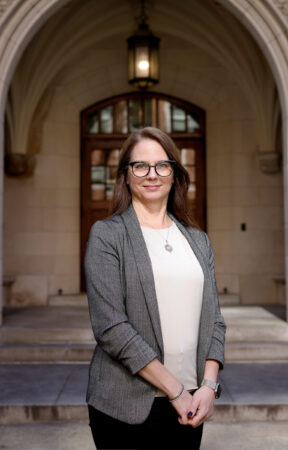
At many institutions, however, support of physician-scientist research is cobbled together on an ad hoc basis rather than designed with intention and strategy. “Nationwide, we need deliberate new models that sustain these careers across the full spectrum,” Bastarache said.
Left unchecked, the consortium warned, the loss of physician-scientists “threatens not only our capacity to advance medicine through scientific discovery but also our ability to capitalize on emerging technologies and therapeutics whose development demands the unique translational insight that only physician-scientists provide.”


