


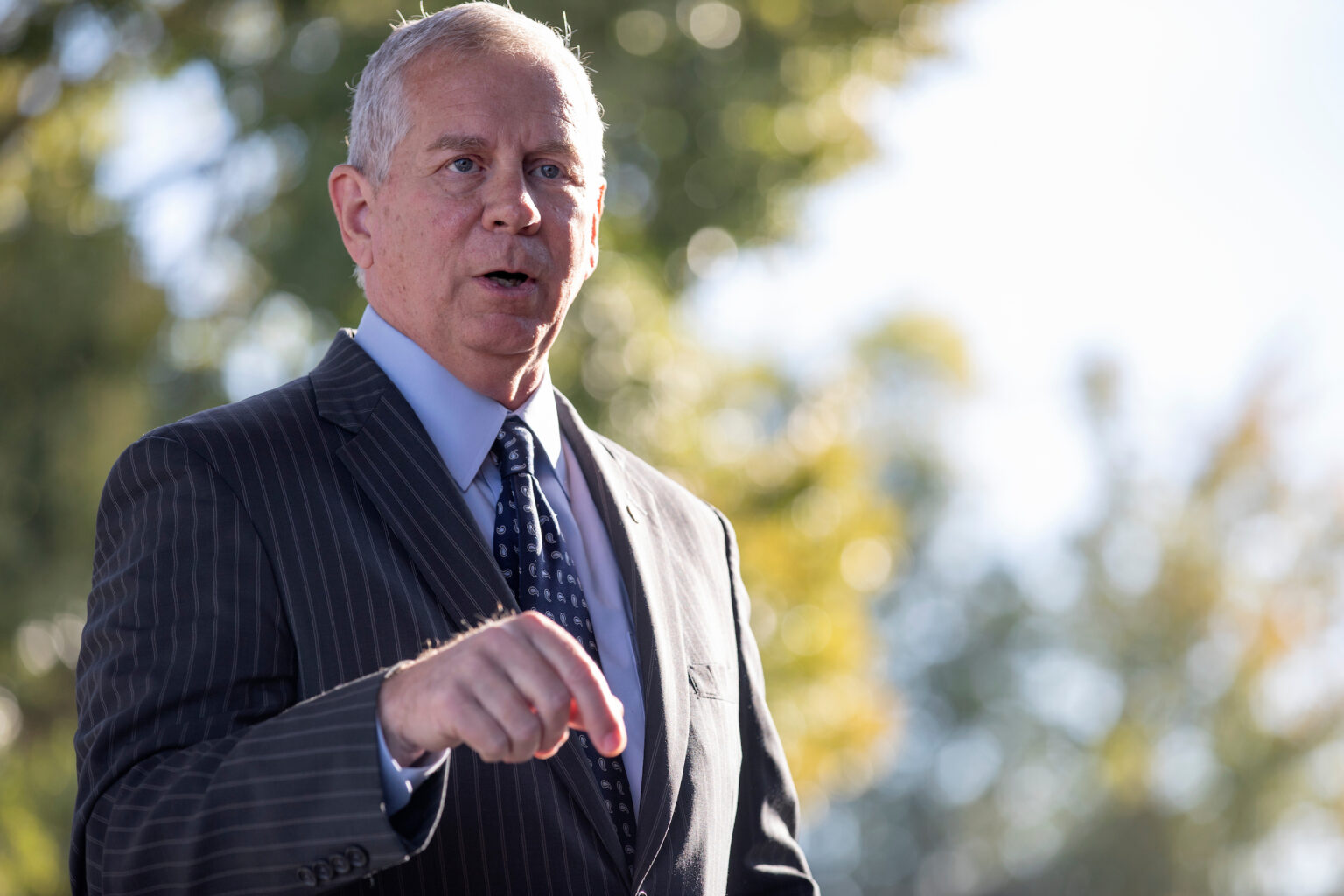
 Clarksville Mayor Joe Pitts speaks during the ribbon cutting ceremony for Vanderbilt-Ingram Cancer Center in October 2022 in Clarksville. (photo by Erin O. Smith)
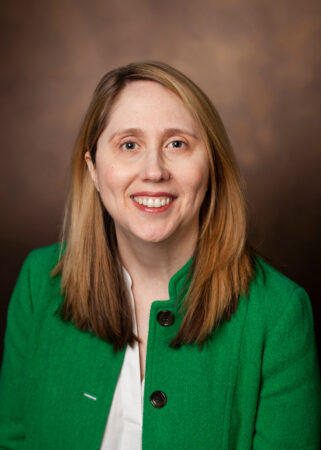
Vanderbilt-Ingram Cancer Center has spent years assembling cancer teams — medical oncologists, surgeons, radiologists, pathologists — in Tullahoma, Spring Hill, Wilson County and beyond.
Proximity is a priority. Advances in immunotherapy and targeted treatment mean many cancers, even advanced ones, are now managed for years rather than months, meaning patients can spend a lot of time on the road to see their care team.
“The goal of treatment is to facilitate your life, not to put your life on hold,” said Laura Goff, MD, MSCI, Executive Medical Director of the Cancer Patient Care Center.
Goff and Waleed Khalaf, MD, PhD, Medical Director for Regional Network Cancer Care, talk about why the evolution of cancer treatments makes mid-state locations essential.
Next month, Community Impact will introduce the people making that shift possible — some of whom grew up in the towns they now practice in. We’ll spotlight the team behind Vanderbilt-Ingram’s regional cancer clinics and revisit the milestones that got us here, such as Cool Springs, which opened in 2001; Wilson County’s radiation oncology growth; and Clarksville’s decades-old radiation program. … And more.

Q: If you were talking at a Chamber of Commerce in Middle Tennessee about the latest generation of cancer care and how Vanderbilt-Ingram Cancer Center impacts their community, what would you say?
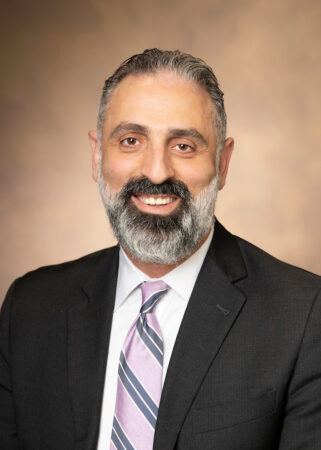
Goff: Cancer care is impacting everybody’s community. At this point, Vanderbilt-Ingram sees patients who come from great distances to access leading-edge cancer therapies. Cancer care delivery requires a mix of groundbreaking technology and attentiveness, providing much of that care within the context of a patient’s everyday life. Their life goes on. They need to try to work. They need to try to take care of their kids. We want that for them.
Often cancer care goes on for weeks and weeks, and many times even years, so traveling three, four hours round trip on a weekly basis can be a strain on patients. What we are trying to do, Waleed and I together, is get the services we can as local as we can to facilitate the highest quality care in Tennessee towns.
The highly specialized treatments will be done at the Main Campus in Nashville . Thankfully, those are not usually treatments that are needed continually long term or able to be offered everywhere. The value of having Vanderbilt-Ingram as your local provider is the seamless transition to those highly subspecialized things that exist within our network. If you go to Vanderbilt-Ingram, we have that deep expertise. We don’t have to refer you somewhere else.
Khalaf: The main point of emphasis that we would want to highlight is exactly that — bringing that care closer to where our patients live outside of the Main Campus. If you’re somebody living in Spring Hill, for example, we’re in your backyard, and we’re bringing that care closer to you. Cancer care nowadays is provided by a team, of course. It’s not just one person, so we bring the whole team to our regional clinics.
There’s this idea floating around that specialists are only available in Nashville. But we want to underline that Vanderbilt-Ingram specialists are around Middle Tennessee. Your care journey can start with us — and should start — with our specialists who are down the street.

Q: What does it mean to bring that kind of hope to people who perhaps didn’t think this kind of care was available in the neighboring county?
Goff: Waleed does it and sees it every day. Our new acquisition in Clarksville, the excitement in patients I have seen on campus was palpable as soon as that was announced. They were so excited that Vanderbilt Health was coming to their community. We have a history of people driving from Clarksville, from Owensboro, and beyond. So, to know that Vanderbilt Health was investing in turning around a hospital — we certainly did it in Wilson County and the other locations too, and they were thrilled.
Khalaf: I think that’s exactly right. There are always sensitivities, I think, when we bring a big name to a small community. There are always challenges navigating that. The people, yes, they are excited, very open, but there are some fixtures in the community that are always sensitive and think you’re coming to just bulldoze and take over and change everything and fire everybody here. And that’s not the case. We’ve proven that in Wilson County especially, which has been a tremendous success.

Q: How has cancer care evolved in the last, say, 10 to 15 years — and is that partly a reason why decentralizing the care is possible now?
Khalaf: The model of driving three hours to a big hospital to get care is changing. People expect to get care closer to where they live, and we’re trying to match that expectation. At the same time, things are changing dramatically at the level of therapeutics and advances. People are living longer and longer with cancer, and it’s really becoming a chronic medical problem as treatments evolve.
A lot of our treatments are now non-chemotherapy treatments; they’re targeted treatments. A lot of them are pills people take at home — they don’t have to come in for an infusion. A lot of them are immunotherapy treatments. A lot of them enable our patients to continue to live life as close to normal as possible while they are dealing with this chronic illness and receiving treatment.
Goff: What we’re really trying to look at is how we can fit more seamlessly into a patient’s life. I tell patients that the goal of treatment is to facilitate your life, not to put your life on hold. If you have a cancer that is very treatable but not curable, you’re going to be on treatment for a long time. We have to find a way to make treatment fit into your life, without placing any more burden on you than is already there.
This a team sport — it’s not just one oncologist who can alone provide adequate cancer care. The Vanderbilt-Ingram model is that we rely on a team of doctors, our surgical oncologists, our expert radiologists, the deep pathology expertise.All of those specialties are necessary to really take adequate care of a cancer patient. It’s one of the values of getting your care at a Vanderbilt Health system rather than a one-off doctor’s office.

