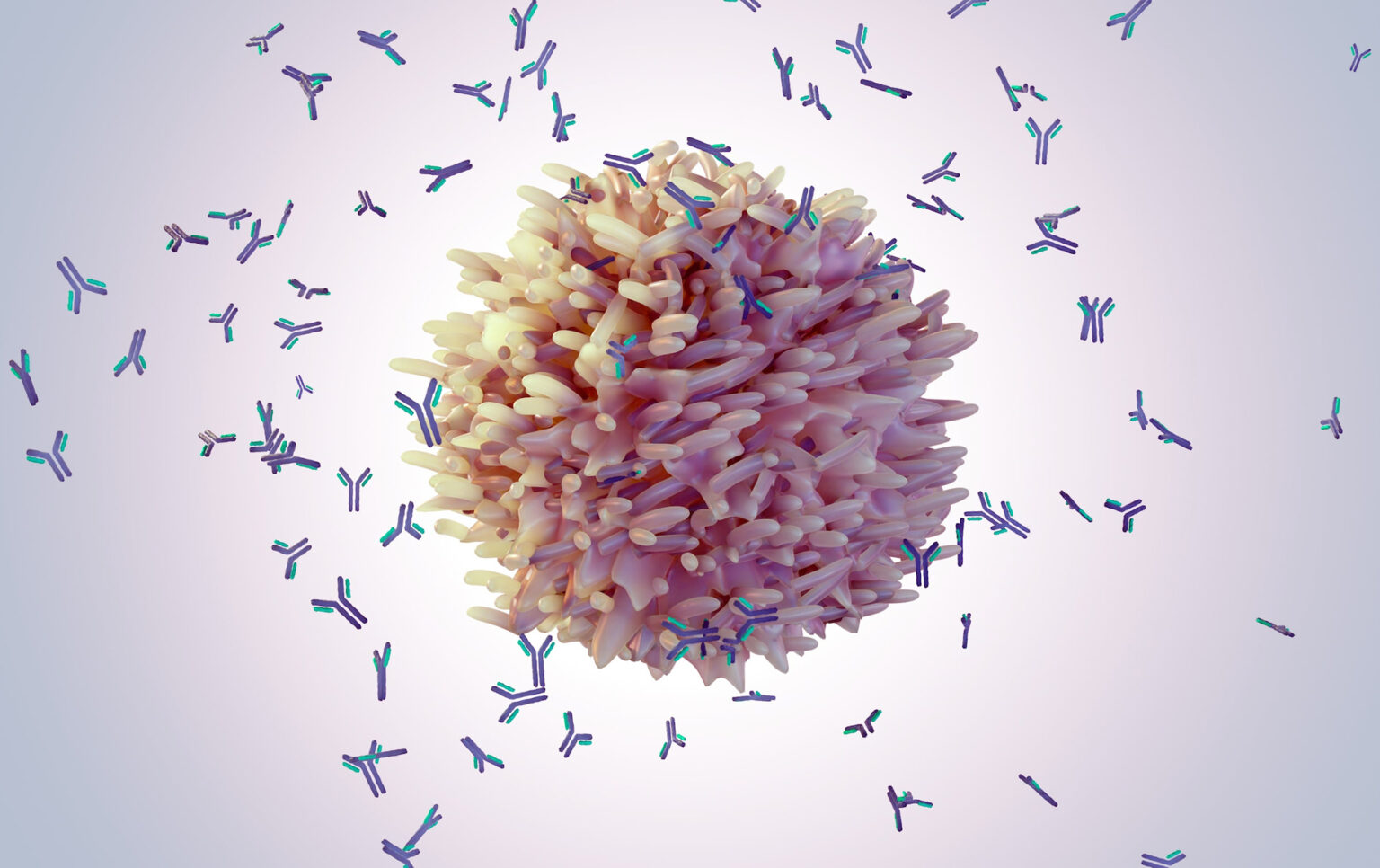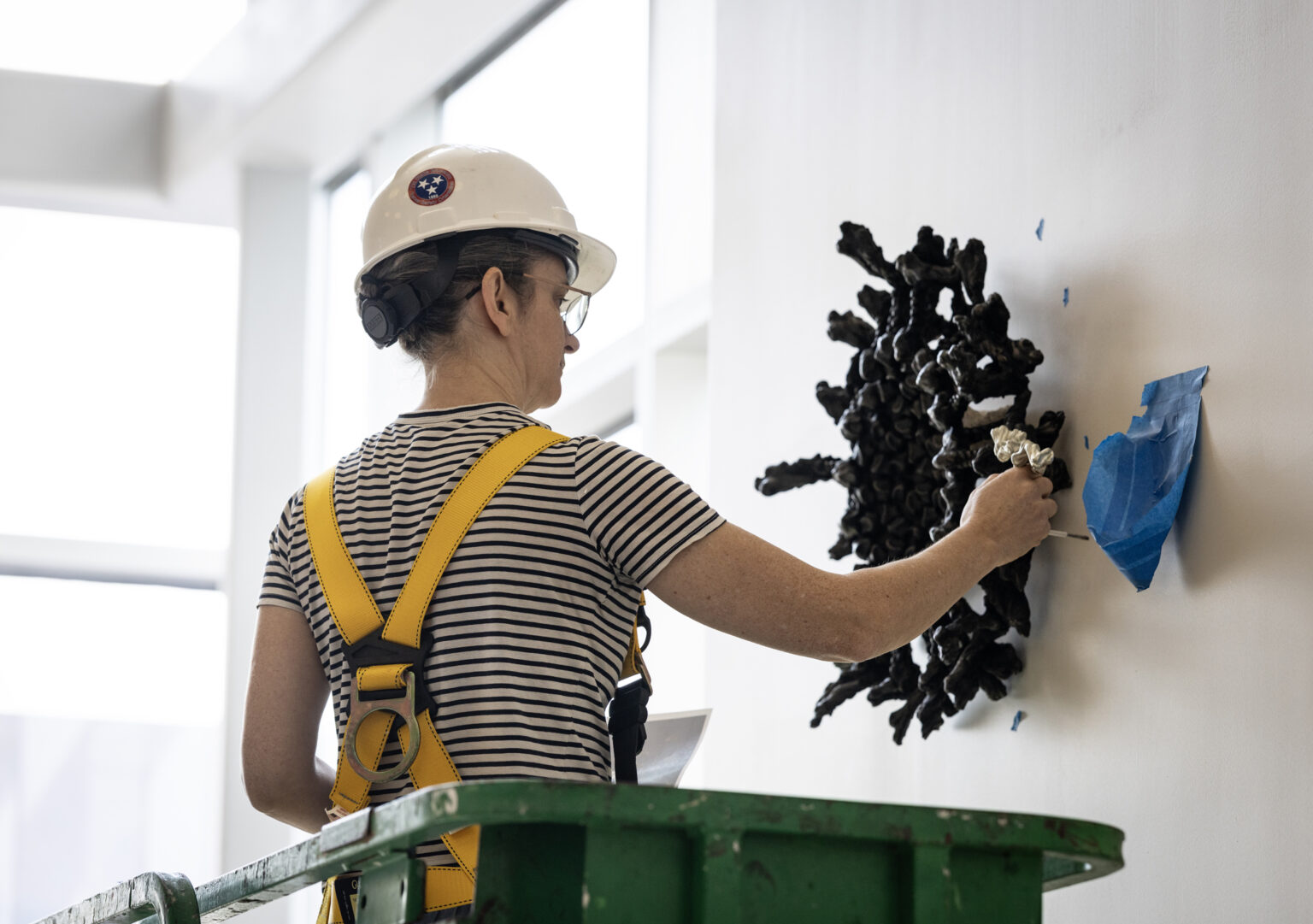
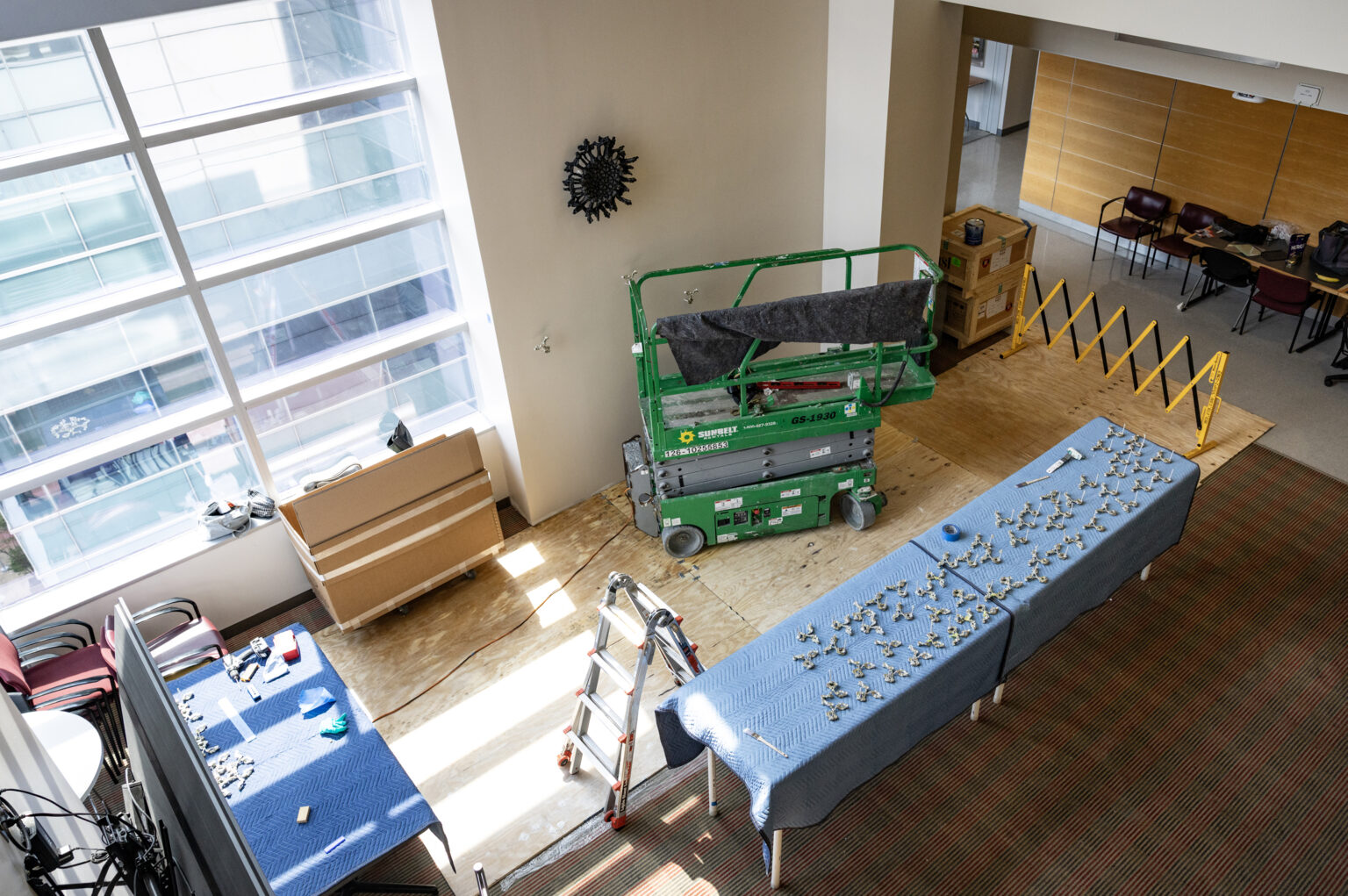
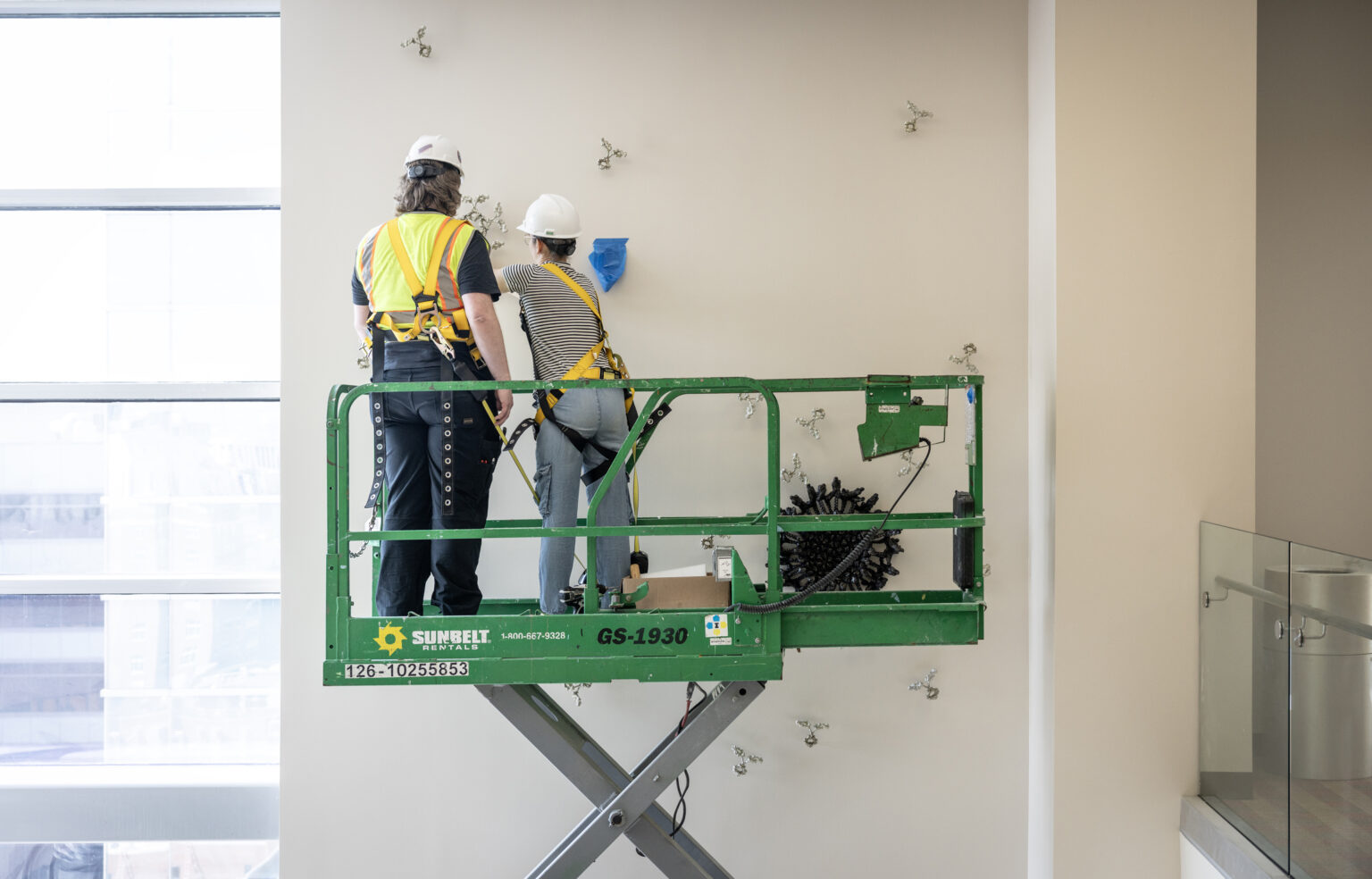
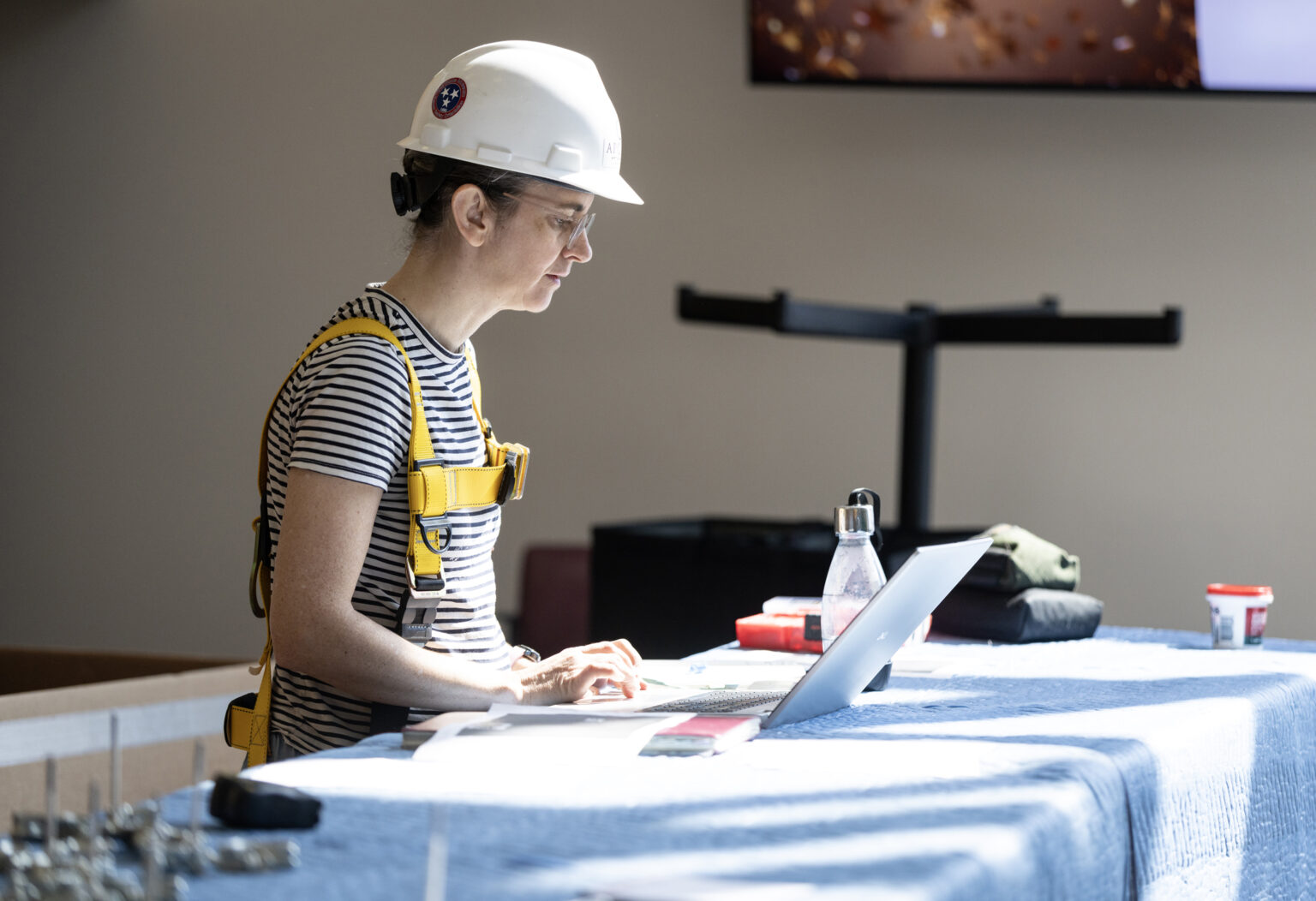
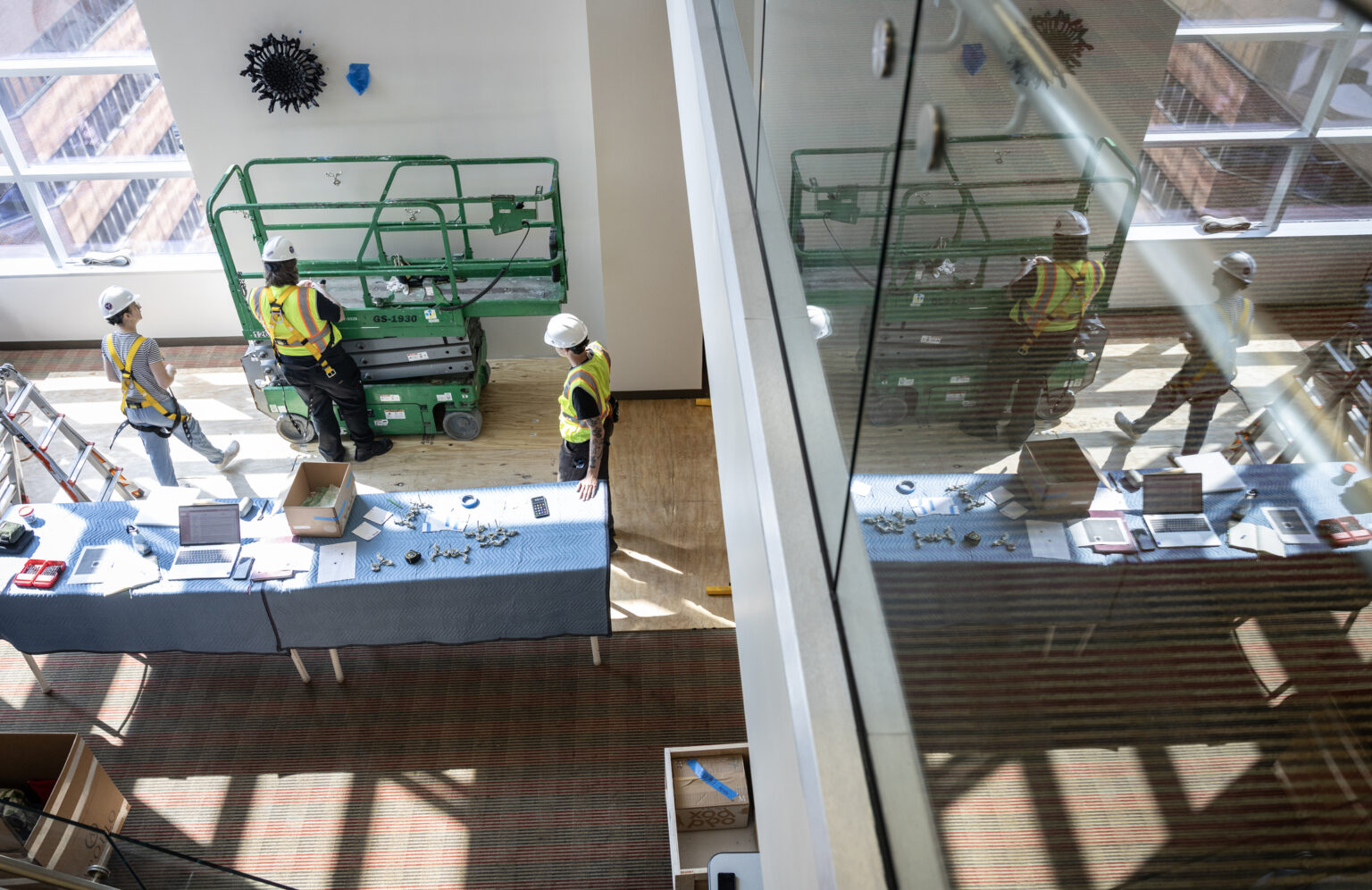
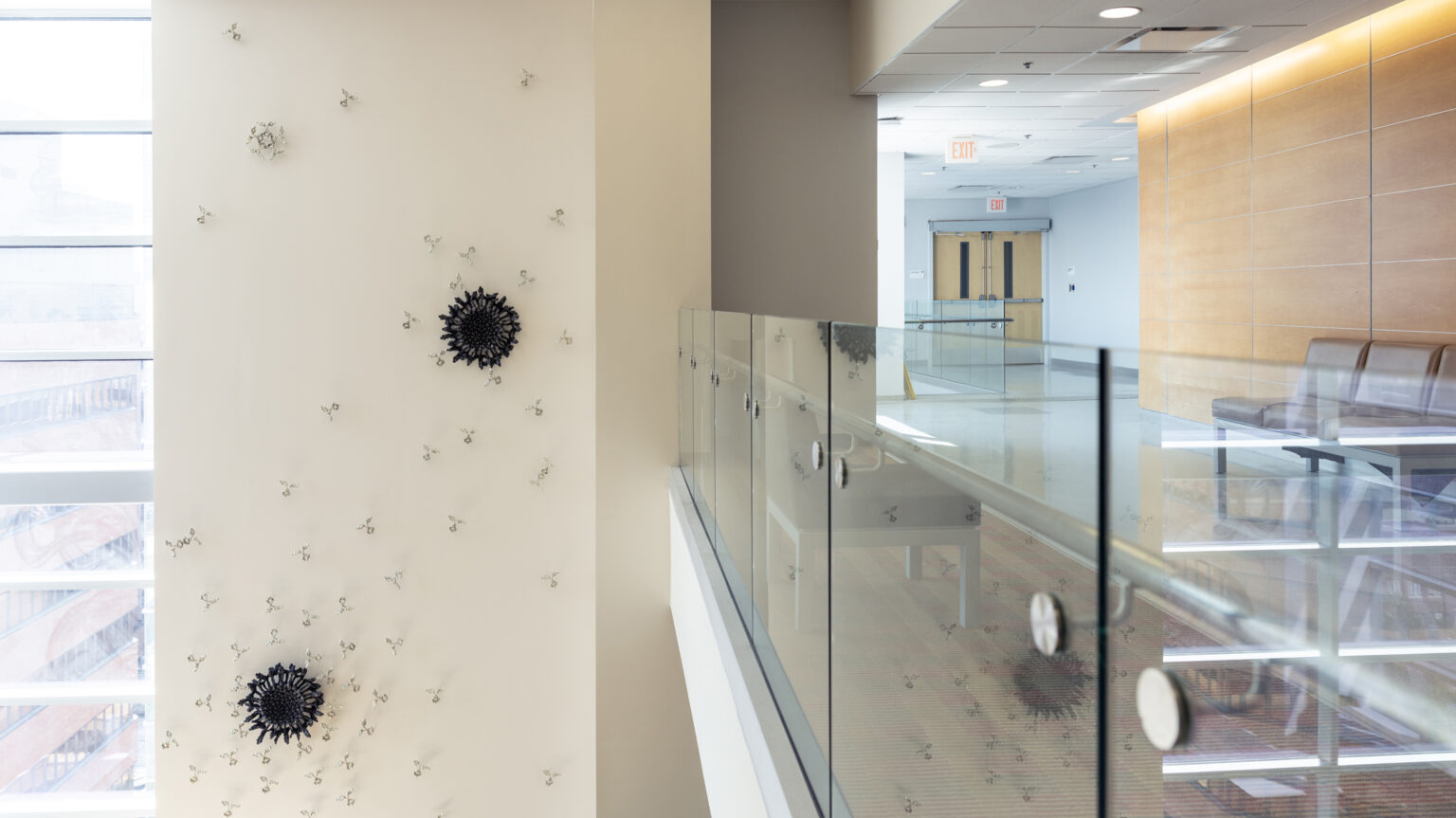

On Sept. 21, the Vanderbilt Center for Antibody Therapeutics (VCAT) unveiled Silent Sentinels, a sculpture installation depicting antibodies surrounding and attacking virus particles in the sunny 11th-floor atrium of MRBIV, the medical research building adjacent to Light Hall on the Vanderbilt Health Main Campus.
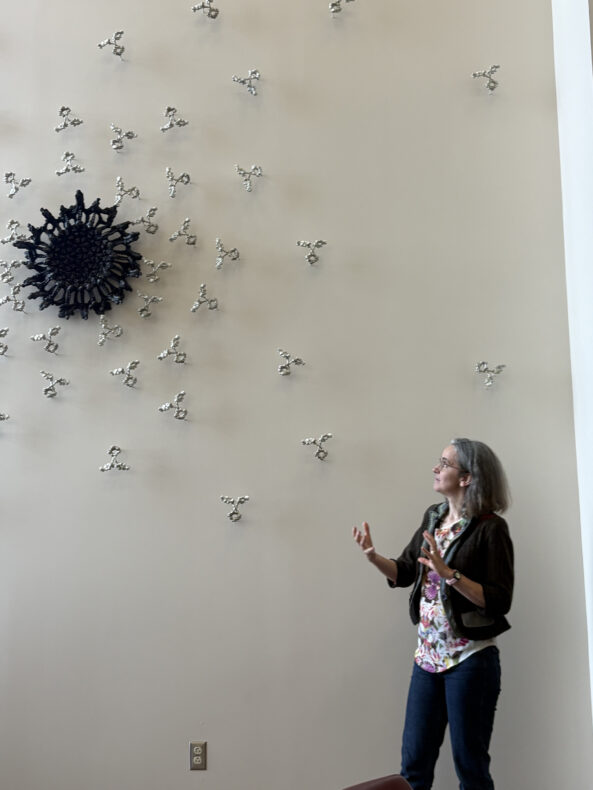
Created by Briony Marshall, a noted London-based sculptor and installation artist who joined VCAT as its first artist-in-residence in 2024, Silent Sentinels is the culmination of a two-year-long project — called “Visualizing Virology” — that explored the value of bringing artists into the laboratory.
“It’s hard to communicate things that you can’t see,” explained VCAT Director James Crowe Jr., MD, the Ann Scott Carell Professor, whose team is known internationally for developing human monoclonal antibodies against a host of pathogenic viruses. “One of those ways is through art.”
“By translating the invisible architecture of immunity into a compelling visual experience, the work celebrates the dedication of those working at the forefront of antibody research,” Marshall wrote in introducing the sculpture. “It’s a tribute to science, a space for reflection, and a marker of the vital work done at Vanderbilt.”
“Visualizing Virology” was an extension of the VI4 Artist-in-Residence Program established in 2019 by the Vanderbilt Institute for Infection, Immunology and Inflammation.
Over the six-month residency, Marshall, who has a biochemistry degree from Oxford University, worked closely with VCAT scientists, including a week on-site in Nashville, learning about the isolation and development of antibodies against the Venezuelan equine encephalitis virus.
Found mainly in Mexico, Central America and South America, the mosquito-transmitted virus can cause life-threatening illness in humans as well as horses.
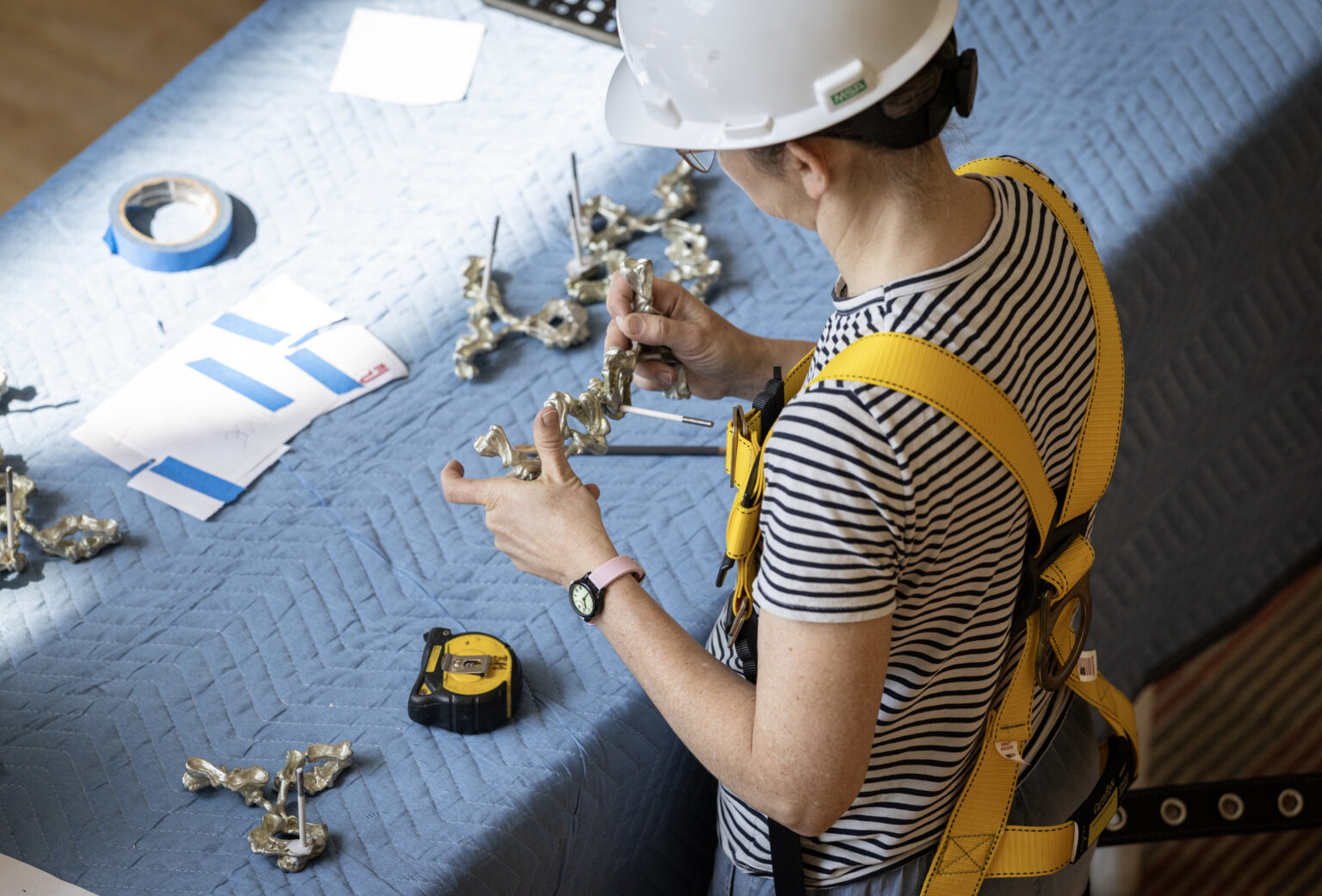
The viral particles were cast in bonded bronze and the antibodies in pewter.
During her residency, Marshall also mentored art students who created their own artistic renderings of the science they encountered in the lab.
In an interview, Marshall said she hoped her work will help people understand science “on a more intimate, emotional level.”
“I get a huge amount of joy,” she said, “when I understand how things work.”