



Kristin Archer, PhD, DPT, Professor and Vice Chair of Research in the Department of Orthopaedic Surgery and Director of the Vanderbilt Center for Musculoskeletal Research, has been awarded a $4 million National Institutes of Health grant for a clinical trial to assess the effects of a remote mind-body physical activity intervention delivered early after lumbar spine surgery. This funding follows a pilot study of “Physical Activity intervention to improve Surgical Spinal outcomes (PASS).”
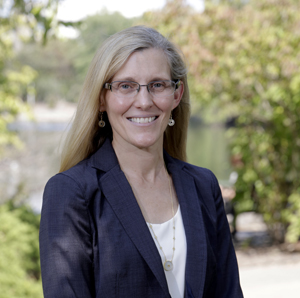
“We are trying to help patients increase their activity early after surgery,” said Archer, who holds the Clint Devin Directorship in Orthopaedic Surgery. “Even though the health care team encourages patients to walk and be active after spine surgery, research has shown us that physical activity is consistently low in the majority of patients. Our spine research group and others have found that over 50% of patients are sedentary during the early postoperative period after lumbar spine surgery.”
Lack of activity may contribute to chronic pain, opioid use and disability. According to Archer, a surprising finding of the pilot study was that patients in the PASS group had higher activity counts and more time spent in moderate-to-vigorous physical activity.
“We realized that, after surgery, patients wanted to increase both the amount of time they were active as well as the intensity of their activity,” she said. “Patients also had improvement in their self-reported pain and physical function as expected after they finished the intervention.
“However, their improvement in opioid use was larger than expected in the pilot study. At 12 months after surgery, 4% of patients in the intervention group compared to 21% in the usual care group were using opioids. The retention in the intervention was also higher than expected: 97% of patients completed at least seven of the eight sessions.”
PASS is a mind-body physical activity intervention based on a Brief Action Planning (BAP) framework that combines behavioral strategies with pain coping skills and individualized feedback from wearable technology (Fitbit). BAP involves self-management support through motivational interviewing, SMART (specific, measurable, attainable, relevant, time-bound) goals, and problem-solving to build self-efficacy and promote behavior change.
According to Archer, most physicians and physical therapists tell people to walk after surgery, but behavior change is difficult for those who have been in chronic pain for an extended time.
“People need support and a plan to become active again after surgery,” she said. “Most patients tell us that the coach provides them with accountability and that knowing someone is going to check in with them helps them stay on track. Motivational interviewing is a communication skill that our coaches use to help promote physical activity behaviors. Our coaches use a collaborative approach to help patients problem-solve any barriers to being active, which increases their confidence and helps them set realistic goals as well as meeting their goals.”
The study will be a fully remote two-group randomized controlled trial at Vanderbilt Health as well as Brigham and Women’s Hospital and University of Washington. Eligible adults with degenerative lumbar spine conditions will be randomized into either an eight-session PASS intervention delivered weekly or a standard-of-care physical activity education.
“Surgery can address the patient’s condition, but the long-term result is heavily influenced by what patients do in the early postoperative period,” said Byron Stephens, MD, MSCI, Division Chief of Orthopaedic Spine Surgery at Vanderbilt Health. “We see many patients who are afraid to move or who fall back into sedentary habits, and that can hold back their recovery.”
PASS patients will receive a Fitbit plus support accessing the Fitbit app through Google Health for activity tracking. Weekly Zoom sessions with a recovery coach who is a physical therapist will be scheduled. The recovery coach and patient will collaborate on weekly goals for a walking and activity program that focuses on increasing the duration and/or intensity of activity. The coach will also work with the patient to understand their pain experience and how stress and mood impact their pain and activity level and will offer skills to manage pain during activity and at rest.
“There is so much that goes into a successful recovery after a complex spine surgery: Physical activity and maintaining a positive mindset, especially during the hard times of recovery, are crucial,” said Scott Zuckerman, MD, MPH, Assistant Professor of Neurological Surgery and Orthopaedic Surgery and Co-Director of the Vanderbilt Spine Outcomes Lab.
If the study results are positive, PASS could change the way physical therapists and spine surgeons manage patients after surgery. This work and line of research is a collaboration at Vanderbilt Health between orthopaedic and neurological surgery departments. Spine surgeons from both departments are involved and dedicated to evidence-based research and finding ways to better manage recovery after spine surgery.
Stephens added that, if the trial confirms pilot findings that PASS patients were more active and fewer were managing pain with opioids a year after surgery, surgeons will have a practical tool to improve the recovery trajectory following surgery.
“This important work gives us an opportunity to establish the critical resources needed for excellent surgical outcomes,” said Jacob Schwarz, MD, Associate Professor of Clinical Neurological Surgery. “With guided return to meaningful exercise, we hope to see our patients more confidently recover and sooner enjoy the activities that matter to them the most.”
The trial will also collect digital biomarkers to examine whether physical activity improves sleep and heart rate variability as well as patient-reported depression.
“We really want to understand if objective physical activity, sleep and heart rate variability are linked in this patient population,” Archer said. “There has been some evidence to support that all these factors improve together in patients with chronic pain, but little is known about this in a spine surgery population. Having evidence of the combined importance of these factors will help us design better rehabilitation programs and will provide us evidence to help educate patients as well as the health care team on the best way to help people recover after surgery.”
The research is supported by NIH grant R01AT013630.

