Bill Snyder Archive — Page 54 of 121

Portrait of a smiling man in a dark suit, light blue shirt, and red patterned tie, posed against a blurred teal background.
December 31, 2019

Kavalali receives Humboldt Research Award

Ege T. Kavalali, PhD, professor and acting chair of the Department of Pharmacology in the Vanderbilt University School of Medicine, has been elected a recipient of a prestigious Humboldt Research Award by the Alexander von Humboldt Foundation of Germany.

A hawk perches on a tree branch amid leafy branches, with its patterned brown-and-white feathers lit by sunlight.
December 12, 2019

VUMC-led team isolates antibody that blocks bird flu

VUMC scientists are redoubling their efforts to help people fight off bird flu. Their focus is H7N9, one of the most dangerous of the influenza viruses that have been transmitted from birds to humans.

Portrait of F. Peter Guengerich, a smiling older man with a gray beard, wearing a dark suit, striped shirt, and red tie.
December 12, 2019

Study examines HIV drug’s potential to treat Alzheimer’s

A drug used to treat and prevent HIV/AIDS is showing promise as a potential therapy for Alzheimer’s disease.

Head-and-shoulders professional portrait of a smiling bearded man wearing glasses, a dark suit, white shirt, and red patterned tie.
December 11, 2019

VUMC’s Denny selected to lead national ‘All of Us’ program

The National Institutes of Health (NIH) has selected Joshua Denny, MD, MS, vice president of Personalized Medicine at Vanderbilt University Medical Center, to be the chief executive officer of the federal All of Us Research Program.

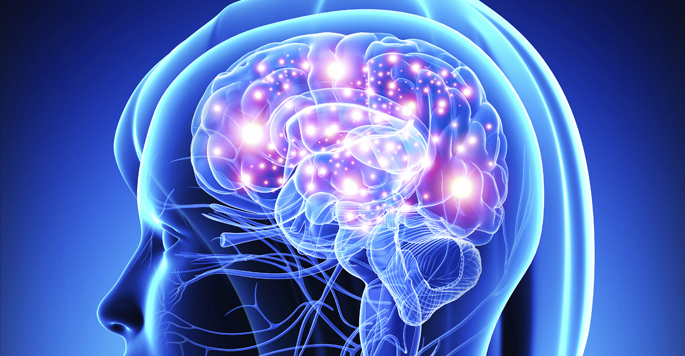
Stylized side-profile illustration of a human head showing a glowing, interconnected brain and nervous system in blue, purple, and pink.
December 5, 2019

Study reveals mysteries of critical brain receptor complex

Poorly functioning AMPARs have been linked to a wide range of neurological and psychiatric disorders including seizures, Alzheimer’s disease, major depression and autism spectrum disorder. Understanding how AMPARs are formed and operate is essential for the rational design of pharmacological compounds that, by tuning AMPAR activity up or down, could improve treatment of these conditions.

Young woman with tear-streaked cheeks looks through horizontal window blinds, touching her lips with one finger.
November 27, 2019

Study finds ‘frozen’ fear response may underlie PTSD

To explore how fear becomes entrenched, VUMC researchers traveled down the precise neuronal pathways in the brains of mice that trigger fear responses, and which normally extinguish the behaviors once the danger has passed.