



Patient care goes beyond chemotherapy and other traditional medical treatments in the Integrative Oncology program at Vanderbilt-Ingram Cancer Center. The program offers patients access to acupuncture, nutrition counseling, exercise coaching, mindfulness sessions, and other options to help them manage pain and maintain mental and physical wellness.
“Integrative oncology provides symptom management for our patients who are undergoing cancer care or after their cancer treatment if they’re having long-standing side effects or symptoms from their treatment,” said Sarah Murawski, PA, who specializes in integrative oncology and practices acupuncture. “That includes difficulty sleeping and stress and nutrition. A lot of our patients really struggle with weight loss. There is also a pain management component. Integrative treatment is more of a whole person care model, focusing on ways to help patients with their symptoms and side effects to give them a good quality of life during and after cancer treatment.”
The Integrative Oncology program was developed in cooperation with Vanderbilt-Ingram’s Supportive and Palliative Oncology Clinic, which supports and enhances a patient’s quality of life at any point in their treatment course. Palliative care is often confused with hospice, but its clinicians are not limited to end-of-life care. They offer effective options for treating cancer-related symptoms and guidance for future medical planning.
Heather Jackson, PhD, APRN, FNP-BC, administrative director of Advanced Practice at Vanderbilt-Ingram and associate professor of Clinical Nursing and Medicine, gave an example of a referral.
“I had a patient who was really having a tough time with nausea and did not want to take any more pills, so Sarah prescribed aromatherapy. It was peppermint oil, and the patient was given a necklace so that she could have the peppermint oil easily accessible.”
Patients are often inquisitive about alternative therapies for cancer treatment side effects, but internet searches can lead them down rabbit holes.
“If you do Google searches about what to do with cancer treatment, there are 1,000 things out there, and integrative or complementary medicine has really been popular in recent years, but there’s every piece of advice under the sun online,” Murawski said. “When patients come to me, I can give them the science and the research behind these treatments. I narrow down all those options.”
After consultations with her, patients feel more empowered, she said.
“A lot of times when patients have a cancer diagnosis, they feel like they are being told what they have to do, but there are all these other actions they can take to support their health that they can choose,” Murawski said. “We give them the research and these options, so they can pick and choose what works best for them and their lifestyles.”
The Integrative Oncology program was launched in 2024, about a year after Vanderbilt-Ingram’s Supportive and Palliative Oncology Clinic was formed.
“What has been great about this service line is a better connection with the cancer center in a way that we didn’t have previously,” said gastrointestinal oncologist and palliative care physician Rajiv Agarwal, MD, associate professor of Medicine and co-medical director of the Supportive and Palliative Oncology Clinic.
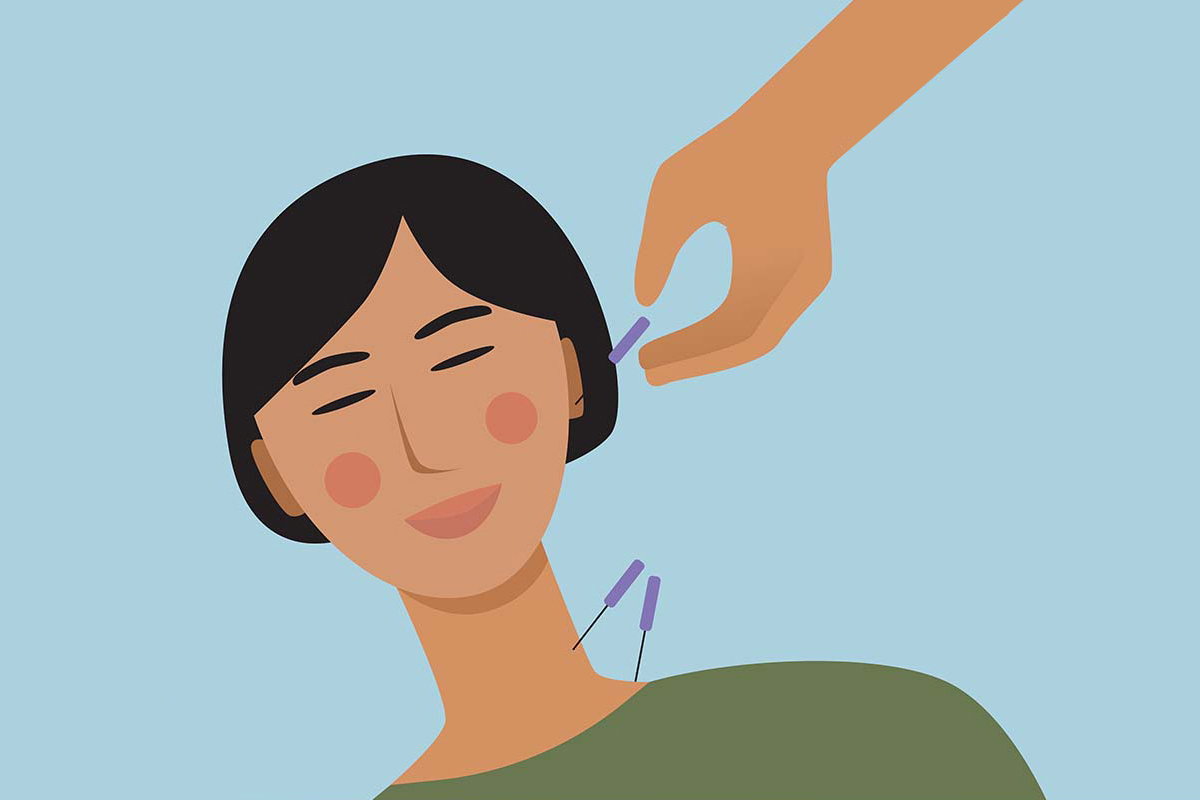
Through the program, Vanderbilt-Ingram offers acupuncture to cancer patients for pain management. Patients receive auricular acupuncture, which involves placing needles in the ear. Since the ear is connected to the autonomic nervous system, vagus nerve and spinal nerves, the stimulation sends signals to the brain that modulate pain processing and reduce inflammation. If patients require more intensive acupuncture, the clinic refers them to the Osher Center for Integrative Health at Vanderbilt.
The Integrative Oncology program partners with the Osher Center, which offers a menu of patient services, including yoga classes, tai chi and qigong classes, massage therapy, sessions on living with chronic pain, mindfulness-based cognitive therapy, and other integrative treatments.
“We’re offering patients easier access to Osher,” said Sara Martin, MD, associate professor of Medicine, medical director of Vanderbilt Health Outpatient Palliative Care and co-medical director of the Supportive and Palliative Oncology Clinic. Integrative Oncology program clinicians make direct referrals to the Osher Center without patients having to go through additional consultations. Patients can receive the care they need on their first visit to the Osher Center.
However, patients come to Vanderbilt-Ingram from throughout Tennessee and other states, so the Osher Center is not a viable option for them.
“I can do vetting to help patients find, for example, a good acupuncturist who is licensed and has gone through the required education,” Murawski said. “I have been able to connect patients with local resources and local nonprofits that offer services for people when money is an issue. I know finances can be tough. For people who cannot access Osher, whether it is because of distance, money or transportation, we have been able to leverage local resources and get patients referrals and access to those.”
Vanderbilt-Ingram’s Supportive and Palliative Oncology Clinic has locations at the Main Campus, One Hundred Oaks, Belle Meade, Cool Springs and Lebanon. Patients interested in the services provided should ask their treating clinicians about a referral.
“Vanderbilt-Ingram is a comprehensive cancer center, and that’s what we’re aiming to provide,” Martin said. “We’re bridging integrative care with more traditional therapies to give our patients the best care possible so that they have the best quality of life possible.”