



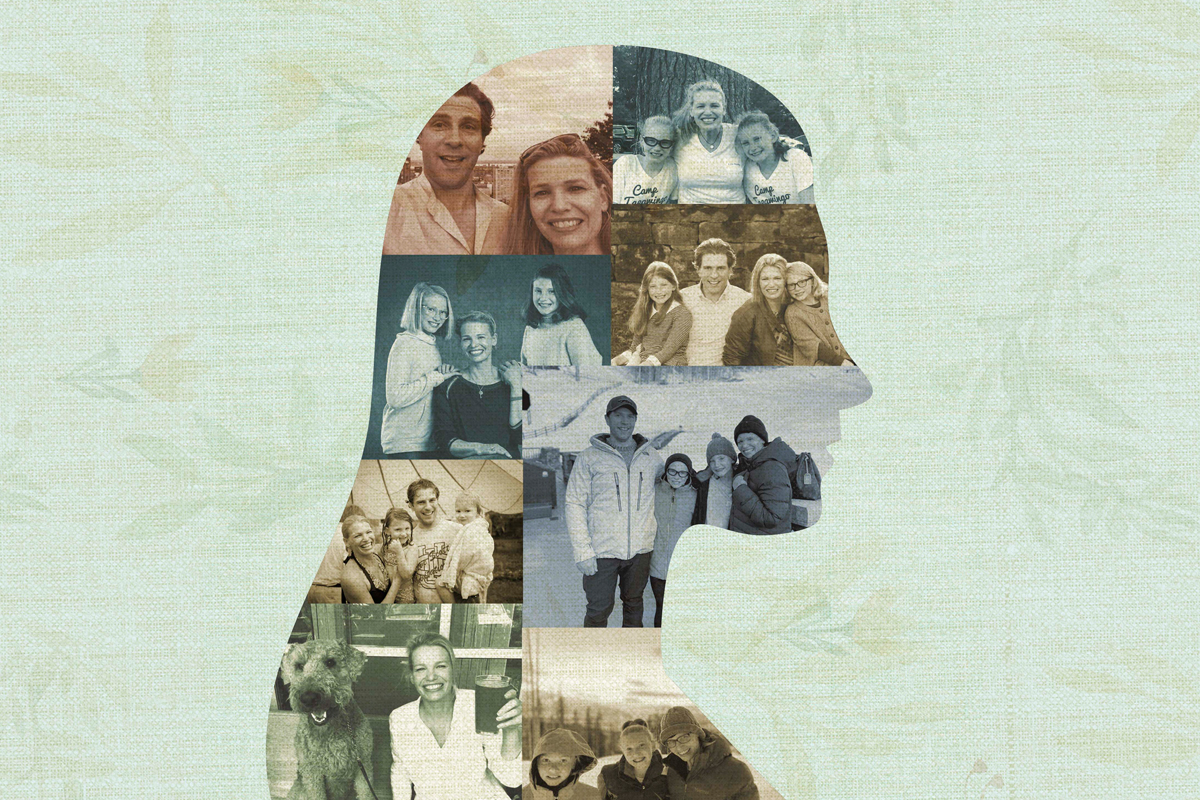
 Illustration by Diana Duren
Even before she was diagnosed with endometriosis, Erin Denbo had long dealt with its symptoms. She knew something was wrong and met with many doctors until she found one who listened. In the fall of 2015, she underwent a six-hour surgery to remove it.
Her husband, Scott, remembers the surgeon describing what he found.
“He said there was endometriosis all over the place, and they removed it,” Scott said. “And he said there were white spots that looked like snowflakes.”
Neither Erin nor Scott thought much about the spots. The surgery appeared successful, and Erin was ready to move on with her life.
At the time, she was a busy mom in her late 30s raising two daughters with Scott. They had been together since their early 20s and were building a life in Nashville after meeting in college and spending time together in California.
Like many young adults juggling work, family and daily responsibilities, cancer — and the unique challenges that come with facing a life-threatening illness in the middle of building a life — was the furthest thing from their minds.
A life-changing call
Three weeks after her surgery, Erin’s phone rang. “She said, ‘Why is the doctor calling me?’” said Scott, who thought it might just be a postsurgery check-in. “She went into another room and when she came back, she said, ‘I have cancer.’”
The white spots the surgeon found weren’t a concern for Scott and Erin, but the surgeon couldn’t shake the feeling that something wasn’t right. He sent tissue samples to multiple pathology labs before getting an answer that made sense. The diagnosis was an extremely rare one: Erin had Stage 4 appendix cancer.
Erin’s doctors referred her to a specialized surgical team at Vanderbilt Health where she began treatment under surgical oncologist Kamran Idrees, MBBS, MSCI, MMHC, Ingram Professor of Cancer Research and division chief of Surgical Oncology and Endocrine Surgery, and Jordan Berlin, MD, Cornelius Abernathy Craig Professor, professor of Medicine and division director of Hematology and Oncology.
The treatment plan involved chemotherapy followed by an extensive operation that included a one-time procedure known as hyperthermic intraperitoneal chemotherapy (HIPEC) for advanced abdominal cancers that combines cytoreductive surgery to remove tumors with a high dose of a heated chemotherapy wash delivered directly to the affected area.
Scott remembers the gravity of that first consultation.
“He told us, ‘This is what it is; this is what you’re dealing with; and this is a really hard surgery,’” Scott said. “It was terrifying.”
The HIPEC is known as the mother of all surgeries for its length and level of difficulty. Erin’s surgery happened two days after she turned 40.
“She joked that she got to have the world’s biggest surgery for her 40th birthday,” Scott said.
Erin underwent several rounds of chemotherapy before the HIPEC, followed by more chemotherapy and hospital stays. When she completed her final treatment, she and Scott shared a beer before “going home to piece our lives together,” he said. For the next three years, life returned to normal.
Rising rates
Erin’s diagnosis falls within a category researchers call early-onset cancer — cancers diagnosed in adults younger than 50. According to Andreana Holowatyj, PhD, MSCI, assistant professor of Medicine in the Division of Hematology and Oncology, cases in younger adults have been rising worldwide.
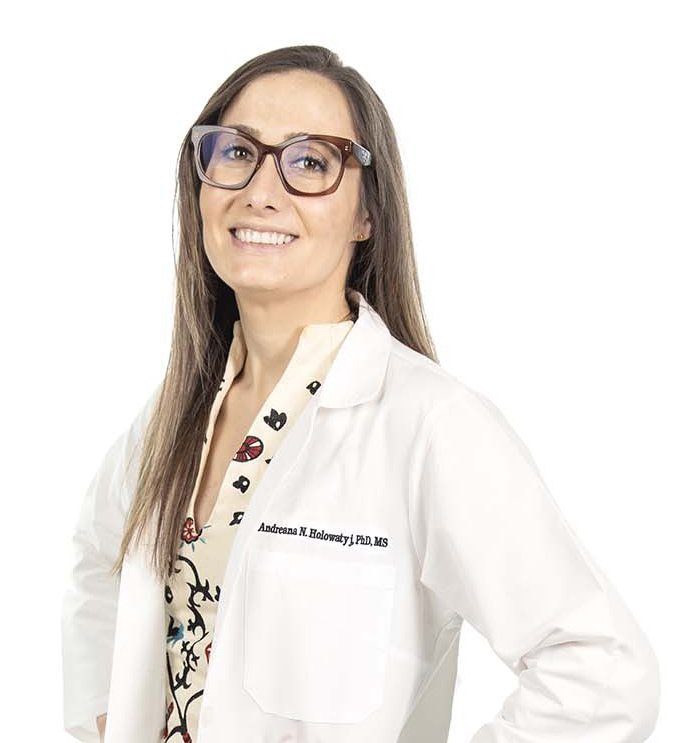
“When we talk about early-onset cancers, we mean adults between the ages of 18 and 49. And we are seeing increases across multiple cancer types.”
Andreana Holowatyj, PhD, MSCI
Those include colorectal cancers, breast cancer, stomach cancer, endometrial cancer, multiple myeloma — and even rare cancers like appendix cancer.
Holowatyj’s research recently showed that although appendix cancer remains uncommon, rates are rising across generations.
“It’s alarming,” she said. “These trends extend beyond one type of cancer.”
As more young adults face cancer diagnoses, scientists and clinicians are recognizing that their needs differ from those of older patients.
Cancer can affect nearly every aspect of life, but for younger adults the disruption often intersects with pivotal stages of life.
“Younger individuals may be thinking about body image, fertility, exercise, dating, relationships, building a career, raising children and taking care of parents,” Holowatyj said. “These are life domains that may be impacted in different ways for someone diagnosed in their 30s compared to someone diagnosed later in life.”
Those concerns can arise at different times along the cancer journey.
Body image issues may emerge after surgery. Potential infertility risk is essential to address before treatment begins. Financial pressures may surface during months or years of care.

“We want to make sure the patient’s voice is represented and that we understand their needs and perspective wholly,” Holowatyj said. “That’s an important part of personalized care — for the patient, with the patient.”
Cancer treatment can dramatically alter how patients see themselves.
For Erin Denbo, the physical effects were real.
“Erin was a really beautiful woman by anybody’s measure,” said Scott. “But after surgery and treatment, there were hormonal issues and changes in weight.”
The large abdominal scar from her HIPEC surgery, however, didn’t seem to bother her much. Instead, Erin focused on rebuilding strength.
She joined Survivor Fitness, a nonprofit program that pairs cancer survivors with volunteer trainers. Her workouts became a source of empowerment, eventually culminating in something unexpected: a Spartan obstacle race completed alongside other survivors.
‘Real focus and purpose’
Mental health challenges are also common among young cancer patients. Scott said Erin’s experience surprised him. “I think Erin was her best self when she was going through treatment,” he said. “It gave her a real focus and purpose.”
Before cancer, Erin struggled with periods of anxiety and depression. During treatment, Scott believes that sense of clarity helped her cope.
“She became the best version of herself,” he said.
Faith also played a significant role. “She had a very strong faith,” Scott said. “I think that helped her through it.”
Support communities helped as well. Erin joined a support group through a local cancer nonprofit, connecting with others who understood what she was facing.
Scott initially resisted joining caregiver support programs himself — something he later regretted.
In the spring of 2019, Erin began experiencing abdominal symptoms again. Idrees confirmed what the Denbos feared: The cancer had returned.
Another surgery followed, but the prognosis was grim. Scott remembers the difficult conversation with Idrees. “He told us, ‘This is bad. It’s going to kill you,’” he said.
Erin chose to pursue additional chemotherapy for a time before transitioning to palliative care. Even then, the family focused on making memories. One trip stands out: a vacation to Telluride, Colorado, with friends in early 2020.
The group rented a cabin high in the mountains. Erin was determined to enjoy the trip despite her illness. “We brought IV bags to keep her hydrated,” Scott recalled.
The ski resort shut down shortly after they arrived as the COVID-19 pandemic began spreading across the United States, but the trip remained meaningful.
“We never got to go skiing,” Scott said. “But we had some really good memories.”

Erin died Aug. 10, 2020, after several weeks in home hospice. She was 44.
Today, Scott reflects on Erin’s cancer journey not only as a time of fear and loss, but also of resilience.
Despite the devastating diagnosis, Erin found ways to live fully — nurturing friendships, raising her daughters and supporting others facing cancer.
“She handled the whole thing with grace,” Scott said.
The caregiver aspect of young adult cancer
When Erin’s cancer returned, Scott approached caregiving differently the second time around. “I was definitely angry at the world,” he said of Erin’s first experience with cancer treatment. “It disrupted our life, our finances, everything we were trying to build.”
As a high-driven professional in sales, balancing work and caregiving proved difficult.
“I probably wasn’t the world’s best caregiver,” said Scott, who sought support through a caregiver group.
“I think coming out on the other side of it, I’m a more empathetic human being,” he said. “More patient.”
Caregivers often face their own emotional and financial challenges, from navigating complex medical systems to balancing careers and family responsibilities.
Holowatyj notes that the impact extends far beyond the patient.
“Cancer doesn’t just affect the individual diagnosed,” she said. “It affects families and loved ones as well.”
Holowatyj said Erin’s story highlights an important message for young adults: Pay attention to any changes in your health. One concerning trend scientists see is younger patients being diagnosed with cancer at later stages.
“Some patients are told their symptoms are something else,” she said. “Others delay seeking care.”
While the word “cancer” can be frightening, she encourages people not to ignore unusual symptoms.
“If you’re experiencing a change that doesn’t feel normal for your body, go talk to your health care provider,” Holowatyj said. “Detecting something early can be lifesaving.”
She also encourages people not to face medical concerns alone.
“If you can, bring someone with you,” she said. “Just because you can do it alone doesn’t mean you have to.”
Help for young adults with cancer
Vanderbilt-Ingram Cancer Center offers a support program for young adults with cancer. To learn more about the program, email Hasani Bland at hasani.l.bland@vumc.org or visit www.vanderbilthealth.com/information/young-adults-cancer