


Division of Gastroenterology Hepatology and Nutrition Archive — Page 7 of 8


-
August 15, 2013
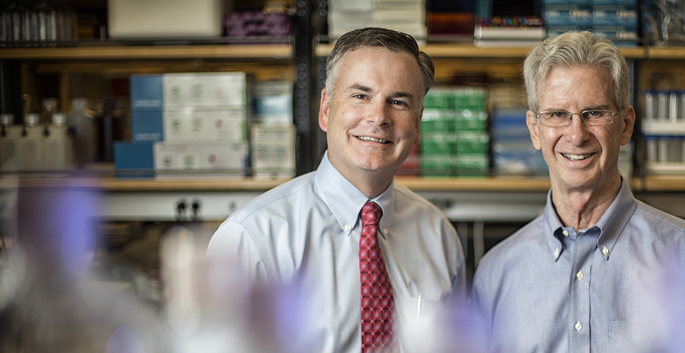
$5.2M NIH grant bolsters colorectal cancer research
Robert Coffey Jr., M.D., Ingram Professor of Cancer Research at Vanderbilt University, has received a five-year, $5.2 million grant from the National Institutes of Health (NIH) to study the role of extracellular RNA (ex-RNA) in colorectal cancer. -
August 12, 2013
Noninvasive test detects stomach bug
A noninvasive test can be used to identify the presence of Helicobacter pylori and evaluate its virulence, which will be useful in areas with high rates of H. pylori-associated gastric cancer. -
June 20, 2013
Correa honored by gastroenterological society
The American Gastroentero-logical Association (AGA) has honored Pelayo Correa, M.D., with its Distinguished Achievement Award, which recognizes an individual for contributions to research that have advanced the science and practice of gastroenterology. -
June 6, 2013
VU study identifies new mechanism for cancer development
Researchers at Vanderbilt University Medical Center led by a 32-year-old postdoctoral fellow have discovered a new mechanism for the development of cancer that is challenging conventional scientific wisdom. -
May 23, 2013
VICC hosts cancer researchers during annual retreat
The role of inflammation in gastrointestinal cancer development was a prominent theme among guest speakers during the Vanderbilt-Ingram Cancer Center annual retreat held at the Vanderbilt Student Life Center. -
March 7, 2013
New core to aid research related to nutrition and diet
A new research core has been established to help Vanderbilt University Medical Center investigators optimize their nutrition- and diet-related study designs, methods, measures, interventions and analysis. -
January 31, 2013
Vanderbilt, GE unite to study colon tumor development
Vanderbilt University has partnered with GE Global Research in Niskayuna, N.Y., the technology development arm of the General Electric Company, to better define — at the cellular level — how colon tumors form and develop.