


James Crowe Archive — Page 7 of 13


-
February 13, 2019
Researchers push forward frontiers of vaccine science
Using sophisticated gene sequencing and computing techniques, researchers at Vanderbilt University Medical Center and the San Diego Supercomputer Center have achieved a first-of-its-kind glimpse into how the body’s immune system gears up to fight off infection. -
January 31, 2019
Designing antibodies to fight the flu
Vanderbilt investigators said their work shows that computational design can improve the ability of naturally occurring antibodies to recognize different flu strains and may hasten the development of more effective flu therapies and vaccines. -
January 24, 2019
VUMC scientists ‘sprint’ to find anti-Zika antibodies
Scientists at Vanderbilt University Medical Center and colleagues in Boston, Seattle and St. Louis are racing to develop — in a mere 90 days — a protective antibody-based treatment that can stop the spread of the Zika virus. -
January 17, 2019
Research explores link between stem cell transplant, diabetes
About a decade ago, at the beginning of his career in academic medicine, Brian Engelhardt, MD, MSCI, noticed that many of his patients receiving a stem cell transplant for their blood cancer ended up with diabetes. -
December 6, 2018
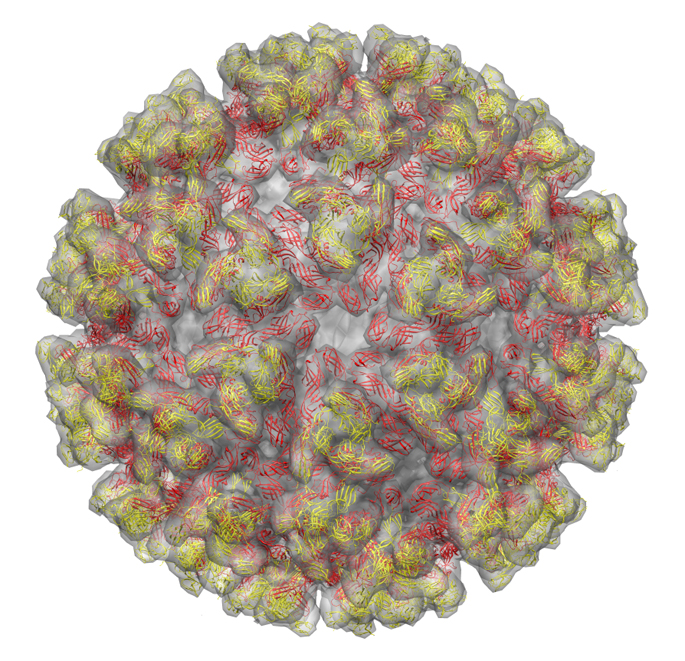
Discovery could lead to neutralizing West Nile virus
Researchers at Vanderbilt University Medical Center and colleagues have isolated a human monoclonal antibody that can “neutralize” the West Nile virus and potentially prevent a leading cause of viral encephalitis (brain inflammation) in the United States. -
October 18, 2018
Translational Research Forum set for Oct. 26
Patricia Griffin, MD, chief of the Enteric Diseases Epidemiology Branch at the U.S. Centers for Disease Control and Prevention (CDC), will be the guest speaker at the 2018 Vanderbilt Translational Research Forum Oc. 26 at the Vanderbilt Student Life Center. -
October 11, 2018
Symposium to focus on prospects for a universal flu vaccine
Internationally known vaccine experts including Vanderbilt University’s James Crowe Jr., MD, will speak next month at a symposium in Nashville on prospects for a universal flu vaccine.