Journal of Clinical Investigation Archive — Page 4 of 4

Transparent laboratory pipette marked with red measurement graduations resting across multiple clear Petri dishes containing pink-purple liquid.
March 19, 2014

Small molecule protects kidney filter

A compound identified at Vanderbilt has therapeutic potential in protecting the kidney filter barrier.

Smiling woman with long reddish-brown hair seated in a laboratory, with shelves of containers, boxes, and scientific equipment behind her.
February 20, 2014

Studies shed new light on breast cancer development

Rebecca Cook, Ph.D., assistant professor of Cancer Biology, has spent her life trying to understand what makes things grow, from seedlings in soil to tumor cells in the body.

Dr. Thomas Wang in a dark suit and pink tie, standing in a modern glass-and-steel building.
September 17, 2013

Researchers identify novel biomarker for diabetes risk

Researchers at the Vanderbilt Heart and Vascular Institute and Massachusetts General Hospital have identified a biomarker that can predict diabetes risk up to 10 years before onset of the disease.

Man in a white shirt standing beside large office windows overlooking a cityscape.
June 6, 2013

Study tracks skin salt’s role in blood pressure control

Clinical pharmacologist Jens Titze, M.D., and his colleagues have identified a new cast of cells and molecules that function in the skin to control sodium balance and blood pressure.

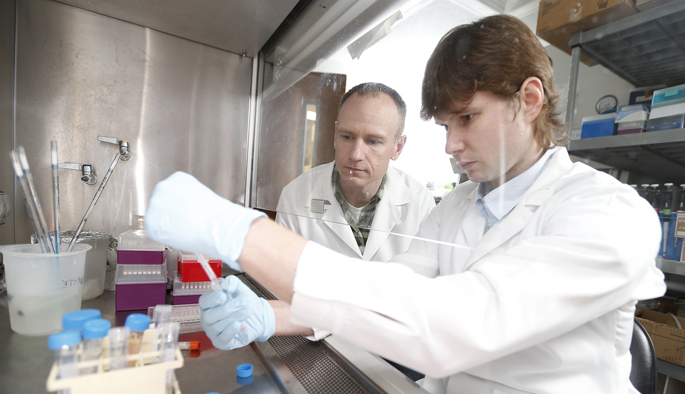
Two laboratory workers in white coats and gloves handle test tubes and other samples at a laboratory workbench; shelves of lab supplies are visible behind them.
May 30, 2013

Study lays groundwork for rational T cell vaccine design

Vanderbilt University investigators have developed a new strategy for identifying the “bits” of a pathogen that spark a protective immune response.

Two researchers in white lab coats pose in a laboratory beside workbenches and shelves of bottles and equipment.
March 21, 2013

Breast cancer study explores therapy to slow recurrence

Many patients with triple-negative breast cancer (TNBC) have recurrence of their disease after an initial response to chemotherapy because the cancer cells have become resistant to treatment. TNBC has a lower survival rate because of this pattern of resistance and there are no targeted agents to treat this form of breast cancer.