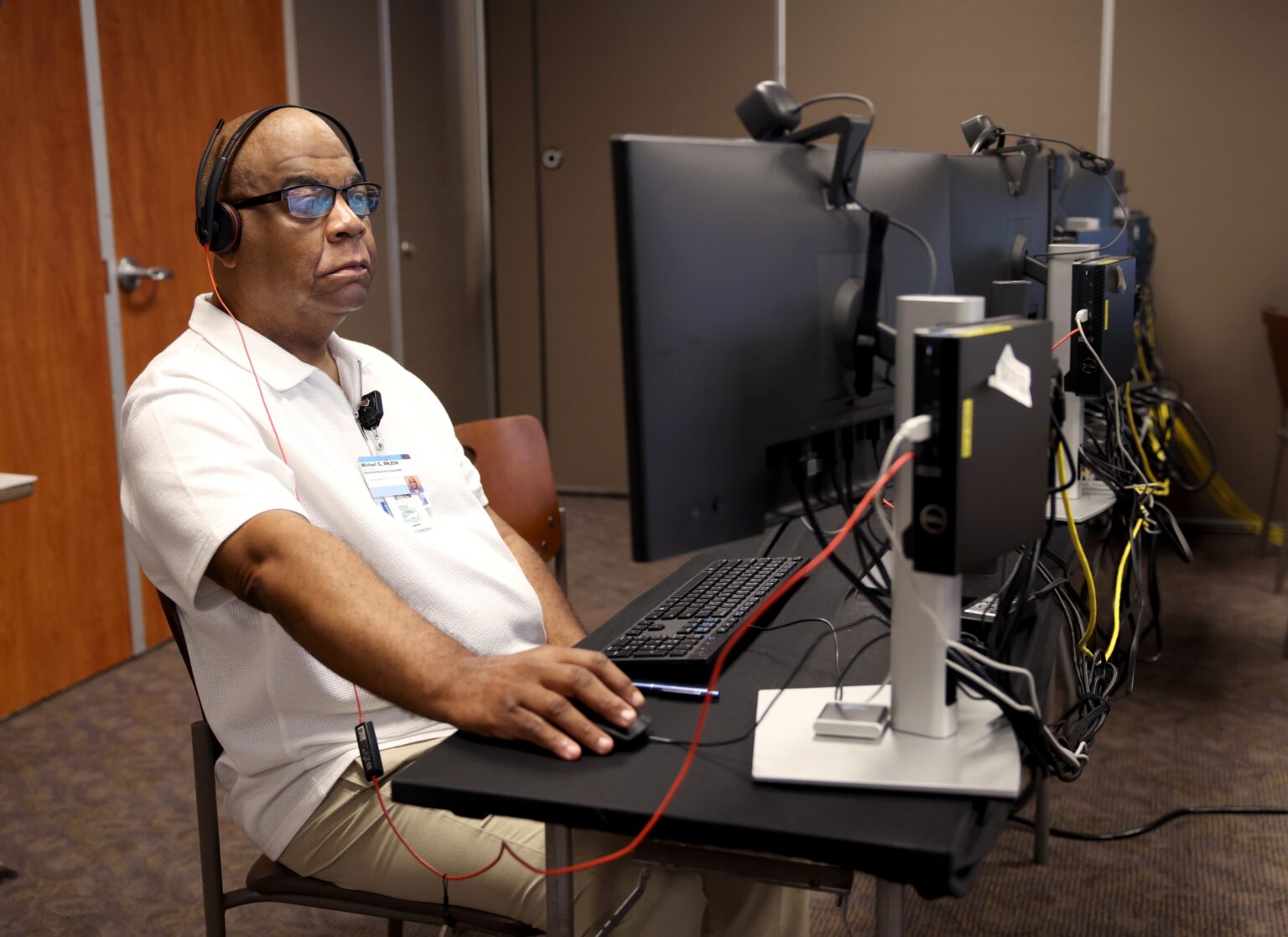
 Michael Gray participates in a training activity at Vanderbilt Clarksville Hospital to prepare for the Oct. 3 transition to Epic, a new electronic health record system. (photo by Donn Jones)

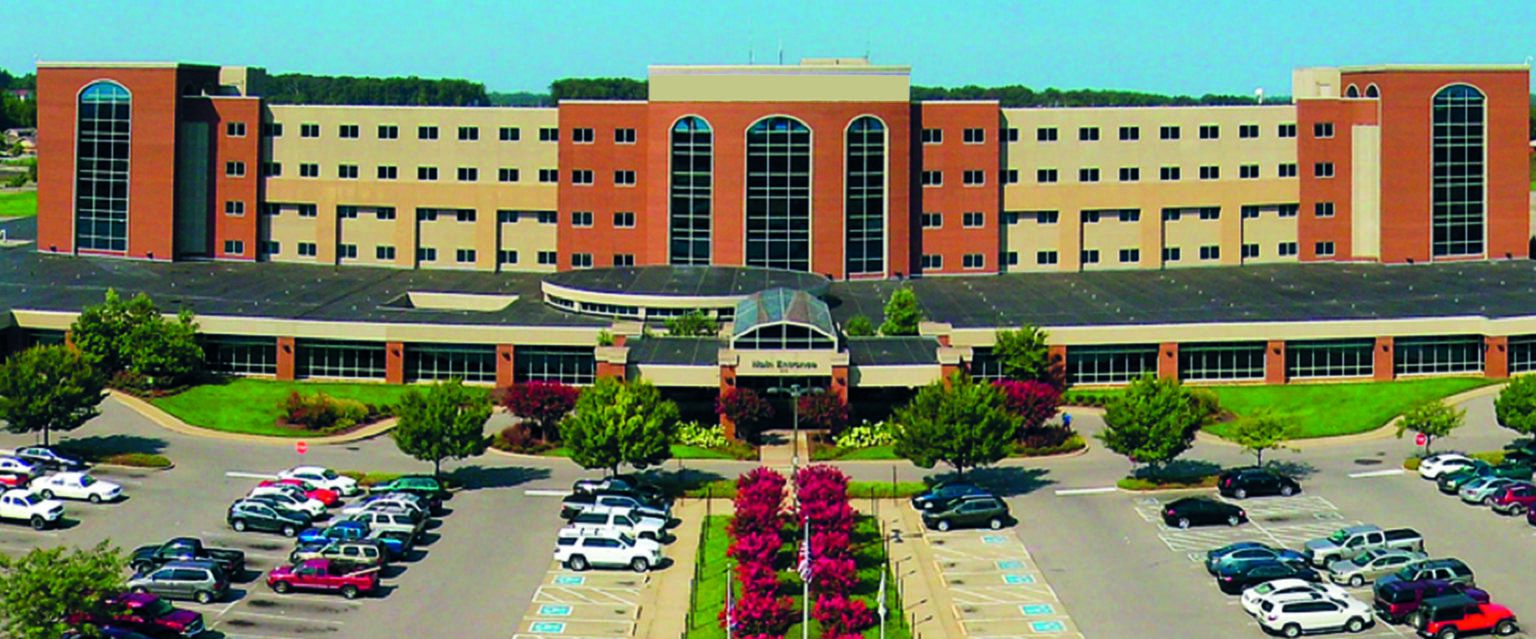
On Oct. 3, Vanderbilt Clarksville Hospital (VCH) will transition to Epic, a new electronic health record (EHR) system that will enhance the coordination of care and improve efficiency for the hospital’s clinical staff and its patients.
The EHR transition marks another significant financial investment in VCH’s future and marks a milestone in integration of the recently acquired hospital into Vanderbilt Health’s broader network. Extensive planning and preparation have taken place over many months to help ensure a smooth transition process for patients, physicians, nurses and staff as the new EHR system goes live.
Hospital leaders expect patients to experience no disruption in care during the transition.

“With the implementation of Epic, our physicians, nurses and staff in Clarksville will have easier access to a unified health record system that spans our entire health system. Through this investment, we are providing our clinicians with the most up-to-date platform that will allow them to have a more comprehensive picture of their patients’ medical history and improve the coordination of their care,” said Jane Freedman, MD, Deputy Chief Executive Officer and Chief Health System Officer for Vanderbilt Health.
Because Epic is used by health systems across the country, clinicians will also be able to access information shared through Epic’s nationwide interoperability network, giving them broader insight into patients’ medical history and previous care when appropriate.
To support the new EHR system, VCH has also invested in hundreds of new computer workstations and other technology upgrades throughout the facility. Staff will also receive other new devices designed to improve reliability, performance and access to clinical information. Additional investments include upgraded printers, scanners, networking equipment and other infrastructure needs to support the hospital’s transition to Epic.
“A transition of this scale represents the best of Vanderbilt Health, with hundreds of our IT experts diligently working side by side with VCH clinical and operational teams. I am excited to see where VCH can go with these tools supporting them,” said Neal Patel, MD, MPH, Chief Informatics Officer and Professor of Clinical Pediatrics for Vanderbilt Health.
VCH has also benefited from significant enhancements to its network infrastructure, helping ensure fast, secure and reliable access to critical applications.
“We are excited to provide our caregivers with more and better tools with which they will, in turn, be able to better serve the patients and this community. The investment directly translates toward improved care. The Epic implementation is the largest step taken thus far to coordinate care across all Vanderbilt Health locations, and it goes the furthest in bringing Vanderbilt Clarksville Hospital firmly into the Vanderbilt Health system,” said Randy Davis, MBA, President of VCH.

The new EHR system will provide clinicians and staff with a single platform for accessing patient information and managing clinical workflows. The system integrates key hospital functions, including emergency care, laboratory services, radiology, pharmacy and inpatient care, creating a more seamless experience for both caregivers and patients.
To support employees and providers during the transition, experienced Epic users and technical experts will be present throughout the hospital during the process when the technology goes live. Operational and technical command centers will also be staffed to quickly address questions and provide assistance.
The transition will involve virtually all hospital employees who use its EHR system, as well as affiliated physicians and other clinical partners. Hospital teams have participated in extensive training and readiness activities in preparation for the Oct. 3 implementation.