


 Robert S. Dittus, MD, MPH

In 2006, Vanderbilt Health leaders made a visionary move to create the Institute for Medicine and Public Health, now known as the Institute for Population and Public Health (IPPH), with the goal of creating a broad infrastructure to support population-based research and systemic health care improvement.
The best way to envision the IPPH is as an expansive matrix that supports more than 250 faculty from many departments as they build knowledge in health services research, epidemiology, health policy, global health, biomedical ethics and other areas essential to improving population and public health.

“The Institute for Population and Public Health at Vanderbilt connects research, training and teaching with policy and practical solutions,” said Russell Rothman, MD, MPP, IPPH Director and Senior Vice President for Population and Public Health. “We amplify collaborations across departments, centers and health systems. The institute reaches across the state, nation and the global community to build and translate knowledge into better health.”
Faculty affiliated with the institute are engaged in research supported by more than $200 million in annual funding with more than 350 grants, and they oversee expansive education and training efforts, including PhD programs in biostatistics, epidemiology and health policy, and three MPH tracks — epidemiology/clinical research, global health and health policy.
The IPPH also supports multiple training programs including National Institutes of Health T32 programs that train predoctoral and postdoctoral scientists, the VA Quality Scholars program, and the Realizing Accelerated Progress, Investigation, Implementation and Dissemination in Learning Health Systems (RAPID-LHS) Center.
On Nov. 2, an IPPH 20th anniversary event will be held at the Vanderbilt University Student Life Center that will feature keynote speakers sharing major research and its impact, and a panel discussion on the future of population and public health. The event will also include the annual Population and Public Health Colloquium, with opening remarks from John Dunn, DVM, PhD, MBA, Commissioner of the Tennessee Department of Health, and presentations and posters from Vanderbilt Health and Vanderbilt University.

The event will also honor the architect and founding director of the IPPH, Robert Dittus, MD, MPH, Chief Innovation Officer and Senior Vice President of Vanderbilt Health Affiliated Network. Dittus was recruited to Vanderbilt University Medical Center (now Vanderbilt Health) in 1997 to serve as Chief of the Division of General Medicine and the Albert and Bernard Werthan Professor of Medicine. At the time, while he saw clear strengths in basic science, clinical research and clinical operations, he felt the Medical Center could benefit by building capabilities in public health, epidemiology, health policy, biostatistics and health services research.
While Vanderbilt could have followed the tradition at many other institutions and formed a School of Public Health, Dittus and other leaders at Vanderbilt Health instead envisioned a broader network that would foster collaboration across departments, share resources, integrate education and benefit from tight connections to clinical operations. Dittus quickly began recruiting and mentoring early-career and seasoned faculty to help build the population/public health enterprise he saw as essential.
In 2006, his vision was born as the Institute for Medicine and Public Health (IMPH), which was tasked with integrating public health, epidemiology, biostatistics, health policy and health services research into Vanderbilt’s clinical and research enterprise so the institution could improve health care delivery, outcomes and population health at scale. In leading these programs, Dittus was appointed Associate Vice Chancellor, Senior Associate Dean for Population Health and Executive Vice President for Vanderbilt Health.
“How was I able to recruit faculty like Frank Harrell, Russell Rothman, Wei Zheng, David Stevenson, David Penson, Sunil Kripalani and Tom Elasy, and all these other great people?” he said. “It’s because we are an institute and not a school. In a university structure, you have a school of public health over here, school of medicine over here, and medical center operations over there … We were a matrixed organization.
“I would go to departments, and I’d say, ‘Here’s a recruit you need to build your research program. … You just pay for them, and I’ll sprinkle in some money for research support, space and mentorship.’ … It was win-win for everybody. I created a vision of the future that excited these talented clinician investigators and leaders that couldn’t be replicated elsewhere.
“Schools of public health around the country couldn’t do that. They couldn’t build with the speed and robustness that I could. And we were connected to the Medical Center, so the research that our folks were doing was intimately connected to clinical operations, not distant and set over somewhere else. Our faculty were clinicians; there was no huge barrier.”
Rothman, the Ingram Professor of Integrative and Population Health, succeeded Dittus in 2020 as IPPH Director. He has a large, color-coded chart on his office wall that notes all the institutes, programs and centers that receive support from or collaborate closely with IPPH. There has been continued growth of this matrix, so having a visual representation of all the synergetic connections is a great reminder of just how much the IPPH touches.
“For a project, you might have a clinical specialist who understands the disease physiology; a behavioral researcher who understands health behavior and how to change behavior; a social scientist who understands anthropology, ecology and other factors; and an implementation scientist who is skilled in moving evidence-based practices and research into use,” Rothman said. “Our main goal is really to be that convener and to bring these voices from across the organization and from across the community together so that we can design research that will advance science, but also be effective, and also so that we can educate the future in how to approach what can often feel like very daunting problems.”
In August 2025, the IMPH was renamed the Institute for Population and Public Health to better reflect the institute’s evolving focus as new avenues of research and shifts in funding transformed scientific investigations and patient care.
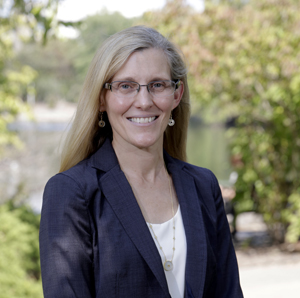
Kristin Archer, PhD, DPT, was appointed to the new role of Associate Director for Strategy and Innovation for the IPPH. Archer is tasked with helping the institute develop and support innovative approaches to research, education and training to advance population and public health. This includes expanding initiatives in digital health, artificial intelligence and machine learning, learning health systems and value-based care; leveraging genomic and exposomic (environmental and social exposures) data resources to better understand health and disease, and advancing other novel methods and tools to improve health outcomes and population health.
“We are entering a transformative time in research and education in which advances in artificial intelligence, digital health, and rapidly expanding genomic and exposomic data are fundamentally changing the way we understand, prevent and manage disease,” Archer said. “By embracing these emerging technologies and data-driven approaches, we have an unprecedented opportunity to accelerate discoveries that improve whole-person health and well-being across populations.”
“Renaming the institute reflects our long-standing attention to leading research that improves the health of populations not only in our surrounding communities but also nationally and internationally,” said Sunil Kripalani, MD, MSc, Professor of Medicine and Health Policy, Director of the Center for Health Services Research (CHSR) and founder of the Center for Clinical Quality and Implementation Research. “As the health care and funding landscapes continue to evolve, the institute’s broad focus helps us connect research more closely with health care delivery, community needs and public policy. Ultimately, it puts us in a stronger position to turn research ideas into meaningful improvements in health.”
Christianne Roumie, MD, MPH, a graduate of Vanderbilt’s Master of Public Health program, leads the IPPH’s educational efforts as the Associate Director for Education. She views the programs of education and training the institute leads as essential to improving health systems and strengthening future leaders.
“Vanderbilt is a leader in population health; we are also leaders in education,” she said. “It’s natural that we should be the ones to teach the concepts of population health to the up-and-coming students who are studying ways to make our health care system better and advance health for our communities.”
Muktar Aliyu, MBBS, DrPH, MPH, Professor of Health Policy and Medicine, Director of the Vanderbilt Institute for Global Health and holder of the Directorship in Global Health, has watched how the IPPH has enhanced the work of the VIGH.
“Support from IPPH has strengthened VIGH by facilitating access to a broad network of experts both on and beyond campus — population health scientists, implementation researchers, educators, community partners and others,” Aliyu said. “IPPH has enhanced our ability to efficiently perform interdisciplinary research and expanded opportunities for our trainees (such as through the global health track of the MPH program). IPPH has also increased our competitiveness when applying for collaborative funding and helped assure the success of our many international programs by ensuring efficient pre- and post-award processes.”
Looking back at two decades of transformative work is gratifying — particularly when you consider the improved health outcomes for those whose lives have been touched — but there is much work and many opportunities ahead, Rothman said.
“Every year, our faculty, staff and trainees achieve remarkable milestones that improve health care delivery, advance science, and improve individual and population health,” Rothman said. “Our successes fuel our momentum for future breakthroughs. This is a challenging, but also very exciting time in population and public health, and the shared mission and strengths of Vanderbilt Health and Vanderbilt University provide the ideal environment to support and amplify the work of the IPPH.”

Kripalani added that Vanderbilt’s “deeply collaborative culture” uniquely positions it to build a strong learning health system that can be a global model.
“Looking ahead, we need to make research and learning a routine part of how health systems operate every day,” he said. “Through the CHSR and the IPPH, we can not only identify better ways to deliver care but also understand how to implement and sustain them in real-world settings. Our goal is a true learning health system where data, evidence, and the experiences of patients and clinicians continually inform improvement. Getting there will require rigorous scientific methods, close operational partnerships, and a shared commitment to better outcomes for everyone we serve.”
As for Dittus, he is grateful to look back on a solid legacy he began dreaming of in the 1990s. He also anticipates advances to come that will be driven by many of the individuals he recruited to Vanderbilt to build his vision.
“I think the future is bright,” he said. “I think these big health systems are where the action’s at. It’s this learning health system where you take the academic parts of IPPH and merge it with clinical operations, so both are informing each other. We are doing that internally with Vanderbilt Health and its hospitals, and extending that out into our network so that we collectively achieve the right care at the right time by the right people with the right outcomes for everyone. … We have an opportunity to lead in that way because of what we have built and the connection we have between clinical operations and research.”
Two decades of advances for improved health
Vanderbilt Institute for Population and Public Health (IPPH) faculty have demonstrated leadership in translating research into concrete and observable improvements in individual, population and public health. Following are just a few examples of IPPH’s 20-year impact.
Transforming care with a learning health system approach
The IPPH and the Center for Health Services Research (CHSR) have made Vanderbilt Health a national leader in learning health systems (LHS) — a model that continually uses data and evidence to improve patient care.
Training to build capacity in implementation science, LHS science, quality improvement, and patient-centered outcomes research has been central to this LHS approach. Externally funded training programs with institutional support provide a strong pipeline for clinicians, researchers and operational leaders at all career stages.
The establishment of RAPID-LHS (Realizing Accelerated Progress, Investigation, Implementation and Dissemination in Learning Health Systems) provides deep academic collaboration for health care delivery projects and serves as a model for institutions nationwide. Because of this strong framework, Vanderbilt Health was selected for the PCORI (Patient-Centered Outcomes Research Institute)-supported Health Systems Implementation Initiative, a national collaborative that helps large health care networks rapidly implement research findings directly into clinical practice.
Improving the delivery of intensive care
For 20 years, the Critical Illness, Brain Dysfunction and Survivorship (CIBS) Center within the CHSR has transformed global critical care. Founded by E. Wesley Ely, MD, MPH, the Grant W. Liddle Professor, the center proved that intensive care unit delirium is a serious form of acute brain dysfunction, not a harmless side effect. The team’s federally funded research linked delirium and deep sedation to higher death rates, longer hospital stays, increased costs and long-term dementia.
These discoveries have revolutionized critical care on a global scale. The CIBS Center’s work shifted ICU practice to lighter sedation, routine delirium screening and early patient mobilization. Central to this is their ABCDEF bundle, a standard of care translated into over 35 languages. Implementing this bundle significantly improves patient survival, shortens ICU stays, reduces delirium and cuts down on post-discharge rehabilitation needs.
Elevating early prevention in respiratory health
The Center for Asthma Research, housed within the CHSR and led by Tina Hartert, MD, MPH, the Lulu H. Owen Professor of Medicine, has transformed how we understand early-life asthma development. By blending epidemiology with translational science, the center proved causal links between early risk factors and the disease, informing national clinical guidelines.
Key focuses include:
• Early-life prevention: identifying modifiable targets in infancy to improve short- and long-term respiratory health.
• Infection risks: clarifying how early infections like RSV and rhinovirus interact with host genetics to increase asthma risks.
• A population approach: uncovering differences in asthma outcomes across populations to create scalable, real-world prevention strategies that reduce overall disease burden.
Addressing health literacy to improve outcomes
Internationally recognized research led by Russell Rothman, MD, MPP, the Ingram Professor of Integrative and Population Health, and Kerri Cavanaugh, MD, MHS, Professor of Medicine, has shown how limited health literacy and numeracy contribute to poor outcomes and has developed patient-centered communication tools that improve self-management and control of illnesses such as diabetes and chronic kidney disease.
Complementing this work, Sunil Kripalani, MD, MSc, Professor of Medicine, has advanced the field by creating a measure of medication adherence now used worldwide in 37 different languages, as well as health communication interventions to improve safe and effective medication use. His work in hospital discharge and care transitions, including medication reconciliation and structured follow-up, has also been adopted widely.
Preventing and managing obesity and diabetes through community-based interventions
Research led by Rothman; William Heerman, MD, MPH, the William K. Warren Foundation Professor; and Colin Orr, MD, MPH, Assistant Professor of Pediatrics, has made advances in developing, testing and scaling innovative approaches to childhood obesity prevention, treatment and nutrition security in health care and community settings. Through the We Grow Healthy Center, these investigators have positioned IPPH as a national leader in developing family-centered interventions for use in real-world health care and community settings. Their Greenlight Plus Trial found that a tailored text and web support program reduced obesity prevalence in children by 42% at age 2 compared to standard counseling.
Ongoing National Institutes of Health- and PCORI-funded studies, such as the ADAPT Trial, are expanding these evidence-based pediatric obesity programs into primary care practices and community organizations nationwide. Research led by Lindsay Mayberry, PhD, MS, Associate Professor of Medicine; Lyndsay Nelson, PhD, Research Associate Professor of Medicine; McKenzie Roddy, PhD, Assistant Professor of Medicine; Emily Morrow, PhD, Assistant Professor of Medicine; and Kripalani, has advanced precision and health systems approaches to diabetes management. Projects include implementing social needs screening for adults with type 2 diabetes, using mobile phone support for medication adherence, customizing behavioral care, and addressing diabetes management alongside cognitive decline.
