



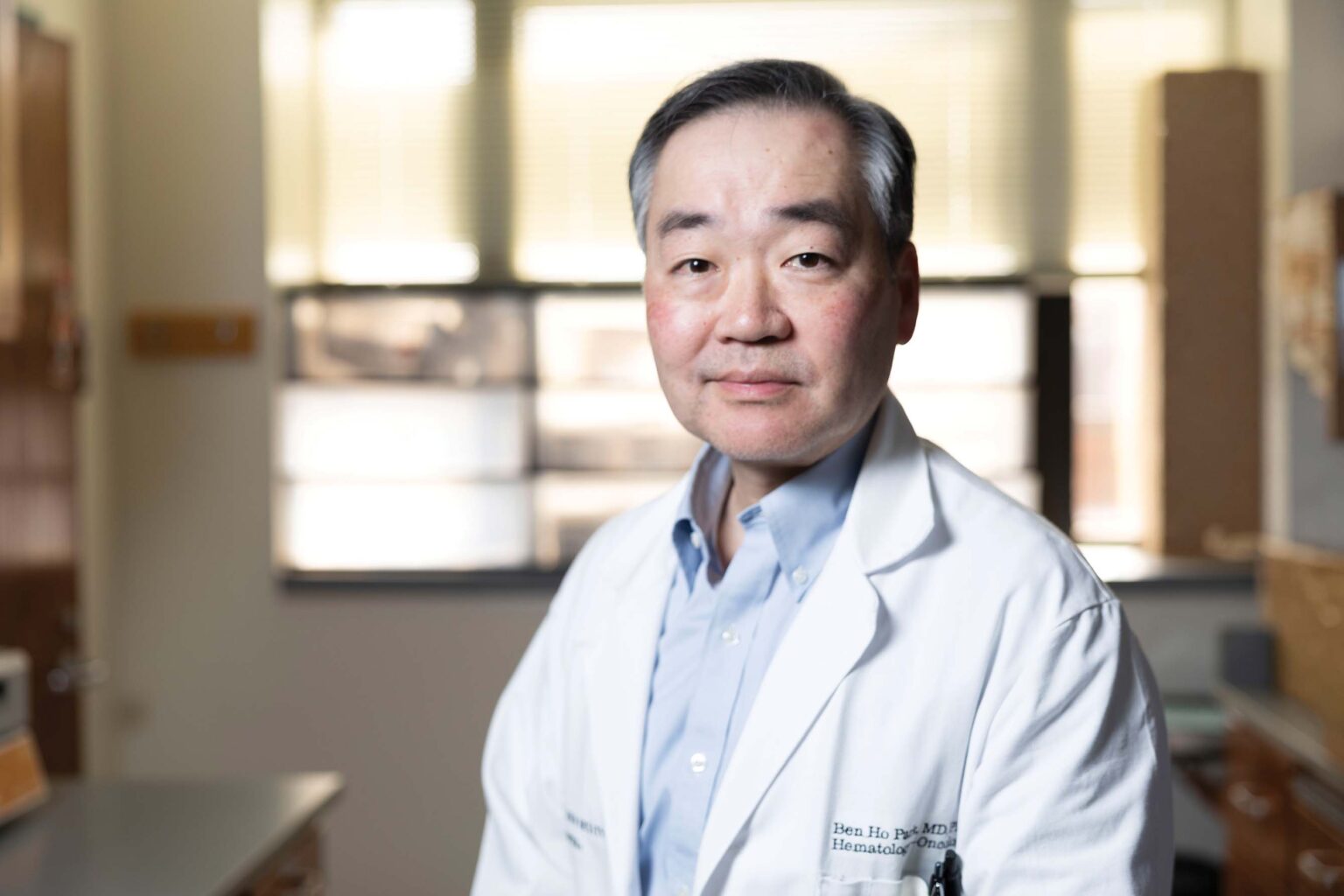
 Photo by Susan Urmy

Every cancer is different. As clinicians we should not make assumptions about one patient’s cancer based solely upon how a cancer most commonly manifests itself in other patients. We must be diligent in delivering personalized care.
The stories in this issue of Momentum have a common thread that details the importance of treating people in a personalized manner, according to the latest clinical diagnostics and each patient’s priorities, particularly as they relate to quality of life, future aspirations, and family history. Our cover story is about how new diagnostic technologies, such as tests for fragments of circulating tumor DNA, can guide care decisions. These liquid biopsies for patients during cancer treatment can identify hidden cancer cells that may differ from the ones found in tissue samples. This difference matters because cancer can recur if therapies do not get rid of the cancer cells. Liquid biopsies are an emerging care paradigm and one that Vanderbilt-Ingram Cancer Center has embraced. Searching for and scrutinizing these cell fragments is especially crucial with breast cancer because it is a heterogeneous disease that can have widely differing cell populations within a single tumor.
Clinicians also need to take the time to get to know their patients and to be thorough in providing personalized care. One story in this issue is about how a Vanderbilt Health physician ordered an extra test that detected early-stage kidney cancer that would have otherwise gone undiagnosed because she knew about her patient’s family history with the disease. In a personal essay, also in this issue, a patient shares about his doctor insisting on an MRI to double check if his prostate cancer required more aggressive treatment even though he had a low Gleason score, a score that usually denotes a very indolent type of prostate cancer. The doctor’s diligence changed the course of treatment from active surveillance to radiation therapy.
Another story is about tailoring the sequence of surgery and chemotherapy according to a patient’s preferences during the treatment course of metaplastic breast cancer, which is a rare cancer, rather than following a standard protocol for more typical breast cancers.
Rare cancers are among the early-onset cancers with rising incidence rates in younger people. Too often, these cancers are diagnosed at late stages because clinicians discount the probability of their occurrence in younger people. An article in this issue details the valiant response of a 40-year-old woman to her Stage 4 diagnosis of appendix cancer — a diagnosis that came after her symptoms had perplexed doctors. The needs of younger patients can differ from those of older patients. One example is fertility preservation. A young leukemia patient shares her story about how freezing her eggs allowed her to become pregnant after her cancer treatment. Our doctors counsel patients about fertility preservation, and Vanderbilt Health is expanding its services to better serve these patients.
Cancer treatments cause unwelcome side effects that can range from weight loss to pain. Many patients prefer integrative therapies, such as nutrition counseling, mindfulness, and acupuncture, to deal with these side effects. An Integrative Oncology program has been developed in cooperation with
Vanderbilt-Ingram Cancer Center’s Supportive and Palliative Oncology Clinic to meet these needs. An article in this issue outlines the personalized care offerings of this program.
We do more than treat cancer at Vanderbilt-Ingram. We provide personalized care for people. We know that every person is unique, and we strive to tailor therapies and supportive care for every patient.