



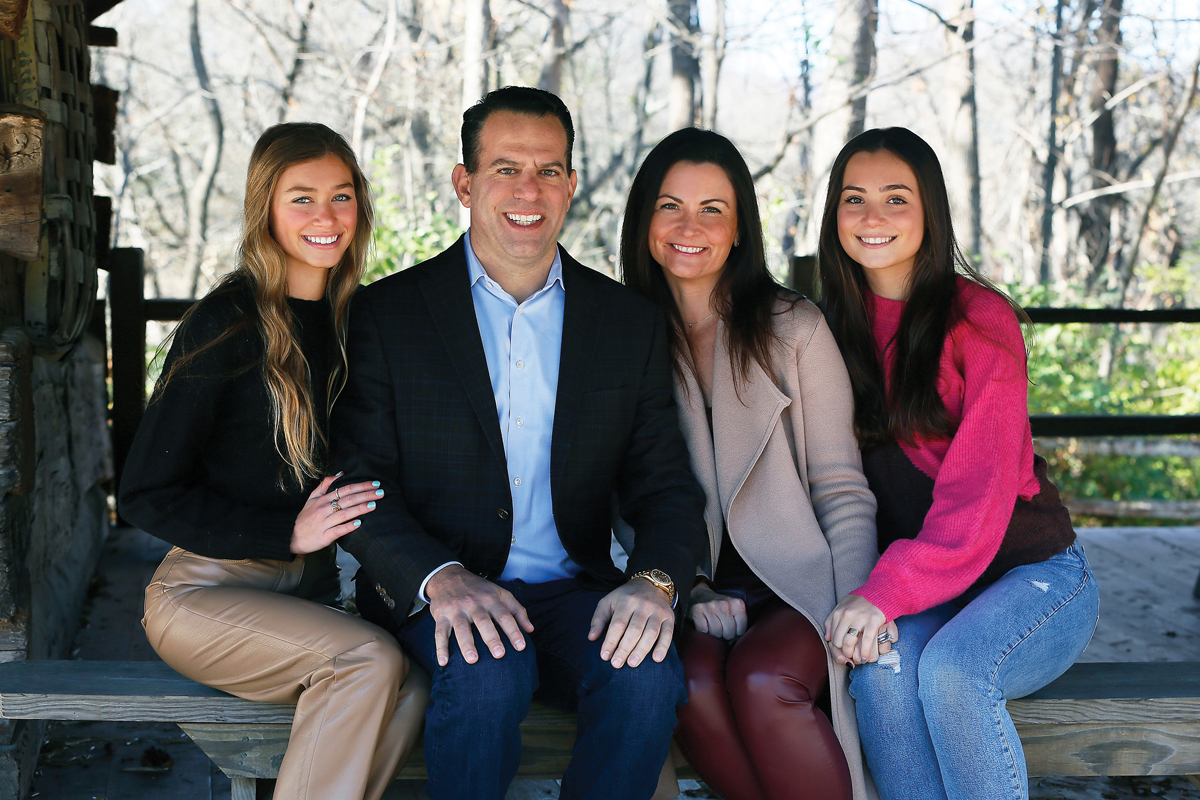
 From left: Alexis, Paul, Lizzie and Taylor Kappelman. Photograph courtesy Kappelman family.
Paul Kappelman and Lizzie Sullivan were born in the same New Orleans hospital, but their paths didn’t cross until many years later during a blind date while they were sophomores at Tulane University.
“She was the sweetest girl, super fun, outgoing and bright,” he said. “We became friends and enjoyed each other’s company. We spent that spring hanging out, and then that summer, we started getting serious and dating.”
Their college romance transcended into a life’s journey. They continued dating through graduate school and stayed steady when their jobs required a long-distance relationship. He proposed when she had returned home just as the New Orleans Jazz & Heritage Festival was about to begin.
She said yes and became Lizzie Kappelman. It was a union that brought them two daughters, successful careers, and stints in Tucson, Arizona, and Dallas, before the family settled in Nashville. Their 23-year union would have lasted longer had she not been diagnosed with a rare cancer at a young age. Lizzie Kappelman was 48 when she learned she had metaplastic breast cancer. The metaplastic subtype, which accounts for between 0.2% and 5% of breast cancers, is aggressive and difficult to treat.
Most metaplastic breast cancers are triple-negative — as Lizzie’s was — meaning that the breast cancer does not express estrogen, progesterone or HER2 receptors. This excludes the use of hormone therapies and HER2-targeted therapies. It is also often resistant to chemotherapy, so a standard of care specific to metaplastic triple-negative breast cancer has yet to be established.
Her cancer was discovered through a mammogram, and a follow-up biopsy determined the type.
“I had heard of triple-negative breast cancer, but I was unaware of metaplastic breast cancer,” Paul Kappelman said. “We learned that the survival rates were not as good as normal triple-negative breast cancer. We knew we were in for a challenge.”
The couple researched cancer centers, contemplating treatment at The University of Texas MD Anderson Cancer Center in Houston, where Lizzie had family, before ultimately deciding to go to Vanderbilt-Ingram Cancer Center. A physician cousin from North Carolina had recommended Ben Ho Park, MD, PhD, the Benjamin F. Byrd Jr. Professor of Oncology, professor of Medicine and director of Vanderbilt-Ingram.
“We emailed Ben, and he emailed back within hours,” Paul Kappelman said. “He was stating, ‘I’d be happy to see you’ and ‘When can you come in?’ I thought, wow, this guy is the head of the program and world-renowned, and he’s that responsive.”
The couple chose Vanderbilt-Ingram because of its proximity to their home and Park’s willingness to involve them more in treatment decisions, he said. She wanted to have surgery before chemotherapy.
“It really came down to a matter of preference given how rare this cancer is, and there wasn’t a black-and-white blueprint for treatment,” he said. “Ben had the perspective that this wasn’t standard triple-negative breast cancer; that it is different; and that we need to be open to as many creative paths as we might seek.”
Metaplastic breast cancer was first recognized as a distinct carcinoma subtype by the World Health Organization (WHO) in 2000. It gets its name from the word metaplasia, a medical term for the transformation of one cell type to another. In metaplastic breast cancer, the cells typically are epithelial cells that line the ducts and lobules of the breast, then they morph into mesenchymal cells that can differentiate into other cell types like those found in bone, muscle and cartilage. Because of this cellular heterogeneity, pathologists and oncologists made diagnoses ranging from carcinosarcoma to squamous cell carcinoma before the WHO designation.
In addition, there is little data on how to best treat metaplastic breast cancer, but some studies suggest that due to their relative insensitivity to chemotherapy, doing surgery first to remove the tumor may be a preferred option. Park has treated a number of patients with metaplastic breast cancer in his 20-plus years as a breast oncologist.
“In my opinion and experience, as a group, most metaplastic breast cancers are not very chemo-sensitive. As such, even though studies suggest no real differences in outcomes whether one gets chemotherapy before or after surgery, that applies to patients with “normal” types of breast cancer. Most of those studies did not include any — or only very few — patients with metaplastic breast cancer, and so the data are not really applicable. Therefore, for patients with metaplastic breast cancer, it is usually my preference to do the surgery first to get the tumor out before it has a chance to spread,” said Park.
Lizzie Kappelman had been interested in health and medicine prior to her diagnosis. She volunteered with fundraising efforts for Type 1 diabetes research and care as well as for Monroe Carell Jr. Children’s Hospital at Vanderbilt. She researched her cancer diligently and engaged with Park in her treatment plan, asking questions and exploring options.
“We would text Dr. Park or email him, and he would call right back,” Paul Kappelman said. “I can’t tell you the number of phone calls and conversations we had brainstorming. He was open to Lizzie’s feedback and ideas, would take them, digest them, and come back to her. We had so many conversations, early in the morning, late at night, at his office, over the phone, over Zoom, just talking about treatment options and plans, listening to his ideas, going back and forth. I appreciate him as a person and as a clinician. He’s pretty special.”
Her treatment plan was surgery followed by chemotherapy, then multiple rounds of radiation along with immunotherapy. However, during her chemotherapy, the cancer recurred.
“Unfortunately, Lizzie’s cancer was completely insensitive to chemotherapy. When it came back, we still tried a lot of different therapies including multiple chemotherapies, radiation and immunotherapy, but the tumor was too aggressive,” Park said.
“The nurses at the Belle Meade clinic got to know Lizzie and me and my family on a personal level,” Paul Kappelman said. “They became like family. It sounds easy, but when you are dealing with cancer patients, and you end up losing these patients, you know it’s hard. We always felt confident that we were getting amazing care, but they were the sweetest people.”
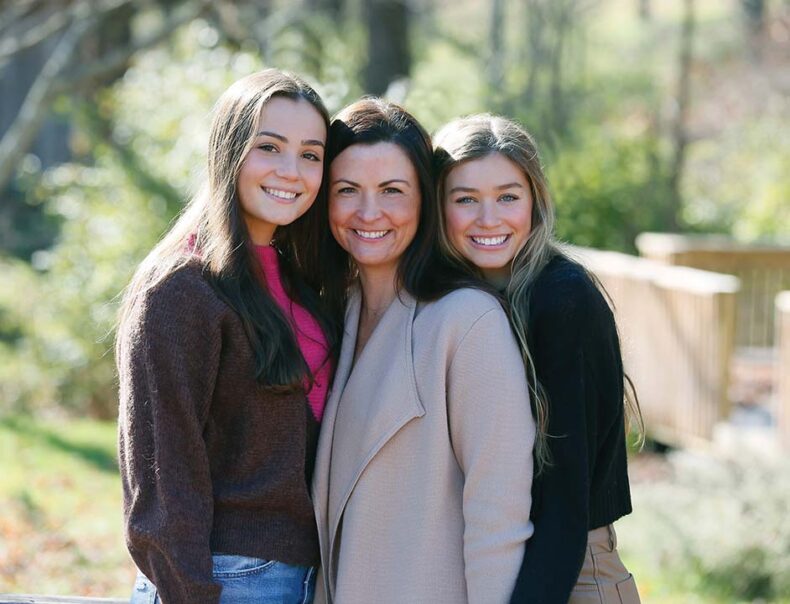
Lizzie Kappelman died Nov. 14, 2023, approximately two years after her diagnosis. She excelled at many roles in life. She had worked in procurement for Compaq Inc. and IBM, and had been a steadfast partner to Paul, a loving mother to her daughters, Taylor Anne Kappelman and Alexis Settler Kappelman, and a master gardener, who kept flowers in blossom around their home. Her family created the Lizzie Kappelman Breast Cancer Research and Innovation Fund in her honor, and in gratitude for her care team at Vanderbilt-Ingram.
At their first meeting, on that blind date, she had worn cowboy boots, Paul Kappelman recalled, because they were going line dancing.
“She just got prettier and prettier as she aged,” he said. “She just had a healthy, natural kind of beauty with long brown hair and big brown eyes. She was captivating. She made time for people and would be really focused on being present with everyone she encountered.”