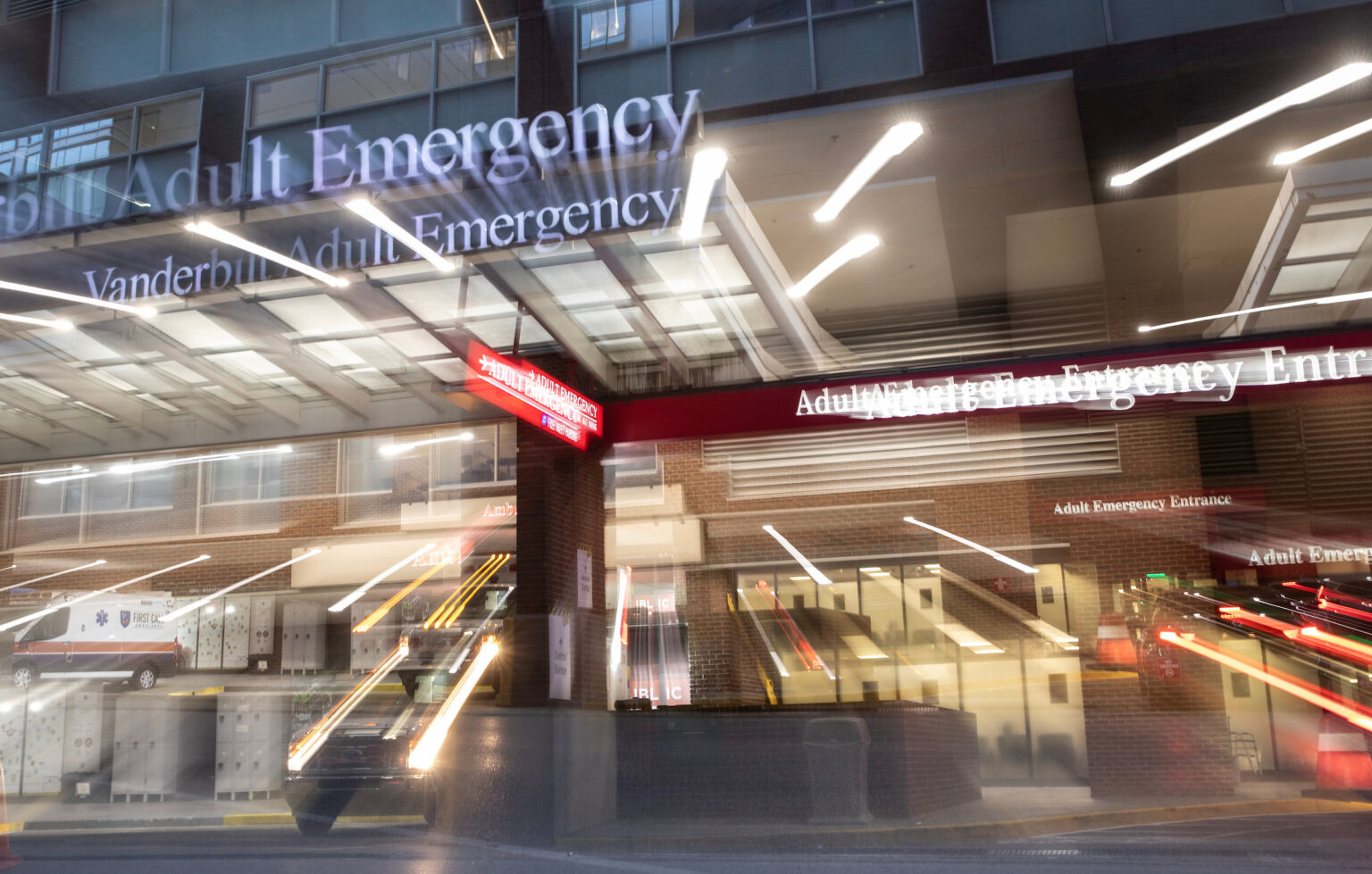
 The study tracked 282 patients who came to the Vanderbilt University Hospital ED with an eye-related symptom and received ocular point-of-care ultrasound and an ophthalmology consultation. (photo by Erin O. Smith)

A study by Vanderbilt Eye Institute researchers found that the use of ocular point-of-care ultrasound (POCUS) in the emergency department (ED) had minimal impact on the need for patients to be seen by an ophthalmologist.
The research was published in Ophthalmology, the journal of the American Academy of Ophthalmology. The study tracked 282 patients who came to the Vanderbilt University Hospital ED between Jan. 1, 2021, and Oct. 31, 2024, with an eye-related symptom and received both an ocular POCUS and an ED or outpatient ophthalmology consultation within one week.
Of the patients who received an ocular POCUS, 91.5% were referred to ophthalmology, including 82.6% of patients with an unremarkable POCUS result. The study found POCUS had a high sensitivity for detecting vitreoretinal pathology, such as retinal detachments and vitreous hemorrhages.
However, ocular POCUS had only moderate accuracy and a low sensitivity for detecting other ocular pathologies that may require prompt intervention, most importantly retinal vascular disease and ischemic optic neuropathy, thereby limiting its use as a diagnostic tool.
“It’s important to recognize these findings are from a tertiary academic medical center with ready ophthalmology support, and their generalizability is limited,” said Amy Chomsky, MD, Professor of Ophthalmology and Visual Sciences. “In rural or limited resourced emergency departments, point‑of‑care ultrasound may be especially useful for identifying vitreoretinal pathology and guiding triage. Further studies in these settings are needed to better define its impact.”
The study team members were: Chomsky; John Bond III, MD, Associate Professor of Ophthalmology and Visual Sciences; Matthew Lipton, MD, Associate Professor of Clinical Emergency Medicine; Jeremy Hatcher, MD; and Vanderbilt University School of Medicine students Andres Dones and Maro Doce.