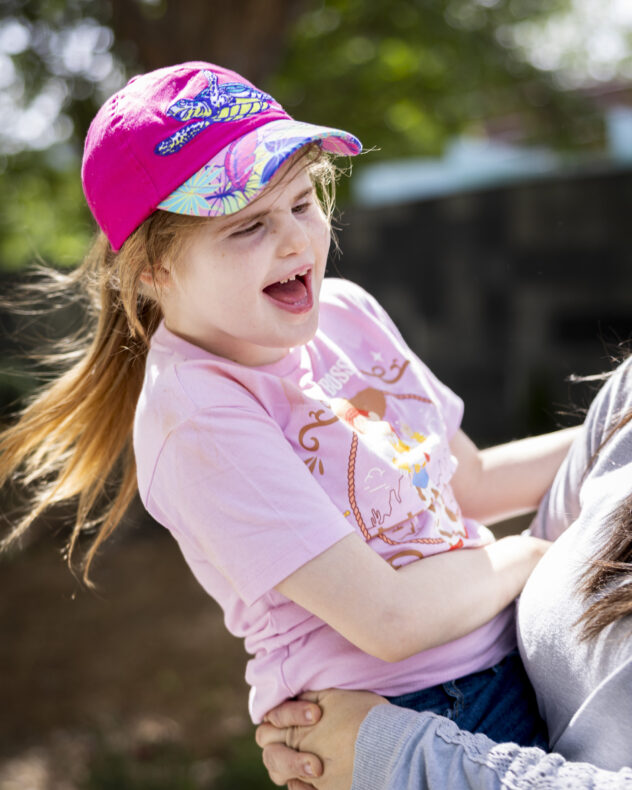
At age 9, Aleah (Sissy) Keasling needed a new heart. Even a routine illness was a strain to her heart. Because of her complex medical and developmental needs, the traditional path and wait time to transplant posed significant challenges.
In January 2026, surgeons at the Golisano Pediatric Heart Institute at Monroe Carell Jr. Children’s Hospital at Vanderbilt used a donor heart recovery technique, pioneered at Vanderbilt Health, to transplant a new heart into Sissy, making her the first child in the country to receive a donor heart procured through the method.
The novel breakthrough could help increase the number of donor hearts available to children awaiting transplant and reduce the time they spend waiting. More than 2,000 children are on the waitlist each year.
For Carlos Mery, MD, MPH, Chief of the Division of Pediatric Cardiac Surgery and holder of the Monroe Carell Jr. Chair, and Larry Markham, MD, Chief of the Division of Pediatric Cardiology and holder of the Katrina Overall McDonald Chair in Pediatrics, the procedure represents a significant step forward in pediatric transplantation.
“This really marks a milestone in the way we do pediatric heart transplantation,” Mery and Markham said collectively. They co-lead the Golisano Pediatric Heart Institute at Monroe Carell. “This has the potential to increase the organ pool and simplify the way we do donation and transplantation. It also has the potential to reduce the time children like Aleah wait for a heart transplant and, by doing that, reduce complications, improve patient and family well-being, and improve neurodevelopmental outcomes.”
Diagnosed as an infant with dilated cardiomyopathy, a genetic disease that weakens the heart muscle over time, Sissy’s condition worsened throughout childhood. By early 2025, episodes that turned her skin blue signaled her heart was failing.
“We thought she had the flu or maybe a cold because she quit eating,” said her mother, Tiffany Keasling. “I didn’t know that at the time, but that was the first sign of her heart failing.”
For many children, that means spending months in the hospital waiting for a suitable donor heart, often relying on mechanical heart support. For Sissy, who also has autism and chromosome 1p36 deletion syndrome, a rare genetic disorder associated with heart disease and developmental delays, that approach was challenging.
With her parents’ permission, Monroe Carell’s pediatric and adult heart transplant teams decided to use a pioneering donor-heart recovery technique that had never been used in a child.
Established by Vanderbilt Health’s adult heart transplant team, the technique, termed REUP (rapid recovery with extended ultraoxygenated preservation), avoids traditional methods that reanimate the heart within or outside the donor’s body. It consists of using oxygenated blood and del Nido cardioplegia solution as a flush for 18 to 20 minutes with a newly recovered donor heart.
Vanderbilt Health’s nationally recognized adult and pediatric heart teams, which are equipped to care for patients’ congenital heart conditions in utero and throughout the lifespan, recently published their findings in The New England Journal of Medicine on the use of the REUP technique in pediatric patients showing the technique’s success.
“This truly marks an incredible achievement in the realm of heart transplantation,” said Aaron Williams, MD, Assistant Professor of Cardiac Surgery and adult heart transplant surgeon. “On the adult side, our team has performed over 130 REUP recoveries with excellent results. Now that we have had the opportunity to modify this into a pediatric-specific protocol, the possibilities are endless. We have worked very hard in making this applicable to the pediatric sector to help save kids’ lives.”
Becoming the first
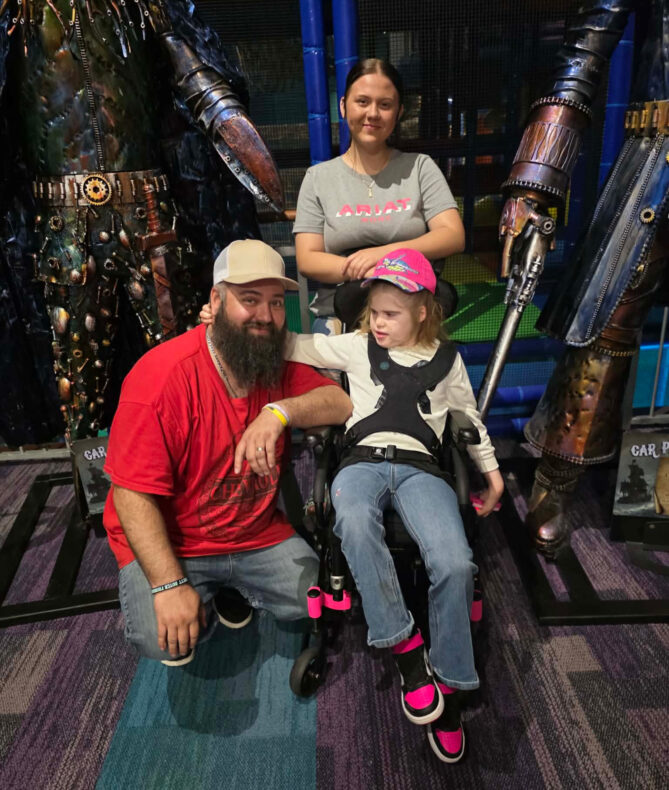
Tiffany and Michael Keasling understood their daughter’s heart was failing.
After discussing options with surgeon Ziv Beckerman, MD, Associate Professor of Cardiac Surgery and Associate Chief of Pediatric Cardiac Surgery, and cardiologist Caroline West, MD, MS, Assistant Professor of Pediatrics, the family agreed to a second valve repair planned for January 2026. There were no guarantees that the repair would work.
“She was quite lethargic,” said West. “Sissy was in her (wheelchair), but she was slumped over. She was extremely thin and would not engage with me whatsoever. It was clear that Sissy’s heart was very sick.”
“Without any medical intervention, I thought it would be months to maybe a maximum of two years that she would be able to live with her underlying heart disease,” West continued.
The news was daunting to her parents. “We were definitely lost, scared, and had big decisions to make,” Tiffany said.
Then, on Jan. 3, while at home in Newport, Tennessee, the family received a call from the Golisano Pediatric Heart Institute at Monroe Carell.
“I thought it was about the scheduled repair,” Tiffany said. “But when she told me they had a heart for her and asked if we still wanted it, I just lost it. Michael couldn’t understand what I was saying because I was trying to tell him while I was crying. We just got up, started packing and headed straight here.”
Although they knew the donor heart had been recovered using a new technique, the family did not hesitate.
REUP expands access to donor hearts
Working together, the pediatric and adult cardiac surgery teams would perform the transplant with support from Vanderbilt Health’s adult heart team. Vanderbilt Health’s approach to recovering and preserving donor hearts expands the pool of organs available to patients like Sissy. Vanderbilt Health’s Williams, an adult heart transplant surgeon, and Kevin McGann, MD, a cardiothoracic surgery fellow, would perform the first pediatric REUP recovery in the country together as a team, like they had on the adult side, now over 130 times.
“The main thing we struggle with in organ transplantation and cardiac transplantation is donor availability. We don’t have enough hearts (for children),” said Beckerman, who is also Surgical Director of Pediatric Heart Transplantation and Director of Adult Congenital Heart Surgery.
Using traditional procurement, donor hearts can safely be preserved for about four to five hours before function begins to decline. When REUP is used to recover hearts from donation after circulatory death (DCD) donors, preservation time can more than double.
To date, Monroe Carell cardiac surgeons have performed 10 pediatric heart transplants using the REUP technique. In total, they have performed 12 heart transplants this year.
“The REUP approach allows us to preserve hearts for over 10 hours, which is truly remarkable,” Beckerman said. “We have hearts that after a 10-hour period showed normal function. The patients we’ve implanted with this approach are truly at the extremes of congenital heart surgery, and we’ve seen that these hearts do just great, just fantastic.”
“We have shown that Vanderbilt-REUP solves a once thought impossible problem — using DCD hearts in our smallest and most desperate patients,” said Ashish Shah, MD, Professor and Chair of Cardiac Surgery and holder of the Alfred Blalock Directorship in Cardiac Surgery. “More importantly, it is a powerful reminder that Vanderbilt Health is more than a collection of hospitals, but rather a catalyst for the best heart transplant team in the world to do hard things.”
The impact is particularly significant for infants, who often face some of the longest waits for donor hearts.
“We’ve had two that waited less than a week, one that literally waited two days,” Beckerman said. “We are at the point right now where we have better access to donor hearts than any other program in the country because we are able to go anywhere in the country.”
‘Trying to keep up with her’
Sissy was taken to the operating room around 10 p.m. on Jan. 3. The recovery by Williams and McGann with the new pediatric REUP technique was a success. After an overnight wait, her parents learned the transplant had gone well and saw her again the next morning.
“The surgeon saw me and took me over there to see her and said she’d done great, done wonderful,” Tiffany said. “That’s all I wanted to hear, that she was good.”
The first thing they noticed was her color. “You could see color in her lips and her cheeks,” Tiffany said.
Sissy, who turned 10 about two weeks after her heart transplant, spent three weeks recovering in the hospital before transitioning to local housing near the hospital for continued follow-up care. Her dad was pleasantly surprised by her recovery.
“With her heart transplant, she recovered way faster and better than with her repair that she had before,” Michael said.
West says Sissy’s prognosis is excellent, and she is thriving.
“I didn’t know how much it was really impairing her quality of life until I got to see how great she did with a new heart,” West said. “Every time I see Sissy in clinic, she’s sitting upright; she’s bright-eyed; she’s laughing; and she has so much energy and joy that it’s almost palpable. Her laughter is contagious. You can’t help but laugh when she’s laughing in clinic. I honestly couldn’t have asked for a better outcome.”
After being cleared from restrictions, the Keaslings took her to the aquarium to see all the colorful fish. She also enjoys riding with her parents on a pink Make-A-Wish golf cart that plays country music. Her appetite has improved as well.
“Most of the time, she’s happy-go-lucky, but she definitely has a lot more energy,” Tiffany said.
The Keaslings’ biggest concern now? “Trying to keep up with her,” Michael said with a laugh.
Asked what Sissy’s transplant and recovery meant to him, his answer was simple: “Everything.”