



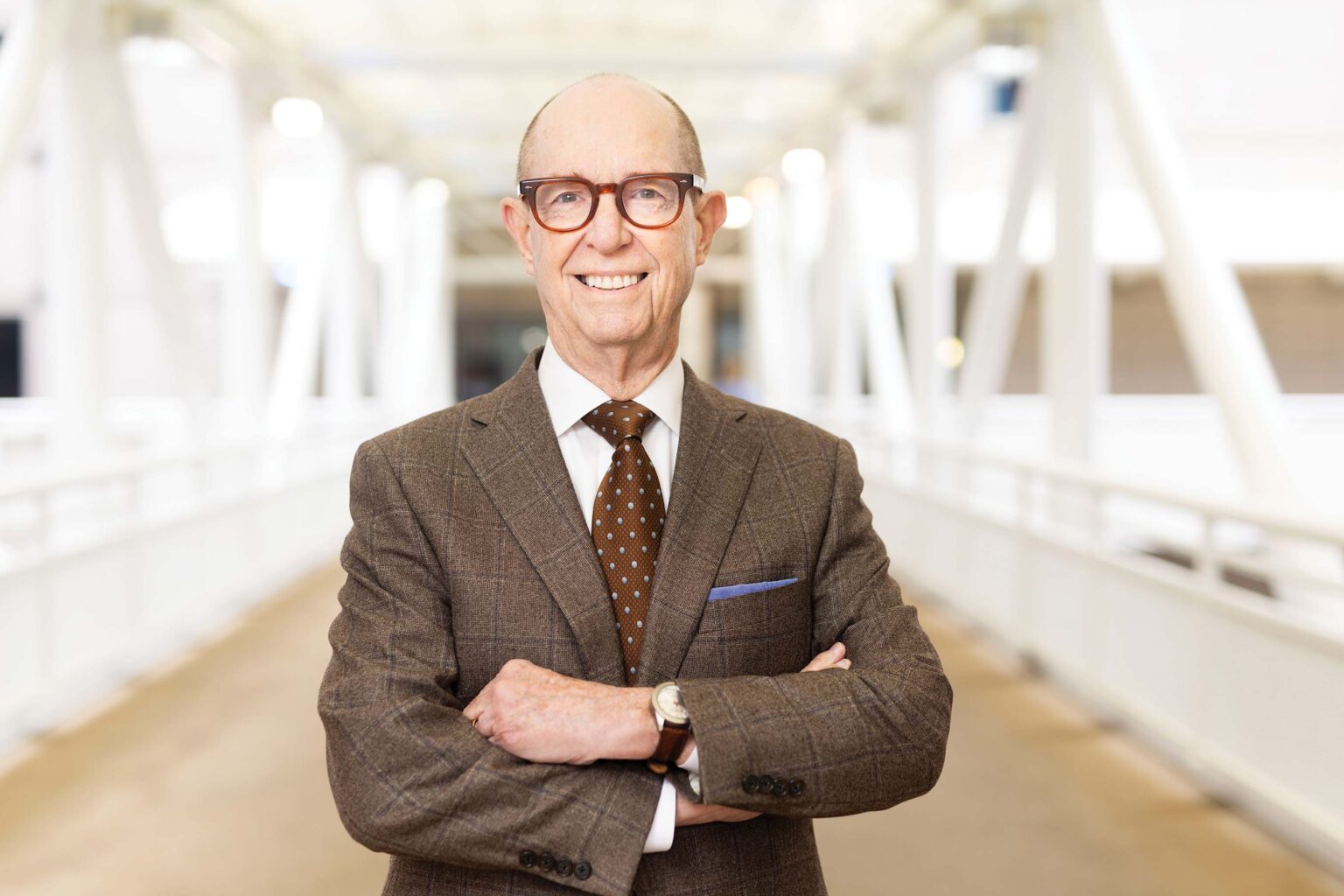
 Photo by Susan Urmy

I joined the faculty at Wayne State University in 1975 and built a research program exploring the molecular events that link inflammation and cancer. My two main interests were then and are still DNA damage and mutations triggered by reactive oxygen species and the involvement of prostaglandins in cancer development. I was recruited to Vanderbilt University in 1989 as the Mary Geddes Stahlman Professor of Cancer Research and found myself in research heaven because of the world-class research environment.
A few years after the move, Hal Moses asked me to help him build what became Vanderbilt-Ingram Cancer Center by serving as the associate director for Research. Along with Hal and David Johnson, we began the hard but very rewarding work of putting in place a cancer center where none had existed. There were plenty of talented faculty and important pieces already in place, such as the A.B. Hancock Jr. Memorial Laboratory for Cancer Research and the Henry-Joyce Cancer Clinic. Everyone pitched in, and within less than two years, we had secured our status as a National Cancer Institute-Designated Cancer Center.
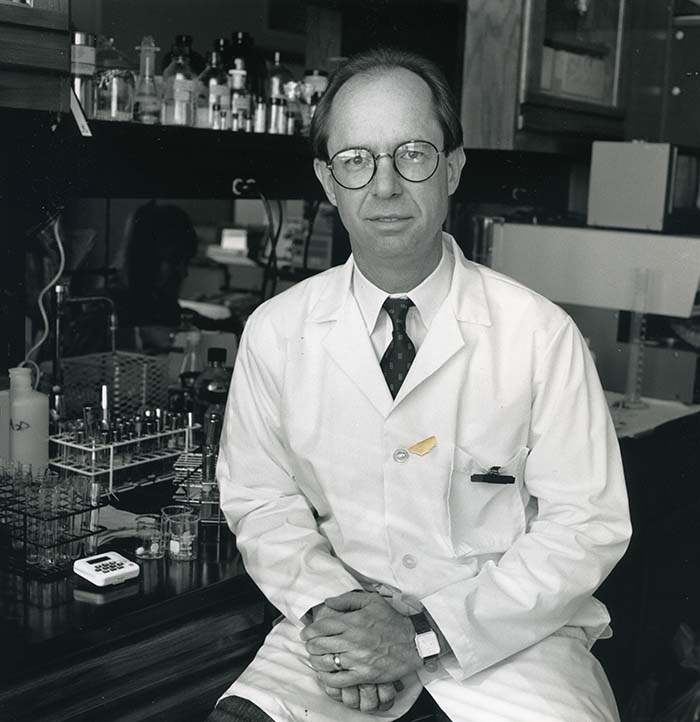
One of the activities I really enjoyed was interacting with individuals interested in making gifts to support cancer research. Philanthropy is essential to building initiatives in an academic medical center, and it was particularly critical as we built Vanderbilt-Ingram. I especially remember a breakfast meeting at Ingram Industries when I closed my remarks by saying, “I am investing my time to build a world-class cancer center so when I get my cancer, I’ll have a great place to be treated.” I based this remark on the statistics that 1 in 2 men and 1 in 3 women will develop cancer in their lifetimes. So there was a good chance I was going to get cancer at some point, but until last year, I only developed skin cancers that were easily removed.
The link between chronic inflammation and cancer has strengthened with time, and our laboratory efforts have provided important insights that led to the use of COX-2 inhibitors for prevention of colon cancer and to a more recent project to develop new drugs for metastatic castrate-resistant prostate cancer. Vanderbilt has been the perfect home for my research program, and I have been blessed with many talented and dedicated PhD students, postdoctoral fellows and research technicians. In fact, last October I celebrated my 50th year as a faculty member with a reunion that drew some 75 former trainees from five continents.
As I got older, I started having trouble urinating — I was going more often, but the stream was weak. This is a fairly common consequence of aging and usually results from an enlarged prostate. My prostate-specific antigen (PSA) levels were low (~ 2.5), so there was no concern about prostate cancer, but the urinary problems were disrupting my sleep and daytime activities. Dr. Richard Hock, my primary care physician, referred me to Dr. Nicole Miller to consider HoLEP laser surgery to reduce the size of my prostate. Cystoscopy revealed that my prostate was small, but it had grown vertically and was making a plug in the bottom of my bladder. Dr. Miller performed the surgery in the summer of 2023, and it was an unqualified success. I wished I had done it years earlier.
The biopsy of the excised prostate tissue revealed some low-grade cancer (Gleason score 6) in about 5% of the tissue, but the consensus was that a Gleason 6 at my age (76) was something I would die “with not of.” So I looked forward to a healthy future with occasional PSA tests to monitor any potential prostate cancer. Eight months after the surgery, my PSA was 3.0, which is still low, but Dr. Miller suggested I get an MRI to see what my prostate looked like if we were going to continue using PSA as an indicator of prostate cancer. The MRI showed two lesions on the outside of my prostate, not in the region that the laser surgery had removed. I wasn’t too surprised because I knew there was some low-grade cancer in there, but I also knew I’d have to get a needle biopsy to see what kind of cancer was in those lesions.
Dr. Kristen Scarpato did the biopsies and called me two days later with the results. Nearly half of the 25 biopsies showed cancer, and there was a mix of Gleason 6 as well as Gleason 7, and one biopsy had a Gleason 8 (3 + 5). My life changed irreversibly during that phone call — I had advanced prostate cancer. Had it spread? I had to get a PET scan that uses a radioactive antibody to find any prostate-specific membrane antigen (PSMA) outside my prostate. My anxiety level was through the roof because the prognosis for men with metastatic prostate cancer at the time of diagnosis is much worse than if the cancer is localized to the prostate.
The PET scan was very simple. I was injected with the radioisotope then moved back and forth in the scanner for 15 minutes. Afterward, the technician said, “Good luck with the results of your scan.” Had he seen something? Did I light up the entire field? I was so keyed up that irrational thoughts were filling my brain. I eventually decided that he was just being nice. In fact, the PET scan revealed the cancer was localized to my prostate.
Despite this good fortune, the cancer had to be treated. After long talks with Dr. Sam Chang and Dr. Eric Shinohara, I decided that radiation therapy would be best for me. There would be a series of 26 radiation treatments over a period of five weeks. The response to radiation is hard to predict, so I prepared for the worst — fatigue, problems urinating, bowel problems. In fact, I experienced very mild symptoms of bladder urgency and some constipation. I never felt tired and worked throughout the treatments.
It’s a four-minute walk from my lab to the radiation oncology suite, so I walked down, got treated, then walked back and continued working. Easy-peasy. Well, not really. The X-ray sources are highly precise and coupled to a CT scanner. This enables the technicians to simultaneously perform low-grade irradiation of the pelvis, more intense irradiation of the prostate and yet more intense irradiation of the region of the prostate with the most cancer — talk about personalized medicine! But to achieve that level of precision without damage to surrounding tissues, preparation for the sessions was exacting and more challenging than I anticipated. For five weeks, my mornings were entirely devoted to it. When I finally completed my last treatment Aug. 14, 2025, I rang the bell and walked back to my office with misty eyes and a big smile on my face.
The other component of my cancer treatment is medication to drive down my testosterone levels (“hormone therapy”). I’m taking a pill every day and will have to continue for 18 months. It’s not my favorite thing, but my side effects are manageable — hot flashes, excessive sweating and a bit lower energy level. I’m exercising and walking regularly so I’m able to work, play golf and enjoy life. My PSA and testosterone levels are undetectable, so all the therapy seems to be working.
I suppose it is ironic that I developed prostate cancer while working on drugs to treat prostate cancer, but it’s not unusual. Being a scientist or a physician is not an insurance policy against getting the disease.
What WAS unusual was the fact that my PSA was never close to a level of concern despite the fact I had advanced disease growing in my prostate — every prostate cancer is different.
As a cancer researcher, I was able to understand my various diagnoses and treatments, which helped mitigate my anxiety. But the fact is that I was a cancer patient and am now a survivor, just like all the people I’ve had the privilege to meet at Vanderbilt-Ingram events. I am confident the radiation killed my cancer, but I’ll always worry when a technician draws blood for my next PSA.
Many times over the past year, I have thought back to that breakfast at Ingram Industries and my comment about building a great cancer center for my own treatment. It took 30 years to collect the dividend, but I was right about the investment. Like all patients at Vanderbilt-Ingram, I received exceptional care for my cancer.