


Department of Pediatrics Archive — Page 39 of 40





-
September 12, 2013
Federal grant bolsters pulmonary fibrosis research
Lisa Young, M.D., associate professor of Pediatrics and Medicine and Cell Biology, has been awarded a five-year, $1.9 million National Institutes of Health grant to study what causes cellular dysfunction and pulmonary fibrosis in patients with Hermansky-Pudlak syndrome (HPS). -
September 5, 2013
Webber delivers first State of Pediatrics address
-
August 23, 2013
Pregnancy promoter and protector
Alkaline phosphatase enzymes appear to play roles in promoting pregnancy and in protecting the uterus from bacterial infection. -
August 22, 2013
Initiative makes cesarean births a family affair
Robert and Michele McClellan expected the experience of their infant son’s birth via cesarean section to be like that of other women who had had the procedure — unable to witness their son’s exit from the womb and for him to be immediately whisked away. -
August 14, 2013
Oxidative stress in autism
A biomarker for oxidative stress is elevated in patients with both autism spectrum disorder and gastrointestinal dysfunction, suggesting opportunities for individualized approaches to clinical care. -
June 12, 2013
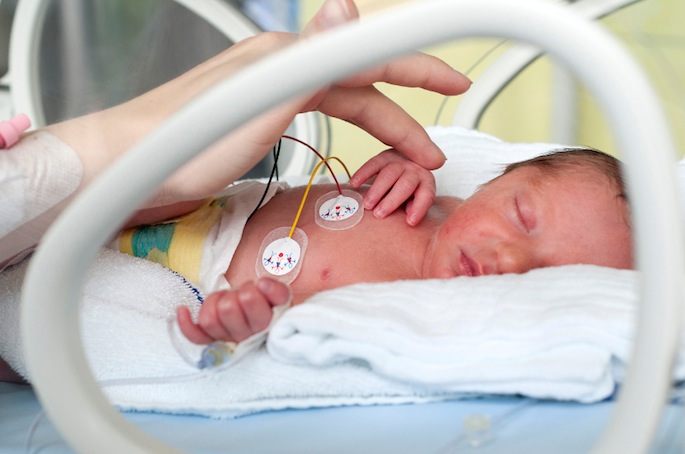
Antacids: risky for premature babies
Antacids that block a certain enzyme pose a risk for a common cardiac problem in premature infants. -
May 10, 2013
Profiling heart cells
A “profile” of the genes and regulatory networks that govern early heart valve development lay the groundwork for generating valves from a patient’s own cells.