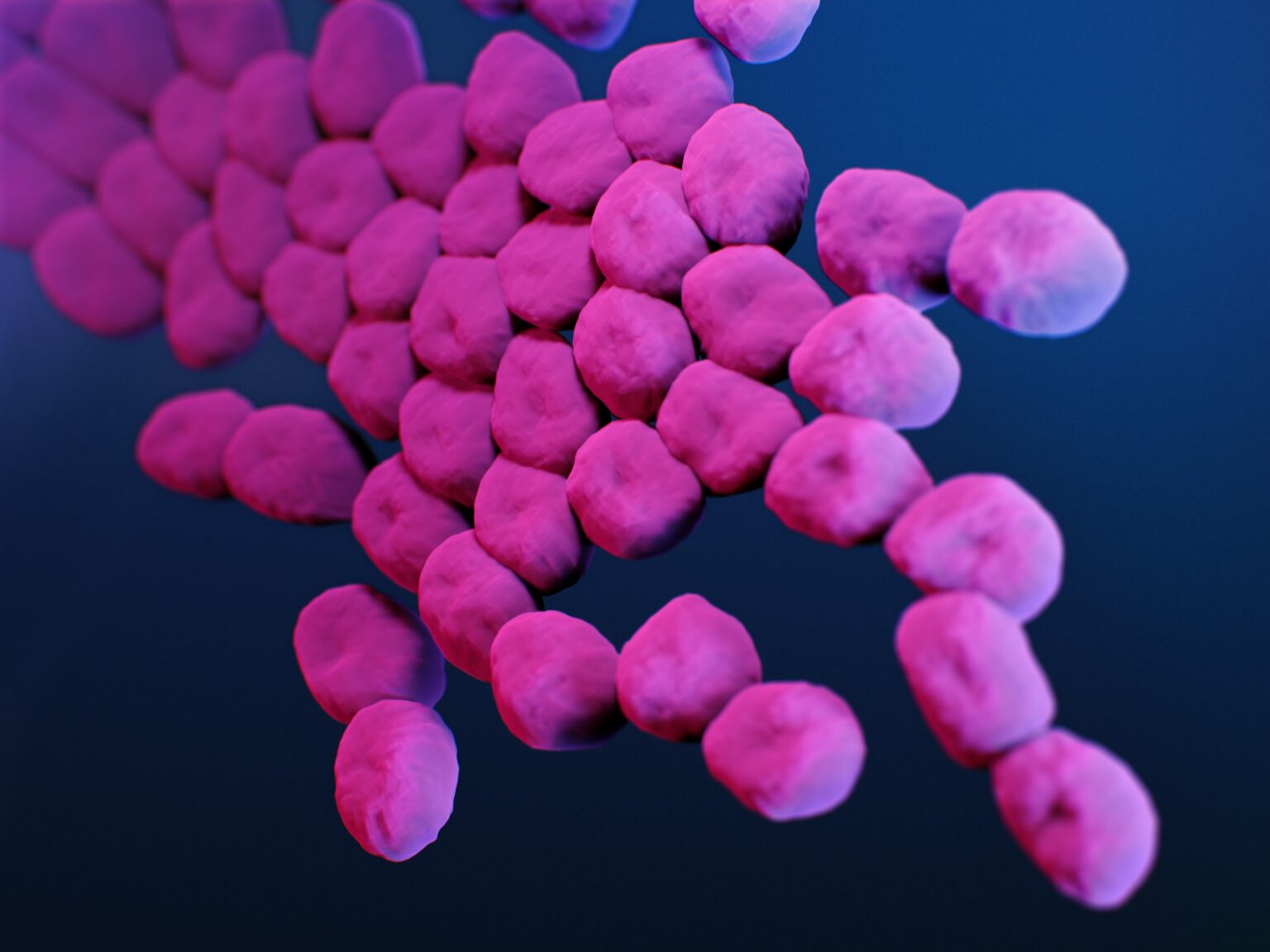
 Medical illustration of antimicrobial-resistant Acinetobacter bacteria. (image courtesy of CDC/Dan Higgins; James Archer)

A gut-lung connection influences susceptibility to infection by Acinetobacter baumannii, a leading cause of hospital-acquired infections, according to a new study led by researchers at Vanderbilt Health and the University of Chicago.
The investigators found that antibiotics disrupt the gut microbiota (microorganisms that live in the intestines) in an animal model; suppress protective immune system pathways in the lungs; and increase the severity of A. baumannii pneumonia. The findings were reported in the Proceedings of the National Academy of Sciences.
“Our study highlights the gut microbiota as a potential therapeutic target to prevent lung infections with A. baumannii and potentially other pathogens,” said Eric Skaar, PhD, MPH, the Ernest W. Goodpasture Professor of Pathology; director of the Vanderbilt Institute for Infection, Immunology and Inflammation; and co-corresponding author of the PNAS report. Erin Green, PhD, assistant professor of Microbiology and Medicine at the University of Chicago and a former postdoctoral fellow in the Skaar group, is the first and co-corresponding author of the study.

The bacterium A. baumannii causes health care-associated pneumonias, including ventilator-associated pneumonias. It is recognized as an urgent public health threat, due to its multidrug resistance, persistence on hospital surfaces, and association with high rates of mortality in critically ill patients, Skaar noted.
Antibiotics are routinely administered to critically ill patients and can disrupt the gut microbiota, which is associated with an increased risk of adverse outcomes, including infections. Some reports estimate that up to 71% of intensive care unit patients receive antibiotics as part of standard care.
In a group of hospitalized patients, the researchers observed an association between antibiotic treatment and microbiota disruption that preceded A. baumannii infection.
To explore the mechanism for this association, they studied A. baumannii infection in a mouse model and demonstrated that oral antibiotics increase bacterial lung colonization and spread to the liver and spleen. Fecal microbiota transplant prevented the spread of A. baumannii to distant tissues, implicating microbiota disruption as a key driver of severe disease.
Using single-cell RNA sequencing, the investigators determined that antibiotic treatment reduced lung expression of immune system pathways involved in protection against infection. These included “nutritional immunity” pathways that starve pathogens by restricting their access to essential nutrient metals.
In future studies, the researchers will explore the mechanisms by which antibiotic-mediated disruption of the gut microbiota suppresses nutritional immunity in the lung.
Skaar and his colleagues have long focused on the battle between hosts and pathogens for nutrient metals, with the goal of identifying novel targets to treat bacterial infections.
“There’s an urgent need for new antimicrobial therapeutics. Increasing rates of antibiotic resistance are threatening to make common infections harder — or even impossible — to treat,” Skaar said.
“Sequestration of nutrient metals is a key component of the innate immune defense against numerous pathogens that cause respiratory and bloodstream infections. Our current findings show that the gut microbiota influences nutritional immunity in the lung, pointing to the intriguing possibility that this gut-lung connection may offer new therapeutic targets for a broad range of health care-associated infections.”
Other co-authors of the PNAS study are Nicholas Negretti, PhD, Tess Brunner, Nicolas Shealy, PhD, Felipe Moser, Sydney Drury, Kacie Traina, Valeria Reyes Ruiz, PhD, Tzushan Yang, DVM, PhD, Christopher Lehmann, MD, Mariana Byndloss, DVM, PhD, Raf van de Plas, PhD, Joseph Zackular, PhD, Samuel Light, PhD, and Jennifer Sucre, MD. The research was supported in part by the National Institutes of Health (grants R01AI101171, R01AI138581, K22AI166265, R01HL168556, K08HL143051, R35GM146969, R35GM138369, R01DK131104 and R01AI168302).