


Cancer Archive — Page 49 of 70





-
October 20, 2016
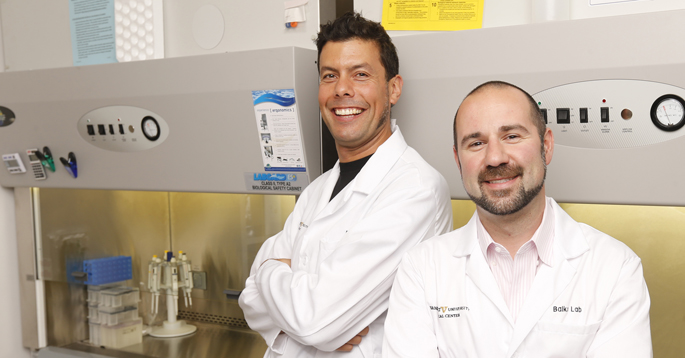
VICC trial putting lung cancer therapy to the test
Vanderbilt-Ingram Cancer Center (VICC) is leading a Phase 3 global trial of a cancer therapy that was initially tested and validated in a VICC research laboratory. One of the first patients treated with the therapy came to VICC after a bump on the head led to an unexpected cancer diagnosis. -
September 29, 2016
BMI genotype and breast cancer risk
For breast cancer prevention, a new study provides evidence for lifestyle modification to reduce weight gain in adults. -
September 22, 2016
New prostate cancer therapy investigated at VUMC
Vanderbilt University Medical Center is the world’s first site to treat a patient in the TULSA-PRO Ablation Clinical Trial (TACT), which employs an emerging therapy that uses MRI guidance and robotically driven therapeutic ultrasound to obtain precise prostate cancer tissue ablation. -
September 22, 2016
VUMC’s Lehman lands LUNGevity research support
Jonathan Lehman, M.D., Ph.D., instructor in Medicine in the Division of Hematology/Oncology, has received a Career Development Award from LUNGevity, a nonprofit organization that provides support programs for lung cancer patients and families, public education and funding for innovative scientific research. -
September 22, 2016
National Lymphedema Network honors VUMC research efforts
Lymphedema research conducted at Vanderbilt University Medical Center (VUMC) to better understand patient risk for this chronic condition and treatment responses received recognition at an international conference. -
September 15, 2016
Fashion show to benefit VICC ovarian cancer research
Fall fashions for women will be on display during the 4th Annual Chic Awearness Fashion Show promoting ovarian cancer awareness and research. The event, to be held Monday, Sept. 26, 6:30 to 8:30 p.m., will benefit the T.J. Martell Foundation, which supports ovarian cancer research at Vanderbilt-Ingram Cancer Center (VICC). -
September 14, 2016
Restore T cells to fight leukemia
Modulation of T cell metabolism thus may represent a new therapeutic avenue for leukemia patients.