


Research Archive — Page 124 of 138





-
February 23, 2017
Team identifies ‘switch’ involved in DNA replication
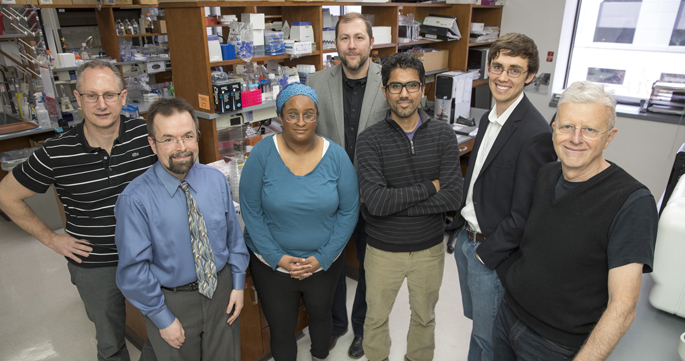
DNA replication is an extraordinarily complex multi-step process that makes copies of the body’s genetic blueprint. It is necessary for growth and essential to life. Now researchers at the California Institute of Technology (Caltech) and Vanderbilt University have found evidence that one of those steps may involve the telephone-like transmission of electrical signals regulated by a chemical “switch.” -
February 23, 2017
A target to heal tiny lungs
The protein beta-catenin may be a good target for therapies to treat lung disease that is a common complication of preterm birth. -
February 21, 2017
Laughing gas for labor
Although nitrous oxide was less effective than epidural anesthesia for pain management during labor, mothers who used nitrous oxide were equally satisfied with their childbirth experience. -
February 9, 2017
Team isolates new antibodies that may aid RSV vaccine design
Researchers at Vanderbilt University Medical Center (VUMC) have taken another step toward developing a vaccine against respiratory syncytial virus (RSV), the major cause of life-threatening pneumonia in infants worldwide. -
February 8, 2017
Social risk factors influence outcomes, Medicare payment
Social risk factors including income, education and ethnic background influence health outcomes and should be taken into account in Medicare payment models, according to a New England Journal of Medicine “Perspective” titled “Social Risk Factors and Equity in Medicare Payment.” -
February 3, 2017
Bacterial signaling systems
Vanderbilt researchers have identified a unique example of communication between bacterial signaling systems, which may have relevance for antibiotic resistance. -
February 2, 2017
Gene mutation discovery may hold autism clues: study
Researchers at Vanderbilt have identified what may be a genetic “smoking gun” for autism spectrum disorder (ASD) — a mutation in the gene for the critical neuronal protein CaMKII.