Vanderbilt Health researchers are studying the impact of medications taken during pregnancy. (file photo by Joe Howell)

Determining the safety of taking selective serotonin reuptake inhibitors (SSRIs) for depression during pregnancy has been challenging. Observational studies have given conflicting results, and randomized clinical trials in pregnant women are generally not feasible due to ethical constraints.
To overcome these limitations, Vanderbilt Health researchers used a target trial method that mimics randomized clinical trials. They compared birth outcomes reported in the electronic health records of women who discontinued SSRIs before or during their pregnancies, to those of pregnant women who continued taking their medications.
In this retrospective study of 1,014 pregnancies, SSRI-exposed infants had a slightly impaired neonatal adaptation immediately after birth, as reflected by lower Apgar scores. An Apgar test is an evaluation just after birth to determine how well the baby is doing. However, prenatal exposure to SSRIs was not associated with a statistically significant increase in neonatal intensive care unit admissions or major birth defects.
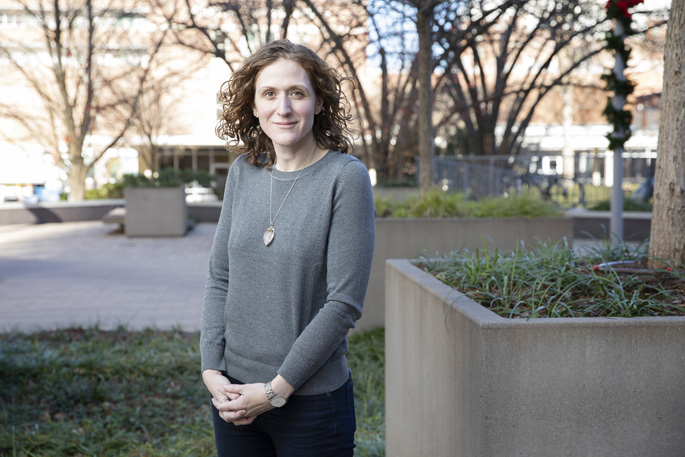
While larger studies are needed to evaluate rare outcomes and factors such as depression severity, these findings support previous recommendations that infants exposed to SSRIs should be delivered at hospitals with neonatal resuscitation capabilities.
The report was published July 1 in the journal JAMA Network Open.
“One of the takeaways (of this study) was that if you need to be on an SSRI, stay on it, but make sure to deliver in a place that can take care of the baby,” said Jennifer Sucre, MD, Associate Professor of Pediatrics in the Mildred Stahlman Division of Neonatology.
“While the goal was not to generate any prescriptive recommendations, perhaps it provides a layer of information about risk for women and their doctors to consider,” said Sucre, the paper’s co-corresponding author with Lisa Bastarache, MS, Research Associate Professor of Biomedical Informatics.

The report also highlights the importance of choosing appropriate comparison groups to evaluate drug safety.
Other studies have mined large pregnancy databases for potential associations between prenatal exposures and birth outcomes. But these databases generally draw from claims and prescription data that do not include, as Vanderbilt Health’s does, information about gestational age and weight at birth or Apgar scores, Bastarache said.
Another innovative aspect of Vanderbilt Health’s Mom-Baby Dyad Database is that it links the electronic health records of more than 76,000 unique pregnancies to the nearly 59,000 women who delivered their babies at Vanderbilt between 2006 and 2022.
Previous studies have compared pregnant women who are taking SSRI medications to those who are not. “That’s a false comparison,” Sucre said. “These are totally different groups of women.”
Women who take SSRIs because of depression or anxiety may have other, potentially pregnancy-impacting factors that women who do not take these medications do not have. A straight-on comparison that does not account for these differences could generate “spurious associations” about SSRIs that are “simply incorrect,” Bastarache added.
In the current study, the paper’s first author Layla Aref, a graduate student in biomedical informatics at Vanderbilt Health, employed a target trial approach. She designed a comparison of two groups of women who stopped or continued SSRI use during their pregnancies to more closely simulate a randomized controlled trial.
“Stay tuned,” Sucre said. “This resource has a lot of potential to understand other drug exposures in pregnancy. (It) really fits with Vanderbilt’s leadership in the personalized medicine space … and brings two vulnerable populations — pregnant women and neonates — to benefit from large-data approaches that Vanderbilt is known for.”
Other co-authors were Jacob Hughey, PhD, Assistant Professor of Biomedical Informatics, and Sherwin Shirazi, MS, Associate Research Data Analyst in the Sucre lab. The study was supported in part by National Institutes of Health grants R01LM010685, K08HL143051 and R01HL158556, and by the Department of Pediatrics’ Biodevelopmental Origins of Lung Disease (BOLD) Center, which Sucre directs.