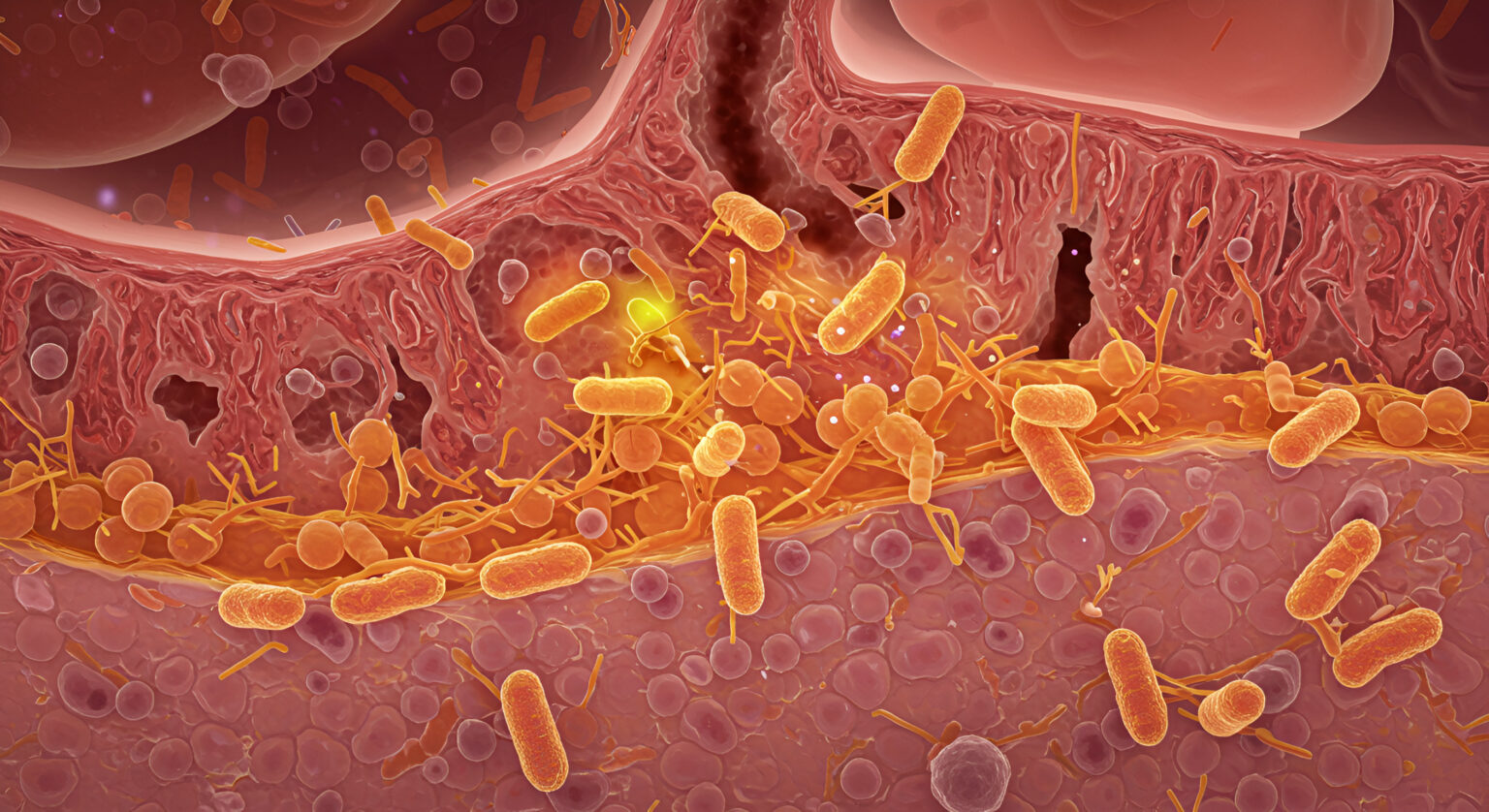
 The rod-shaped pathogen C. diff must overcome a variety of threats to survive and grow in the gut. (illustration by Adobe Stock)

The pathogen Clostridioides difficile (C. diff) — a leading cause of hospital-acquired infections — must contend with a variety of threats inside the harsh environment of the gut to survive and grow.
Researchers at Vanderbilt Health have now discovered a unique system C. diff uses to simultaneously sense and respond to two different threats: host-mediated nutrient deprivation and a microbiota-produced antibiotic compound. Their findings, published Sept. 8 in Science Signaling, suggest new therapeutic options for preventing and treating C. diff infections.
C. diff causes diarrhea and colitis (inflammation of the colon). There are about half a million C. diff infections in the U.S. each year, according to the Centers for Disease Control and Prevention. People taking antibiotics; those who have had a recent hospitalization or live in a health care facility; and adults over 65 are most at risk for C. diff infection, for which there are limited treatments.

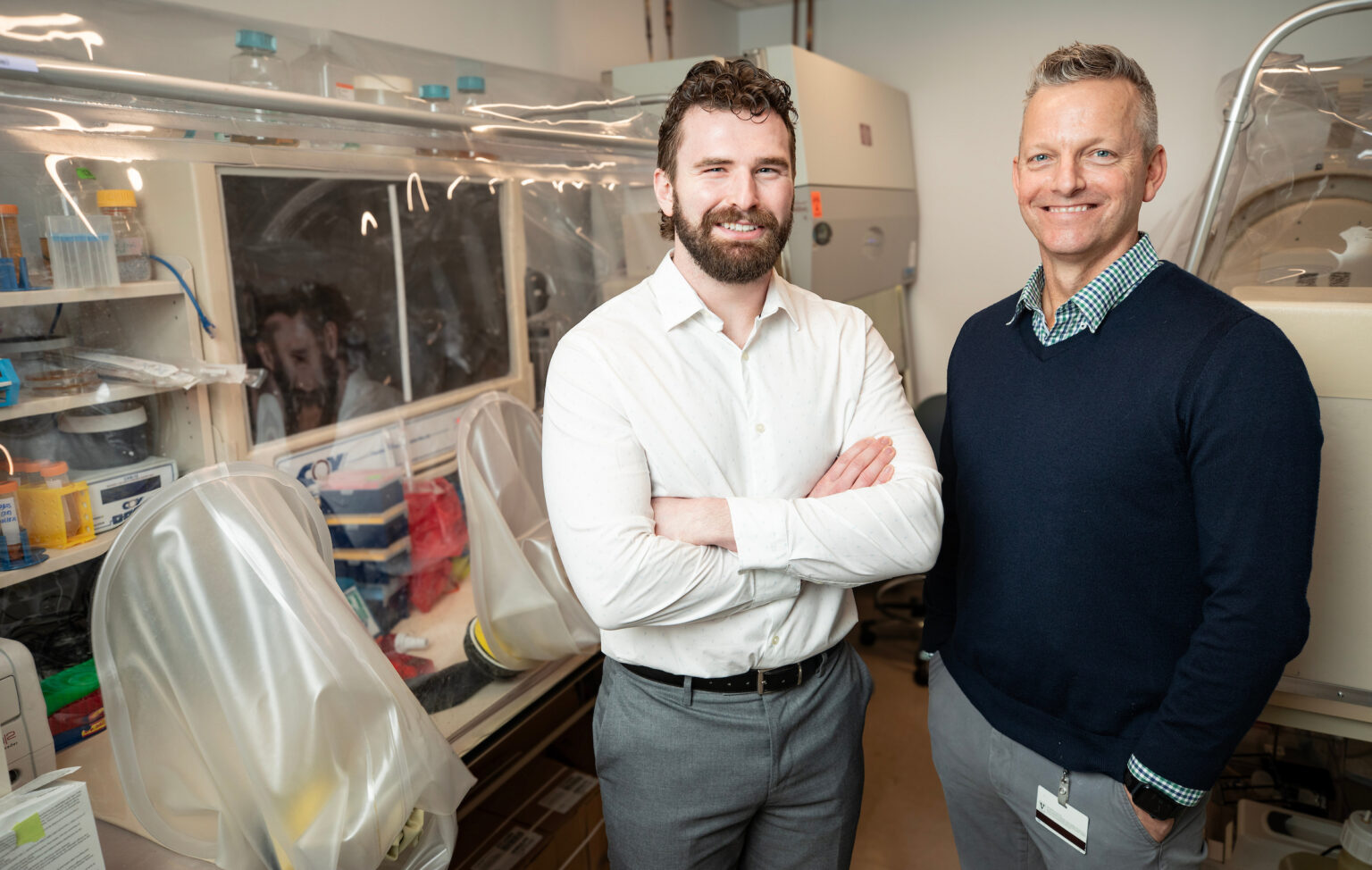
“It’s critical to understand how C. diff adapts to environmental stressors in the gut for us to identify novel antimicrobial targets,” said the paper’s first author, Martin Douglass, PhD, a postdoctoral fellow working with Eric Skaar, PhD, MPH, Director of the Vanderbilt Institute for Infection, Immunology and Inflammation.
Skaar and his team have made pioneering discoveries related to the mechanisms that vertebrate hosts use to starve bacterial pathogens of nutrient metals like iron and zinc, called “nutritional immunity,” and to the ways that bacteria respond.
In the current study, the researchers turned their attention to the microbiota — the billions of microorganisms that reside in the gut, fighting for their own nutrients and space to live, and potentially producing antimicrobial compounds. The team focused on the effects of bacitracin, an antibiotic compound produced by the gut commensal bacterium Bacillus licheniformis. Bacitracin is used in topical ointments to prevent and treat minor skin infections. Although B. licheniformis is found in the human gut, it is not yet clear that it is producing bacitracin, Douglass noted.
The investigators identified a new multiprotein complex, called a Bce module, that C. diff uses to respond to bacitracin and showed that this module was essential for C. diff survival in the presence of B. licheniformis or bacitracin in vitro and in mice. Bacitracin both inhibited symptoms of C. diff infection and eliminated the pathogen in the mouse model, Douglass said.
The researchers also made the surprising discovery that expression of the genes encoding the Bce module was regulated by another system that responds to low iron availability, and they showed that the two defense strategies are synchronized and control signaling pathways that preserve the bacterial cell wall.
“The cell wall is the first line of defense for all bacterial organisms against environmental stressors,” Douglass said. “What we found is that the synchronizing of these two systems — the response to nutritional immunity and to bacitracin — protects a required cell wall remodeling process.
“C. diff evolved to sense both stressors independently and collectively to maintain adequate levels of cell wall building blocks.”
The findings point to the possibility of using bacitracin and/or B. licheniformis as potential therapeutics to combat C. diff infection. The use of B. licheniformis as a probiotic strain has increased in recent years, and studies have shown that probiotics including B. licheniformis can decrease C. diff colonization and prevent recurrent infection.
“B. licheniformis could be considered for use as a probiotic in patients at high risk for C. diff infection,” Douglass said. “It’s also possible that drugs that target the system we discovered could be developed to use in conjunction with B. licheniformis to both inhibit C. diff infection and clear the pathogen.”
Skaar, the Ernest W. Goodpasture Professor of Pathology, is the corresponding author of the Science Signaling paper. Co-authors are Douglass; Lauren Melton; M. Wade Calcutt, PhD; Tess McNeely; Sarah Price, PhD; and Matthew Munneke, PhD. The research was supported by the National Institutes of Health (grants R01AI164687, U19AI174999 and T32DK007673); a Howard Hughes Medical Institute Hanna Gray Fellowship; and a Postdoctoral Enrichment Program Award from the Burroughs Wellcome Fund.