


Tech & Health Archive — Page 7 of 21




-
May 29, 2024
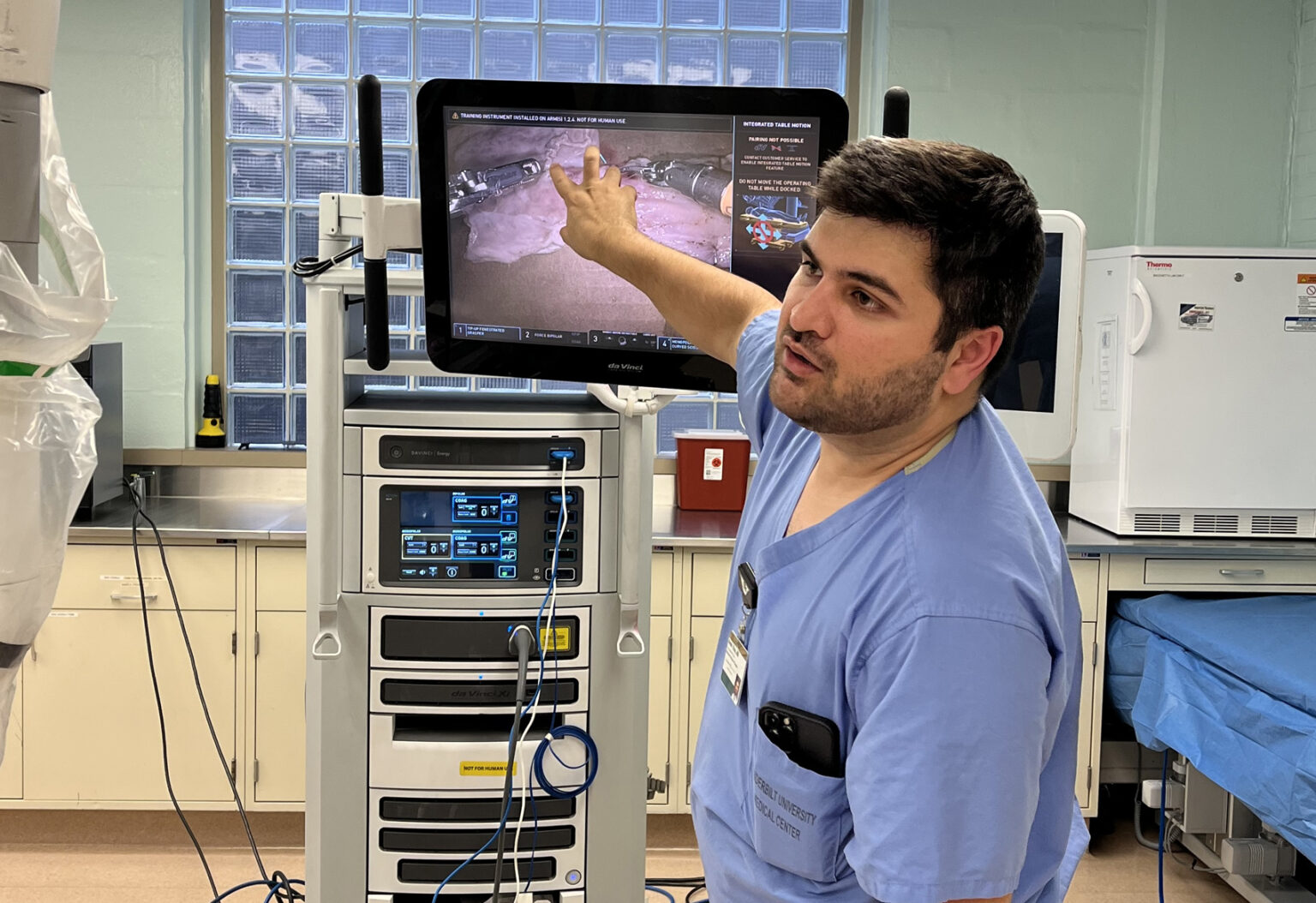
Robotic pancreatectomy speeds recovery time for retired educator
He knew he needed complicated surgery, so researching his options, he learned about the Vanderbilt surgical team led by Kamran Idrees, MD, MSCI, MMHC, Ingram Associate Professor of Cancer Research. -
May 15, 2024
New online repository offers physicians quick guidance on care of rare disease patients
Vanderbilt University Medical Center has collaborated with Children's National Hospital in Washington, D.C., to develop the Rare Disease Clinical Activity Protocol Program, or RareCAP, a growing online repository of clinical protocols designed to offer quick, practical guidance on the care of patients with rare diseases. -
May 8, 2024
Supercomputing redesign of a COVID monoclonal antibody
The approach, which combines high-performance computing, simulation, machine learning and experimental validation, will help keep antibody drugs up to date in the future against highly variable viruses. -
April 26, 2024
Vanderbilt’s Innovation Ambassadors help their colleagues change the world
Within the intellectual powerhouse that is Vanderbilt University and Vanderbilt University Medical Center thrives a group of doctors, engineers, computer scientists and others who also are visionaries, inventors and entrepreneurs. -
April 25, 2024
AI shows promise for clinical phenotyping
Researchers at Vanderbilt University Medical Center have demonstrated the potential for large language models like ChatGPT to help generate electronic health record phenotyping algorithms, a critical but time-consuming task in observational health research. -
April 22, 2024
AI to doctors: Beat that!
Artificial intelligence programs outperformed doctors at answering typical patient questions — suggesting they could be used to write first-draft responses and help speed doctors’ work. -
April 16, 2024
Unsung Zeros: How biostatistics advances personalized health in the era of smart data
VUMC is acrawl with statistical design, bias detection and analysis that’s recognized with $532 million in federal and nonfederal research support.